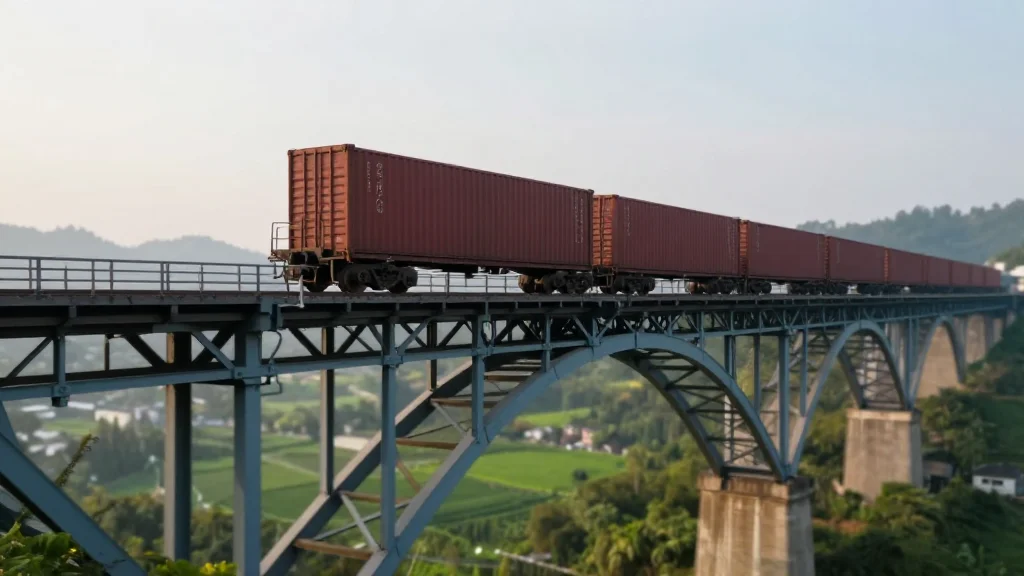
Midland Main Line Upgrades Increase Freight Usage Despite Electrification Pause
Companies Mentioned
Why It Matters
The enhancements increase rail freight efficiency, reducing road congestion and positioning the Midland Main Line for future electrification, which benefits the broader logistics ecosystem and the UK economy.
Key Takeaways
- •Kirk Hill bridge rebuilt, adding clearance for larger containers
- •New headroom enables taller freight trains across Sileby–Trent corridor
- •Freight traffic rise reduces road congestion and supports economic growth
- •Upgrades preserve future electrification options without major new spending
Pulse Analysis
The Midland Main Line (MML) has long served as a vital inland artery linking the West and East Coast rail networks, offering an alternative to the congested London corridor for freight movements. While the UK government halted the line’s electrification in mid‑2025 due to funding constraints, Network Rail has turned the pause into an opportunity to boost capacity through targeted civil works. By focusing on clearance upgrades rather than full‑scale electrification, the railway has unlocked additional freight paths with minimal capital outlay, reinforcing the MML’s strategic role in the national logistics chain.
The most visible upgrade is the replacement of the Kirk Hill bridge at Sutton Bonington. Originally slated for demolition under the electrification scheme, the bridge was rebuilt during the programme pause, raising the deck to provide the gauge needed for taller, high‑cube containers. Similar headroom improvements were made between Sileby, Loughborough and Trent, and additional clearances were identified on the Trent High Level, Ratcliffe‑Toton and Attenborough‑Toton sections. These interventions allow larger‑gauge freight to run both eastward to the East Midlands Gateway and westward toward the Midlands’ industrial hubs.
The capacity boost translates into tangible economic benefits. Larger container trains can now bypass London, cutting transit times and shifting volume from road to rail, which eases highway congestion and lowers emissions. Freight operators gain greater routing flexibility, while the upgraded clearances also accommodate maintenance equipment, promising the removal of long‑standing speed restrictions and improved reliability. Crucially, the work preserves the corridor’s readiness for future electrification or bi‑mode services, ensuring that when funding resumes the line can transition smoothly without additional structural constraints. This pragmatic approach demonstrates how incremental infrastructure tweaks can deliver outsized returns for the logistics sector.
Midland Main Line upgrades increase freight usage despite electrification pause
Comments
Want to join the conversation?
Loading comments...