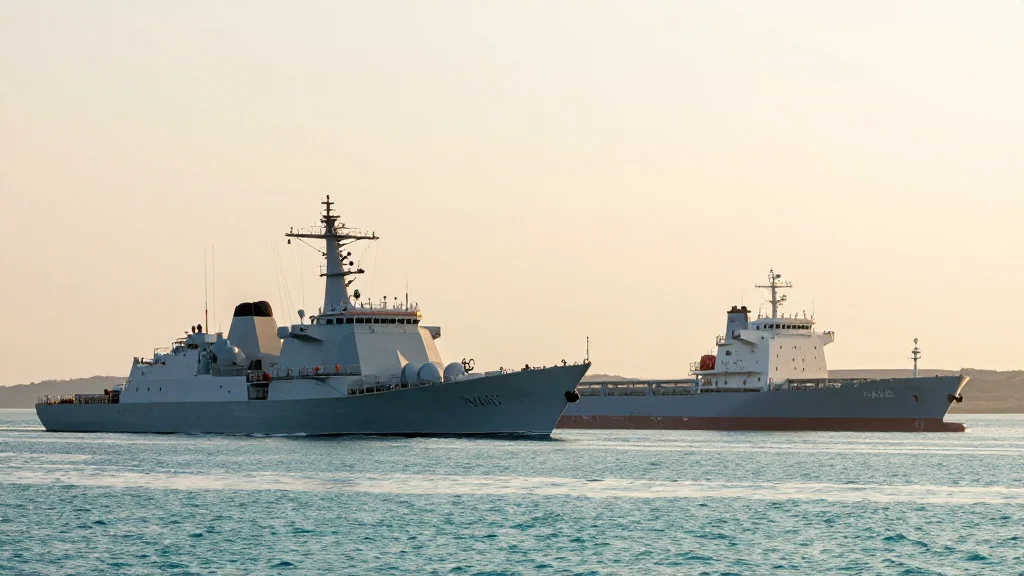
NATO Allies Refuse to Join U.S. Hormuz Blockade, Deepening Rift With Trump
Why It Matters
The standoff threatens NATO unity and could disrupt a fifth of global oil supplies, amplifying market volatility and reshaping U.S.–European security cooperation.
Key Takeaways
- •NATO members reject Trump's Hormuz blockade, favor diplomatic solution
- •Britain and France plan post‑war multinational escort mission
- •Blockade could disrupt roughly 20% of global oil shipments
- •Trump threatens NATO withdrawal if allies refuse participation
- •Iran seeks permanent control, may levy fees on passing ships
Pulse Analysis
The Strait of Hormuz, a chokepoint through which about 20% of the world’s oil passes, has become the flashpoint of a new geopolitical showdown. After six weeks of fighting, President Trump announced a unilateral maritime blockade aimed at Iranian‑bound vessels, positioning the United States as the primary enforcer. While the move underscores Washington’s resolve to pressure Tehran, it also risks escalating a regional conflict that could spill into global energy markets, where any disruption instantly reverberates through oil prices and supply chains.
European NATO members have pushed back, emphasizing a diplomatic pathway over direct military involvement. Britain’s Prime Minister Keir Starmer and France’s President Emmanuel Macron have pledged to develop a defensive, multinational escort mission that would safeguard commercial shipping once a cease‑fire is secured. This approach reflects a broader alliance strategy to maintain freedom of navigation without becoming entangled in the U.S.‑Iran confrontation. The divergence highlights growing friction between Trump’s unilateral tactics and the collective security framework that underpins NATO, raising concerns about alliance cohesion and the potential for a strategic drift.
The economic stakes are substantial. A full‑scale blockade could choke off a fifth of global oil flow, spiking prices and prompting investors to reassess risk exposure in energy‑dependent markets. Moreover, Iran’s intent to cement control and impose levies on transiting vessels adds a layer of fiscal uncertainty. Analysts warn that prolonged stalemate may compel major oil‑importing nations to seek alternative routes, reshaping trade patterns. Ultimately, the resolution will hinge on diplomatic negotiations that balance Iran’s security demands with the international community’s need for uninterrupted energy supplies, while also testing the durability of the transatlantic alliance under pressure.
NATO Allies Refuse to Join U.S. Hormuz Blockade, Deepening Rift With Trump
Comments
Want to join the conversation?
Loading comments...