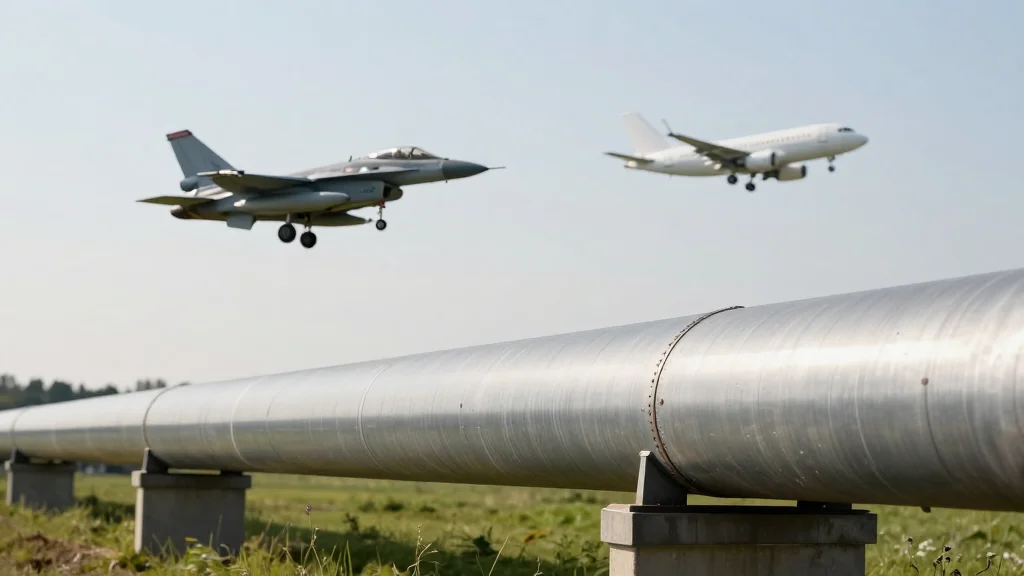
NATO Jet Fuel Network Strain Threatens European Airline Operations

Companies Mentioned
Why It Matters
The jet‑fuel bottleneck illustrates a critical vulnerability in Europe’s aviation supply chain, where a single infrastructure asset serves both defense and commercial needs. As military operations intensify, civilian airlines face higher fuel costs, potential schedule disruptions, and reduced profitability, which could ripple to passengers through higher ticket prices. Moreover, the debate over extending the pipeline highlights strategic tensions within NATO, exposing a split between western members with robust logistics and eastern allies that remain under‑connected. Resolving this imbalance is essential not only for defense readiness but also for maintaining the reliability of Europe’s broader transport network. A prolonged fuel shortage could also accelerate a shift toward alternative fuels or on‑site storage solutions, reshaping the European aviation market. Policymakers will need to balance security imperatives with commercial stability, ensuring that future infrastructure upgrades incorporate safeguards for civilian supply chains.
Key Takeaways
- •NATO’s Central Europe Pipeline System (5,000+ km) now prioritises military jet fuel, tightening civilian supply.
- •Jet‑fuel prices have roughly doubled amid geopolitical tensions, raising airline operating costs.
- •Poland’s Energy Minister Milosz Motyka proposes extending the pipeline to the east, covering a total of ~10,000 km.
- •IATA Director General Willie Walsh calls the fuel outlook “sobering,” warning of possible flight cancellations.
- •Airlines are preparing contingency plans, including alternate sourcing and extra fuel reserves.
Pulse Analysis
The current fuel squeeze is a textbook case of how defense logistics can become a choke point for civilian supply chains. Historically, NATO’s Cold‑War pipelines were built for rapid military redeployment, with little regard for commercial resilience. Today, the same infrastructure underpins a heavily integrated European aviation market that moves millions of passengers each summer. The rapid price escalation—fuel costs now roughly twice pre‑conflict levels—means airlines must either absorb higher expenses or pass them onto consumers, a dilemma that could erode demand in price‑sensitive segments.
Strategically, the proposed eastward extension serves a dual purpose: it mitigates the “two‑speed NATO” risk identified by Poland and creates a more balanced logistics backbone for the alliance. However, financing such a project will likely involve EU cohesion funds, NATO cost‑sharing, and possibly private‑sector participation, introducing a new layer of complexity. If the extension proceeds without clear governance, it could set a precedent for future dual‑use infrastructure projects, blurring the line between military and commercial priorities.
Looking ahead, airlines may accelerate investments in fuel‑efficiency technologies, alternative propulsion, and on‑site storage to hedge against similar disruptions. Regulators could also consider mandating minimum civilian fuel allocations during crises, a policy shift that would formalise the protection of commercial supply chains. In sum, the jet‑fuel bottleneck is not just a short‑term inconvenience; it signals a structural inflection point where defense logistics and civilian supply chain management must converge to ensure European air travel remains reliable and affordable.
NATO Jet Fuel Network Strain Threatens European Airline Operations
Comments
Want to join the conversation?
Loading comments...