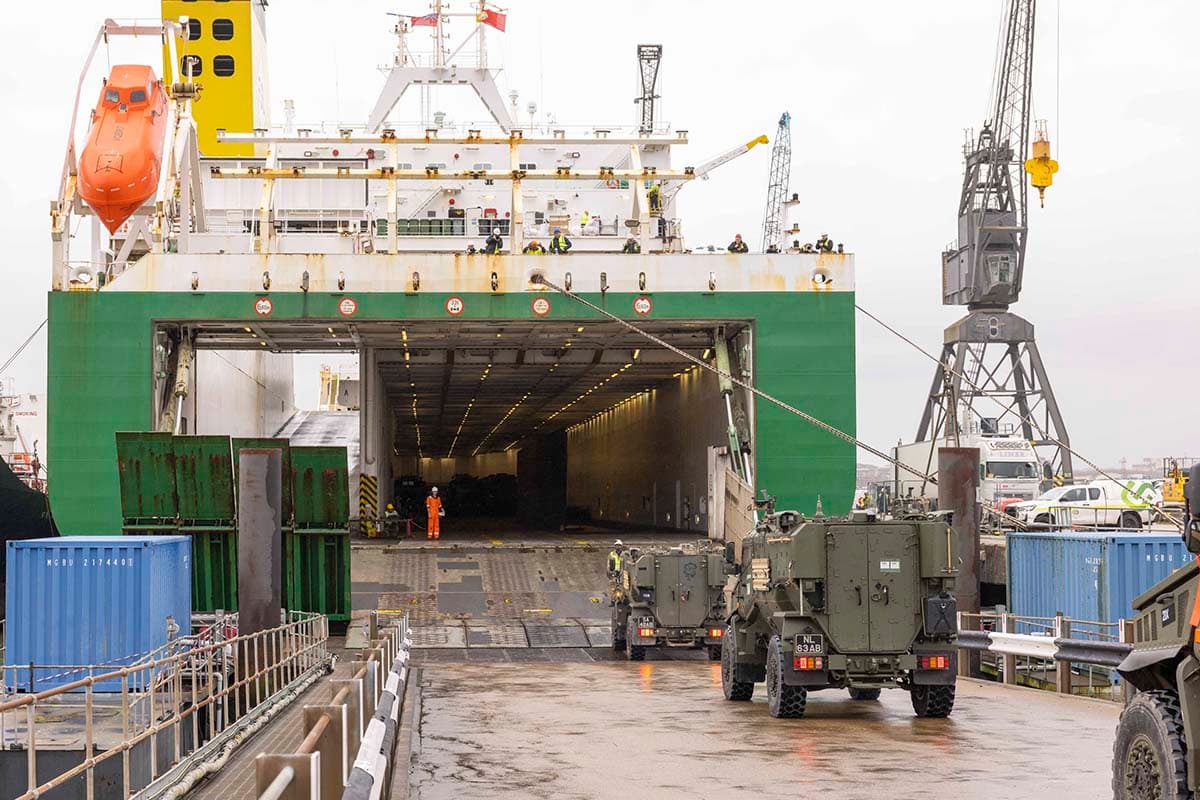
NATO Supply Lines at Risk of Collapse, Think Tank Warns
Key Takeaways
- •NATO logistics face geographic chokepoints in the Wider North
- •Thin lift margins limit rapid reinforcement under fire
- •Infrastructure lacks dedicated defenses against sabotage
- •Commercial capacity integration needed to sustain high shell consumption
- •Mobile air defense and counter‑UAS units recommended for protection
Pulse Analysis
Europe’s logistics backbone, once taken for granted, now sits on a fault line. Decades of post‑Cold‑War underinvestment combined with just‑in‑time commercial practices have left NATO’s northern supply routes vulnerable to missile, drone and sabotage attacks. The Council on Geostrategy’s new primer underscores that the “permissive environment” that underpinned NATO’s logistics in the 1990s no longer exists, forcing planners to reckon with contested sustainment in real time.
The report outlines four structural weaknesses: choke points such as the Baltic Sea lanes, thin lift margins that cannot absorb sudden surges, a scarcity of militarily robust infrastructure, and virtually no dedicated defence for convoys. By revisiting 1980s British Army estimates—35,000 155 mm shells per division per day—the authors show that a modern NATO corps could burn through tens of thousands of rounds daily, dwarfing Ukraine’s current 5,000‑shell rate. Reinforcement is further hampered by the absence of forward‑deployed forces in Norway, Sweden and Finland, meaning that moving corps‑level assets under fire would be a logistical nightmare.
To avert a supply‑line collapse, the authors recommend hardening key nodes, embedding contested‑logistics assumptions into exercises, and leveraging commercial transport capacity for rapid surge. Crucially, they advocate mobile air‑defence and counter‑UAS teams to shield convoys from emerging threats. Implementing these measures would not only safeguard NATO’s operational tempo but also send a clear signal to adversaries that Europe’s supply chains are resilient, preserving the alliance’s credibility in upholding Article 5 commitments.
NATO supply lines at risk of collapse, think tank warns
Comments
Want to join the conversation?