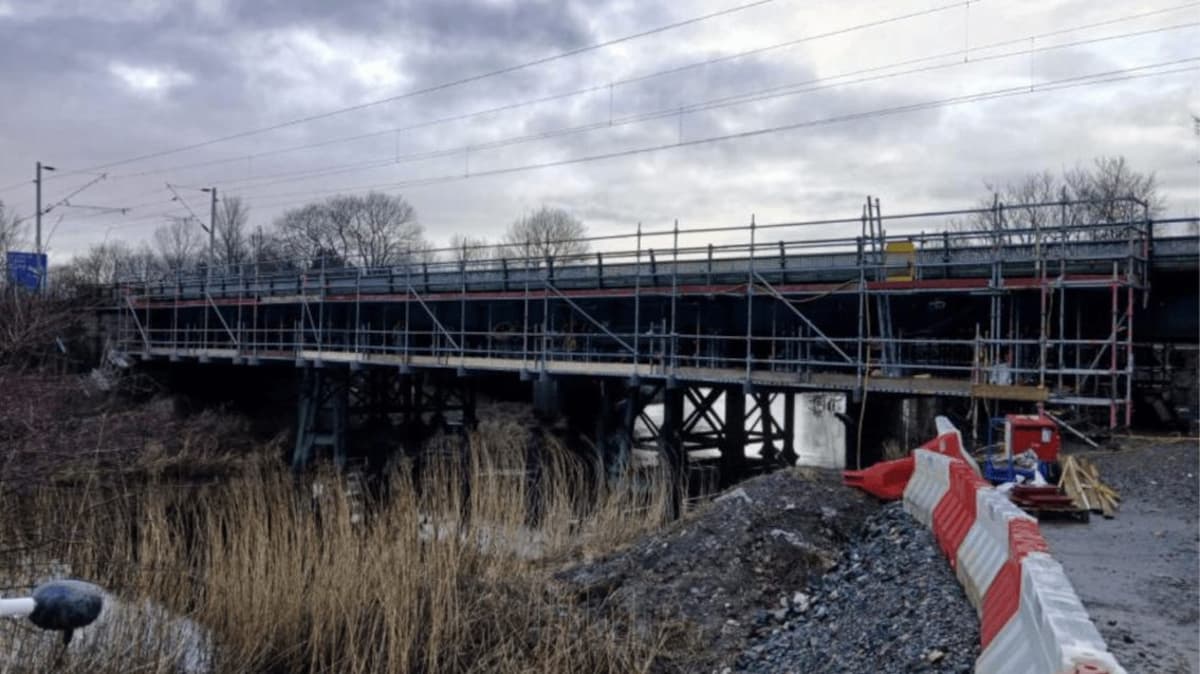
Network Rail Completes £4m Infrastructure Upgrades on Inverclyde Line
•February 19, 2026
0
Why It Matters
Strengthening critical assets reduces disruption risk, safeguarding commuter confidence and supporting regional economic activity. The upgrades also align with the UK’s broader push for a more resilient rail network amid climate challenges.
Key Takeaways
- •£4 million spent on Inverclyde line upgrades.
- •Bridges and retaining walls reinforced for durability.
- •Work completed in eight‑day, two‑weekend programme.
- •Enhances long‑term operational resilience for passengers.
- •Minimal service disruption thanks to weekend scheduling.
Pulse Analysis
Network Rail’s recent £4 million investment on the Inverclyde line underscores a growing focus on infrastructure resilience across the UK rail system. Aging bridges and supporting structures have long been a bottleneck for reliability, especially in Scotland where harsh weather accelerates wear. By targeting high‑impact assets—such as the River Gryffe bridge and key retaining walls—Network Rail not only extends asset life but also mitigates the risk of service‑affecting failures, a priority for regulators and passengers alike.
The eight‑day, two‑weekend engineering programme was meticulously planned to minimise passenger inconvenience. Teams employed prefabricated concrete elements and advanced steel repair techniques, allowing rapid installation during off‑peak periods. Coordination with ScotRail ensured that timetable adjustments were communicated clearly, preserving commuter trust. The use of modern, durable materials signals a shift from patch‑work to long‑term solutions, delivering measurable improvements in track stability and platform safety that will translate into fewer delays and cancellations.
Beyond the immediate benefits, this project fits into the UK’s broader rail modernization agenda, which emphasizes climate‑adapted infrastructure and capacity growth. Strengthened bridges are better equipped to handle increased freight traffic and future electrification projects, supporting economic development in western Scotland. For investors and industry stakeholders, such upgrades demonstrate a commitment to asset stewardship, potentially lowering operating costs and enhancing the network’s attractiveness for both passengers and freight operators. The Inverclyde line’s enhanced resilience thus serves as a model for similar regional upgrades nationwide.
Network rail completes £4m infrastructure upgrades on inverclyde line
0
Comments
Want to join the conversation?
Loading comments...