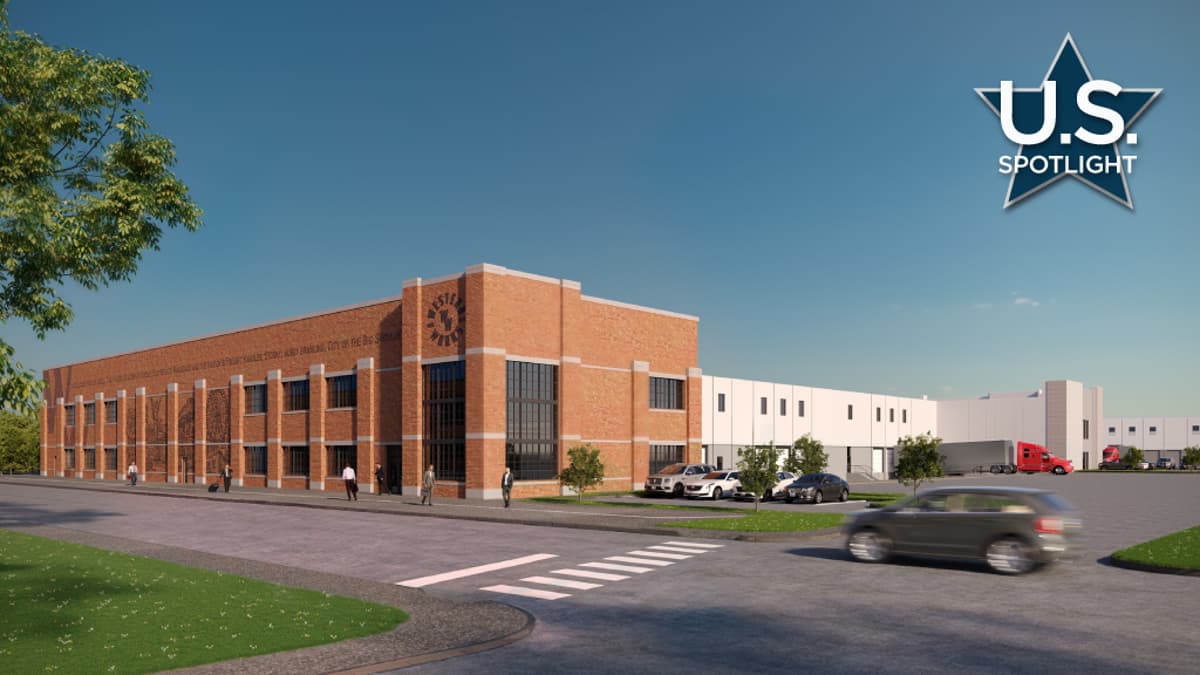
New Chicago Logistics Hub Nods to City’s Industrial Past
Why It Matters
The hub adds high‑quality warehouse capacity to a tight Chicago market while preserving the area’s industrial heritage, boosting local employment and supporting modern supply‑chain needs.
Key Takeaways
- •Brookfield invests $104 million in 33‑acre Western Works hub.
- •Project will deliver nearly 570,000 sq ft of spec warehouse space.
- •Site retains historic design elements honoring Chicago’s industrial past.
- •Warehouse vacancy in Chicago’s submarket ranges from 3‑6 percent.
- •Lease‑back with Wheatland Tube speeds planning without timeline delays.
Pulse Analysis
Brookfield Properties is breaking ground on Western Works, a $104 million, 33‑acre logistics and manufacturing campus in Chicago’s historic “Back of the Yards” district. The site, once the nation’s first purpose‑built industrial park, will feature four speculative buildings totaling almost 570,000 sq ft, with façades that echo the city’s brick‑laden past—gridded windows, Chicago Common Brick, and a Sandburg verse engraving. By preserving the visual language of the former Central Manufacturing District, Brookfield signals a commitment to the neighborhood’s identity while delivering state‑of‑the‑art warehouse space for modern supply‑chain operators.
Chicago’s warehouse market remains tight, with vacancy hovering between three and six percent, underscoring robust demand for high‑quality industrial real estate. The Western Works location benefits from existing industrial zoning and its designation as a Planned Manufacturing District, which safeguards the land from residential conversion and streamlines entitlement processes. Brookfield’s lease‑back arrangement with former owner Wheatland Tube allowed developers to advance planning without interrupting the tenant’s operations, a tactic increasingly common in speculative builds where tenants lack the bandwidth for protracted redevelopment negotiations.
Beyond square footage, the project is poised to generate significant economic ripple effects. New logistics capacity supports e‑commerce fulfillment, last‑mile distribution, and light manufacturing, sectors that have accelerated in the Midwest post‑pandemic. The infusion of construction jobs and subsequent operational roles aligns with Chicago’s broader strategy to revitalize its industrial corridors while maintaining community character. As other cities grapple with zoning battles and heritage preservation, Western Works offers a template for balancing growth, heritage, and neighborhood stewardship, reinforcing the Windy City’s reputation as a logistics hub for the nation’s supply chain.
New Chicago logistics hub nods to city’s industrial past
Comments
Want to join the conversation?
Loading comments...