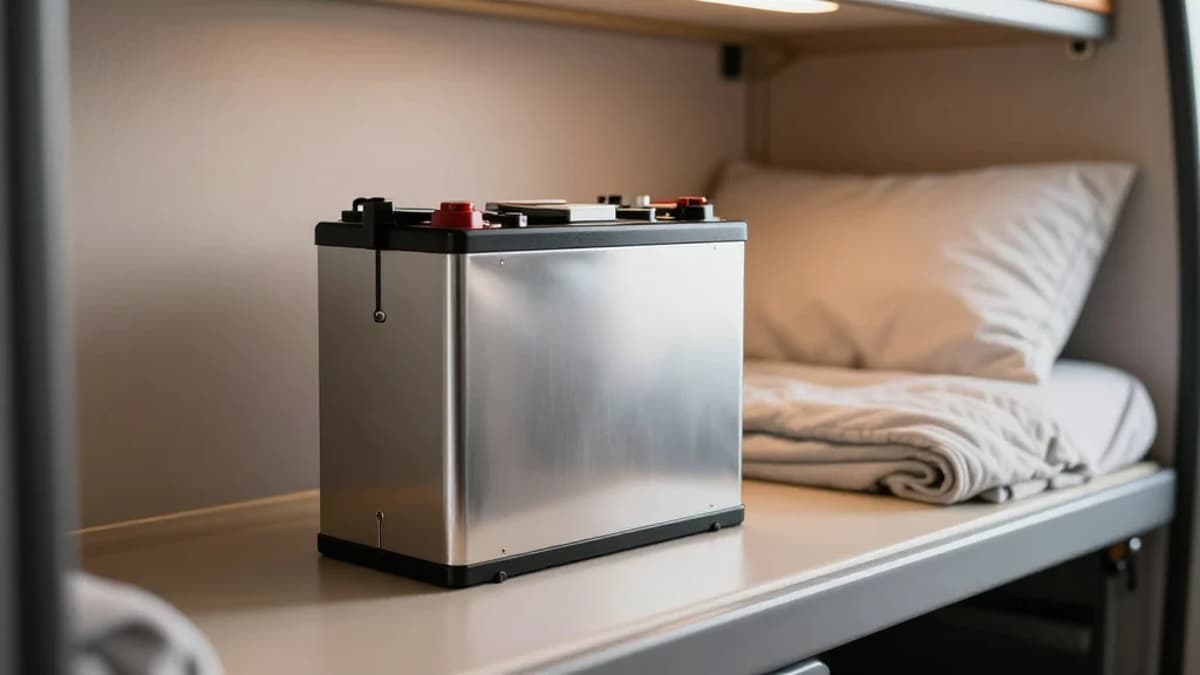
Next Step in a Peaceful 10-Hour Truck Driver Rest Period: Lithium Batteries
•March 4, 2026
0
Why It Matters
Eliminating diesel‑powered APUs cuts fuel consumption and emissions while improving driver comfort, directly impacting fleet operating costs and regulatory compliance. The technology signals a broader shift toward electrified auxiliary systems in long‑haul trucking.
Key Takeaways
- •Lithium‑iron‑phosphate APU eliminates diesel idling
- •Covers full 10‑hour rest using alternator charge
- •Reduces fuel use by up to 1.2 gallons/hour
- •10‑year warranty improves resale and ROI
- •Price ranges $4k‑$10k, runtime varies
Pulse Analysis
The trucking industry is confronting mounting pressure to reduce emissions and improve driver welfare, especially during the federally mandated 10‑hour rest period. While electric powertrains for propulsion dominate headlines, auxiliary power needs remain a hidden source of diesel consumption. Battery‑powered APUs, like Dragonfly’s lithium‑iron‑phosphate solution, address this gap by storing energy generated by the vehicle’s alternator, allowing sleepers to stay comfortable without running a diesel engine or a noisy two‑cylinder unit.
Dragonfly’s offering leverages the high energy density and lighter weight of LiFePO4 chemistry, delivering up to a full rest cycle of heating, cooling and electrical power. Fleet operators can quantify savings: each hour of idling avoided equates to roughly 25 miles of fuel‑burn, translating into measurable ROI when combined with a decade‑long warranty and the ability to transfer the unit between trucks. Pricing tiers from $4,000 to $10,000 reflect runtime differences, making the technology accessible to both retrofit projects and new‑build OEM integrations. Early adopters such as Stevens Transport illustrate that large carriers are willing to invest when total cost of ownership drops despite higher upfront spend.
Looking ahead, broader adoption hinges on overcoming cost inertia and addressing safety perceptions around lithium fire risk. Advances in cell packaging—stainless‑steel enclosures with burst caps—mitigate fire hazards, but industry standards will be essential for confidence. As federal agencies tighten idling regulations and fuel prices remain volatile, battery‑driven APUs could become a standard component of the long‑haul truck, driving down emissions, extending engine life, and enhancing driver sleep quality. The shift mirrors a larger electrification trend that may soon extend beyond propulsion to every auxiliary system on the road.
Next step in a peaceful 10-hour truck driver rest period: lithium batteries
0
Comments
Want to join the conversation?
Loading comments...