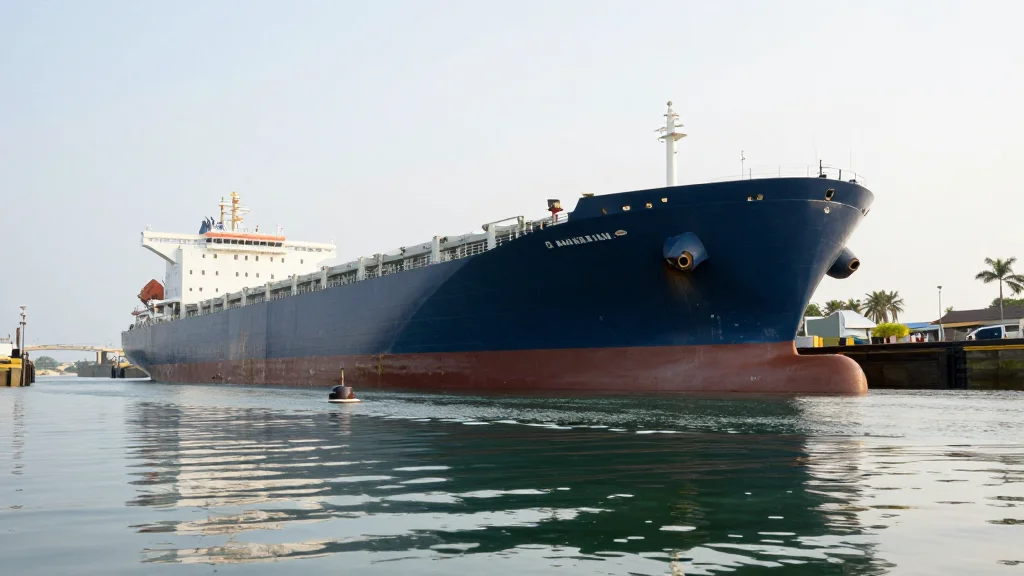
NOAA Warns Potentially Historic El Niño Could Renew Pressure on Panama Canal
Why It Matters
A severe El Niño could curtail canal capacity, raising freight costs and reshaping trade routes for carriers that rely on the waterway’s shortcut between the Atlantic and Pacific.
Key Takeaways
- •NOAA predicts 63% chance of a very strong El Niño by winter 2026‑27.
- •Panama Canal Authority lowered Neo‑Panamax draft limit to 49.5 ft as precaution.
- •Traffic up 8% in 2026 as oil tankers avoid Strait of Hormuz.
- •Indio Rio $1.6 bn reservoir due 2031, unavailable for upcoming drought.
Pulse Analysis
The Pacific Ocean’s El Niño cycle is entering a phase that NOAA rates as potentially "very strong," a classification achieved by only a handful of events since 1950. Warmer sea‑surface temperatures shift atmospheric patterns, suppressing rainfall over Central America and draining the Gatún Lake that feeds the Panama Canal. Historical data shows that when lake levels dip below 80 feet, the canal must impose draft restrictions or even limit daily transits, directly affecting global supply chains that depend on the shortcut between the Atlantic and Pacific.
Faced with this looming threat, the Panama Canal Authority pre‑emptively reduced the maximum draft for Neo‑Panamax vessels to 49.5 feet, shaving half a foot off the previous limit. This modest adjustment protects water reserves but also trims cargo capacity for ships that can carry up to 14,000 TEUs. The move comes as 2026 sees an 8% surge in canal traffic, largely from oil tankers and LNG carriers rerouting around a congested Strait of Hormuz. While the canal still averages 38‑41 transits per day, any further water shortfall could force operators to cut slots, driving up freight rates and prompting shippers to consider alternative routes such as the Suez Canal or over‑land rail corridors.
Long‑term resilience hinges on infrastructure projects like the $1.6 billion Indio Rio reservoir, slated for completion in 2031. Until then, the canal remains vulnerable to climate‑driven water scarcity, a risk that investors and logistics planners must factor into route optimization and cost modeling. The convergence of a strong El Niño, rising traffic volumes, and delayed water‑storage capacity underscores a strategic inflection point for maritime trade, where operational flexibility and climate risk mitigation will become decisive competitive advantages.
NOAA Warns Potentially Historic El Niño Could Renew Pressure on Panama Canal
Comments
Want to join the conversation?
Loading comments...