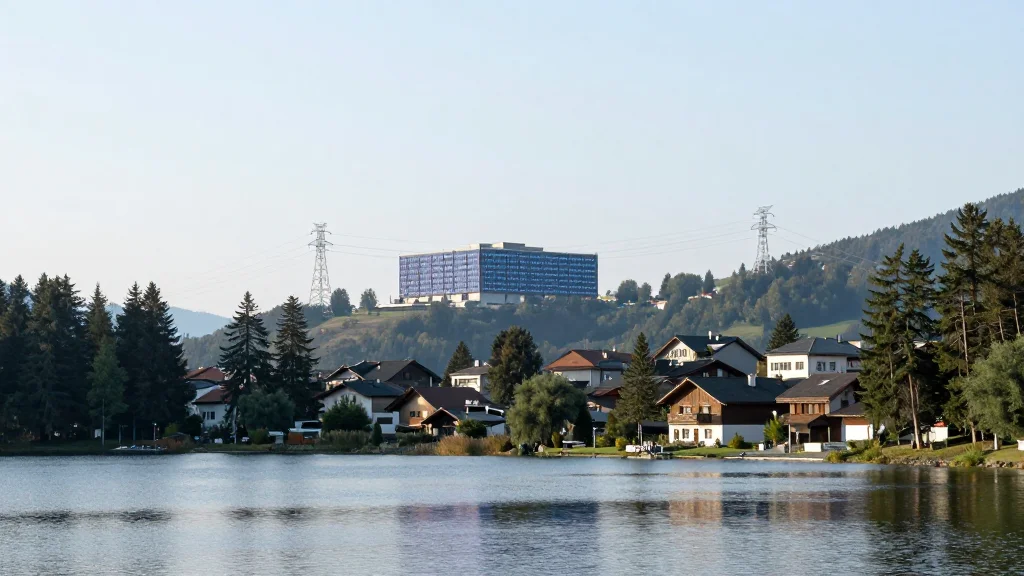
NV Energy to Cut Power to 49,000 Lake Tahoe Residents for Data Center Demand

Companies Mentioned
Why It Matters
The NV Energy curtailment underscores how the digital‑infrastructure boom is reshaping traditional energy supply chains. As hyperscale data centers consume a growing slice of regional power, utilities must reconcile high‑margin, low‑elasticity industrial loads with the reliability expectations of residential customers. The outcome will influence future transmission planning, renewable integration, and the regulatory architecture governing cross‑state electricity markets. If the power shift proceeds without a clear mitigation strategy, Lake Tahoe’s tourism‑driven economy could suffer, prompting broader debates about who gets priority in an increasingly congested grid. Conversely, a coordinated response—such as accelerated transmission projects or localized renewable generation—could set a template for other regions where AI‑driven compute demand collides with local community needs.
Key Takeaways
- •NV Energy will reduce electricity to ~49,000 Lake Tahoe residents by up to 75% after May 2027.
- •Data‑center demand in northern Nevada could add 5,900 MW by 2033, potentially raising the sector’s share of state electricity to 35% by 2030.
- •Liberty Utilities’ wholesale contract with NV Energy expires in 2027; extensions have been granted in 2015, 2020 and late 2025.
- •Regulatory oversight is split: CPUC sets Liberty rates, FERC governs interstate wholesale, and Nevada’s balancing authority controls transmission.
- •Community leaders, including Danielle Hughes of Tahoe Spark, warn the curtailment threatens 49,000 customers with no leverage in the decision‑making process.
Pulse Analysis
The NV Energy decision is a microcosm of a larger supply‑chain shift where digital infrastructure becomes a first‑order consumer of electricity. Historically, utilities have prioritized residential reliability because of regulatory mandates and political pressure. However, data centers offer utilities a stable, high‑value load that can be contracted for decades, often with favorable rates and minimal demand‑response volatility. This creates a financial incentive to reallocate capacity, especially in regions like northern Nevada where transmission constraints are already tight.
From a market perspective, the clash could accelerate the development of dedicated transmission corridors and spur investment in renewable generation earmarked for data‑center use. Companies such as Google and Microsoft have announced plans to pair new compute facilities with on‑site solar and battery storage, a trend that may alleviate pressure on the public grid if adopted widely. Yet, without coordinated policy, the burden of transition will fall on smaller utilities and the communities they serve, as seen in Lake Tahoe.
Looking ahead, regulators may need to rethink the traditional hierarchy of load prioritization. Introducing a transparent, market‑based mechanism that values reliability for residential customers alongside the economic benefits of data‑center contracts could mitigate conflict. Failure to do so risks not only local backlash but also a precedent where high‑tech demand trumps basic services, reshaping the energy supply chain in ways that could reverberate across the nation.
NV Energy to Cut Power to 49,000 Lake Tahoe Residents for Data Center Demand
Comments
Want to join the conversation?
Loading comments...