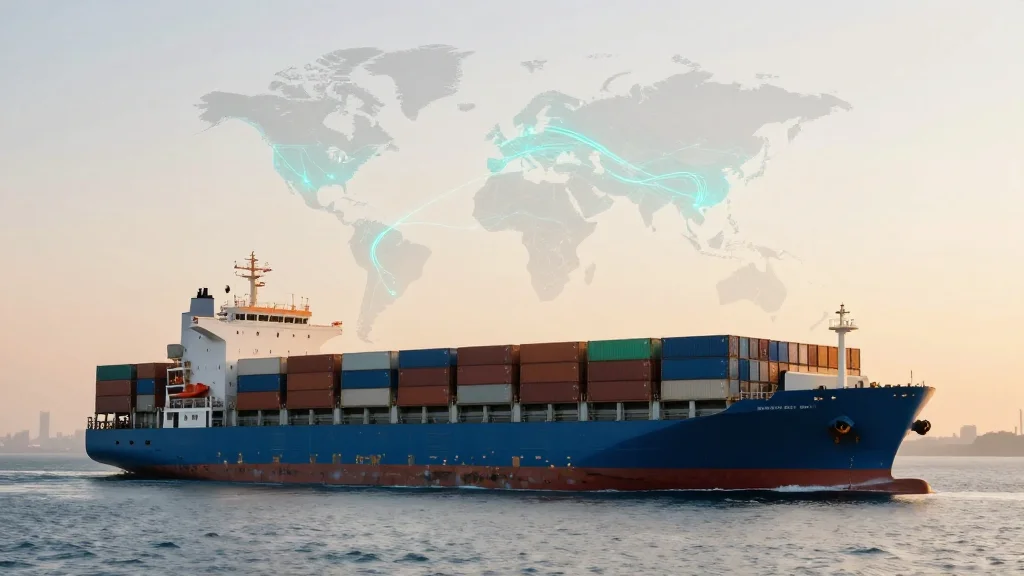
Ocean Freight Contracts: How Data Steers One Shipper’s Approach
Companies Mentioned

Why It Matters
Data‑driven freight contracting reduces exposure to supply‑chain shocks while improving cost transparency, a critical advantage as geopolitical events and pandemic fallout keep freight markets unstable. Companies that embed performance analytics into contracts gain negotiating leverage and more resilient logistics networks.
Key Takeaways
- •Emser Tile uses multi‑dimensional data to optimize ocean freight contracts
- •Bluspark provides analytics linking rates, performance, and carrier selection
- •Data insights enable sourcing shifts, e.g., Vietnam to Turkey, based on cost
- •Transparent metrics improve carrier relationships and reduce supply‑chain disruptions
- •Pandemic, Red Sea, Hormuz closures drove freight rate volatility and congestion
Pulse Analysis
The ocean‑freight market has entered a period of sustained turbulence, driven by pandemic‑induced demand swings, the Red Sea crisis, and the recent closure of the Strait of Hormuz. These events have pushed freight rates upward, congested ports, and injected uncertainty into transit times. In response, shippers are seeking tools that move beyond simple price negotiations, turning instead to granular data that can forecast performance and pinpoint cost drivers across the supply chain.
Emser Tile’s partnership with Bluspark illustrates how a data‑centric strategy can translate into tangible operational gains. By aggregating vessel‑string information, terminal throughput, and carrier on‑time metrics, the tile manufacturer builds a multi‑dimensional view of each shipment. This visibility enables the company to evaluate landed‑cost differentials when considering sourcing relocations—such as shifting from Vietnam to Turkey—where even modest cost variations compound over high‑volume inventory. Moreover, the insight empowers Emser Tile to negotiate service levels with carriers, aligning speed and reliability with its inventory‑intensive model.
The broader implication for the logistics industry is a shift toward collaborative, performance‑based contracts. As shippers demand measurable outcomes, carriers are compelled to share real‑time data and align incentives with their customers’ supply‑chain goals. This symbiotic relationship reduces the friction traditionally associated with freight negotiations and creates a more predictable, cost‑effective shipping environment. Companies that adopt such analytics‑driven frameworks are likely to secure better rates, improve service reliability, and build resilient supply chains capable of weathering future disruptions.
Ocean freight contracts: How data steers one shipper’s approach
Comments
Want to join the conversation?
Loading comments...