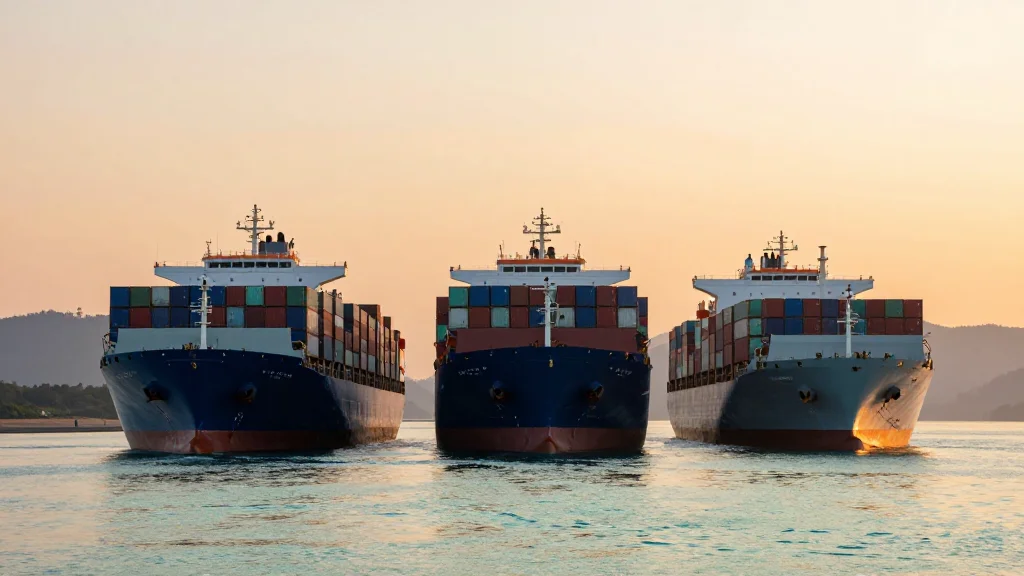
Ocean Shipping Held Hostage: How One Region, One Conflict Can Impact a Global Industry
Companies Mentioned
Why It Matters
The disruption reshapes global freight costs and routing, forcing shippers to absorb higher fuel surcharges while carriers grapple with a looming capacity glut. Understanding these dynamics is critical for supply‑chain risk management and pricing strategy in 2026‑27.
Key Takeaways
- •Gemini network adds Antwerp, Algeciras, Istanbul shuttle links in 2026.
- •Iran‑U.S. conflict blocks Strait of Hormuz, stranding up to 2,500 vessels.
- •Marine fuel prices up 70%, pushing spot rates 30% higher worldwide.
- •Overcapacity peaks 2027 as 14,000‑TEU ships join fleet, pressuring rates.
- •Digital upgrades like Maersk’s OneWireless and API shift reshape freight services.
Pulse Analysis
The February 2026 surprise attack on Iran has turned the Strait of Hormuz into a near‑impassable chokepoint, stranding an estimated 2,000‑2,500 vessels and roughly 20,000 seafarers. With 20% of global oil flow typically routed through the strait, the blockage has sent marine bunker prices soaring—up more than 70% since the start of the year—prompting carriers to apply emergency fuel surcharges. The immediate effect is a sharp rise in container spot rates, with Xeneta reporting over 30% increases on major east‑west routes and Far‑East‑to‑Mediterranean lanes climbing to $4,200 per FEU. These cost spikes are reverberating through supply chains far beyond the Middle East, as congestion at transshipment hubs like Singapore and Colombo forces carriers to reroute cargo via the Cape of Good Hope, extending transit times and further inflating freight charges.
Against this backdrop, carriers are leveraging network enhancements introduced by the Gemini alliance and other strategic moves to mitigate disruption. Hapag‑Lloyd’s 2026 schedule adds direct calls to Antwerp, Algeciras and Istanbul, while shifting select services back through the Suez Canal where security permits. However, the industry faces a structural overcapacity challenge: Sea‑Intelligence projects a 17% order‑book‑to‑fleet ratio peaking in 2027 as a new generation of 14,000‑TEU vessels joins the market. This surplus traditionally pressures rates downward, but the current fuel‑driven inflation temporarily offsets the deflationary trend, creating a volatile pricing environment that shippers must navigate.
Long‑term resilience will depend on digital transformation and infrastructure investment. Maersk’s OneWireless platform, slated for early‑2026 rollout, promises real‑time container visibility and 4G connectivity, while carriers like Hapag‑Lloyd and CMA CGM adopt API‑based freight ecosystems that enable dynamic pricing tied to market indices. Parallelly, DP World’s automation projects and CMA CGM’s AI partnership, backed by a €100 million (~$108 million) investment, aim to streamline terminal operations and enhance predictive logistics. For shippers, these advances offer the prospect of more transparent surcharge structures and flexible routing options, essential tools for managing cost volatility amid geopolitical uncertainty.
Ocean Shipping Held Hostage: How one region, one conflict can impact a global industry
Comments
Want to join the conversation?
Loading comments...