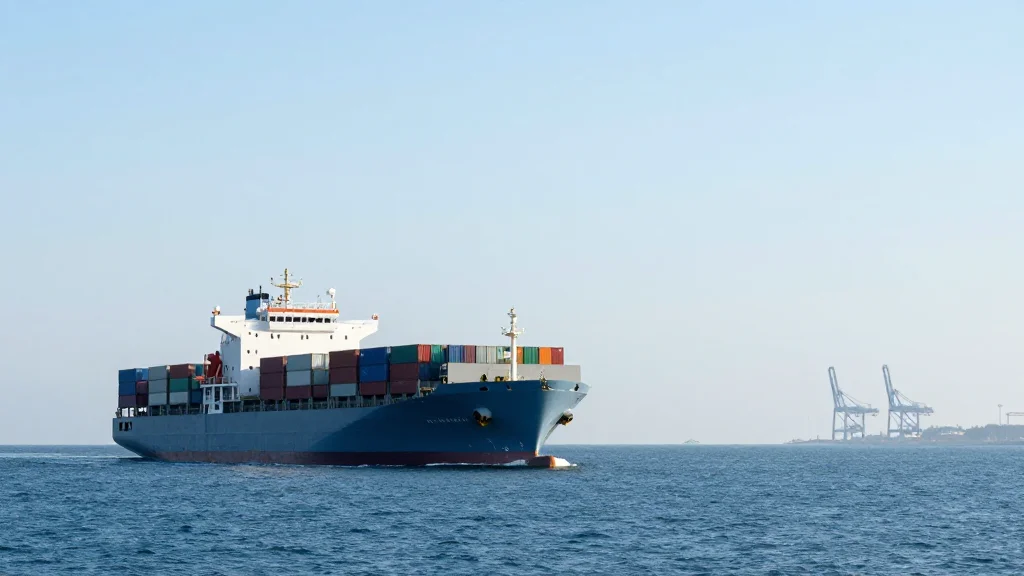
OOCL Posts Revenue Decline in Muted First Quarter
Why It Matters
The revenue dip signals persistent weakness in container shipping demand, pressuring margins for major carriers and potentially reshaping capacity deployment strategies.
Key Takeaways
- •OOCL Q1 revenue fell 7.6% YoY to $2.13 billion.
- •Total TEU volume rose 1.7% to just under 2 million.
- •Load factor dropped 2.1% despite 4.3% capacity increase.
- •Trans‑Pacific revenue plunged 17% to $744 million.
Pulse Analysis
The first‑quarter results from OOCL underscore how the broader slowdown in global trade is reverberating through the container shipping sector. After a pandemic‑driven surge, import‑export volumes have plateaued, and freight rates have softened as shippers negotiate tighter contracts. OOCL’s parent, Cosco Shipping, has been expanding its fleet, but the excess capacity is now outpacing demand, eroding yields. Analysts attribute the 7.6% revenue contraction to a combination of lower spot rates, delayed cargo movements in Asia, and lingering supply‑chain bottlenecks that have yet to fully resolve.
Despite a modest 1.7% rise in TEU volumes, OOCL’s load factor fell by 2.1%, highlighting the mismatch between capacity and utilization. The carrier added 4.3% more slots across its network, yet the trans‑Pacific lane—its most profitable segment—saw revenue tumble 17% to $744 million, reflecting weakened Asia‑North America trade. Asia‑Europe earnings slipped 4.5% and trans‑Atlantic fell 4.3%, indicating that the slowdown is not confined to a single corridor. These dynamics pressure operating margins and force carriers to consider vessel redeployments or slower new‑build deliveries.
Looking ahead, the industry is likely to see continued rate compression until demand rebounds or capacity is trimmed. Shipping lines may accelerate alliance collaborations, offer more flexible pricing, or delay fleet expansion to preserve cash flow. For investors, OOCL’s performance serves as a bellwether for the larger Cosco portfolio and for carriers that rely heavily on high‑margin Pacific routes. Monitoring freight indices, order books, and macro‑economic indicators such as Chinese manufacturing output will be crucial for gauging when the market can transition from a muted quarter to sustainable growth.
OOCL posts revenue decline in muted first quarter
Comments
Want to join the conversation?
Loading comments...