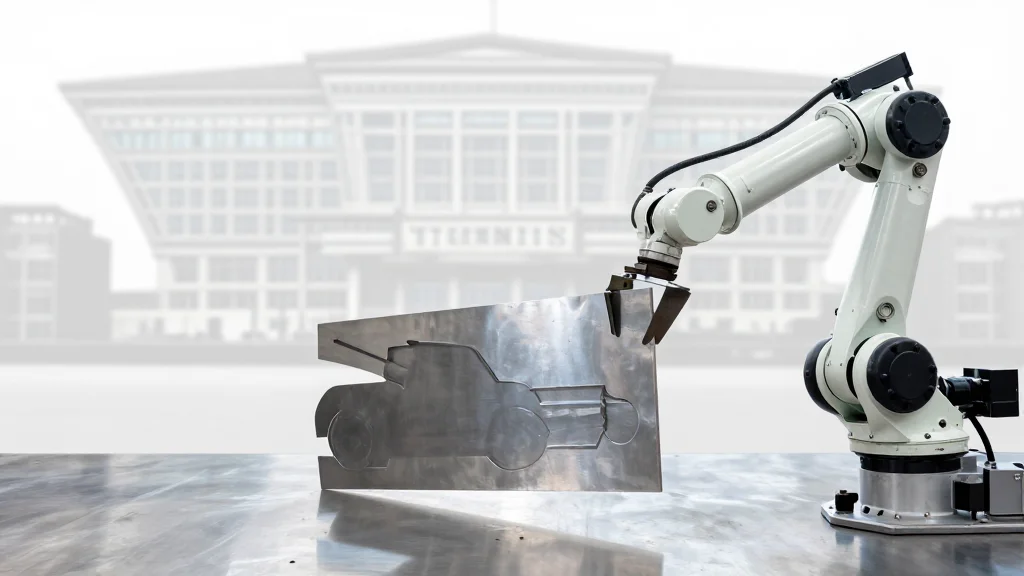
Pentagon Taps GM and Ford to Augment U.S. Munitions Output Amid Ukraine and Iran Wars

Companies Mentioned

Why It Matters
The Pentagon’s outreach to GM and Ford signals a shift toward a more industrialized, domestic defense supply chain, reducing reliance on overseas suppliers and vulnerable overseas production lines. By leveraging the automotive sector’s scale and advanced manufacturing capabilities, the United States can accelerate the replenishment of depleted munitions stockpiles, a critical need as the Ukraine and Iran conflicts extend. Moreover, the move could revitalize U.S. manufacturing jobs and infrastructure, providing a dual benefit of national security and economic stimulus. If successful, this model could set a precedent for future mobilizations, allowing rapid conversion of civilian factories in response to emerging threats. It also raises policy questions about the use of the Defense Production Act, the balance between commercial and defense priorities, and the role of labor unions in wartime production. The outcome will shape how the U.S. prepares for prolonged multi‑theater engagements in the coming decade.
Key Takeaways
- •Pentagon holds preliminary talks with GM CEO Mary Barra and Ford CEO Jim Farley to shift auto capacity to weapons components.
- •Discussions include GE Aerospace and Oshkosh Defense, expanding the industrial coalition beyond automotive firms.
- •U.S. defense budget request tops $1.5 trillion, with $200 billion earmarked for munitions replenishment.
- •GM Defense previously won a $214.3 million Infantry Squad Vehicle contract; Ford contributed ventilators during COVID‑19.
- •Defense Secretary Pete Hegseth warned that “It takes money to kill bad guys,” highlighting funding urgency.
Pulse Analysis
The Pentagon’s courting of GM and Ford reflects a pragmatic response to a supply‑chain crunch that traditional defense contractors cannot resolve alone. Historically, large‑scale industrial mobilizations have hinged on a few dominant firms; today, the defense ecosystem is fragmented, with many niche suppliers and long lead times for high‑tech components. By pulling in the automotive sector—renowned for its high‑volume, low‑cost metalworking and advanced composites—the DoD hopes to create a parallel production line that can absorb spikes in demand without overtaxing existing defense plants.
However, the initiative faces structural hurdles. Defense contracts are bound by strict compliance, security clearances and certification processes that auto manufacturers are not accustomed to navigating. The Defense Production Act could streamline procurement, but invoking it without clear legislative backing may provoke political backlash, especially from labor unions wary of wartime shifts that could jeopardize civilian jobs. Moreover, the timeline for retooling—often measured in months rather than weeks—means the strategy is a medium‑term fix rather than an immediate surge capacity.
Strategically, the move could reshape the U.S. industrial base, encouraging a hybrid model where civilian manufacturers maintain a “dual‑use” capability. This would not only buffer the military against future stockpile erosion but also embed defense considerations into broader economic planning. If the Pentagon can negotiate flexible, outcome‑based contracts that respect the commercial realities of GM and Ford, the United States may secure a more resilient, domestically anchored supply chain—an advantage that could prove decisive in any protracted multi‑theater conflict.
Pentagon taps GM and Ford to augment U.S. munitions output amid Ukraine and Iran wars
Comments
Want to join the conversation?
Loading comments...