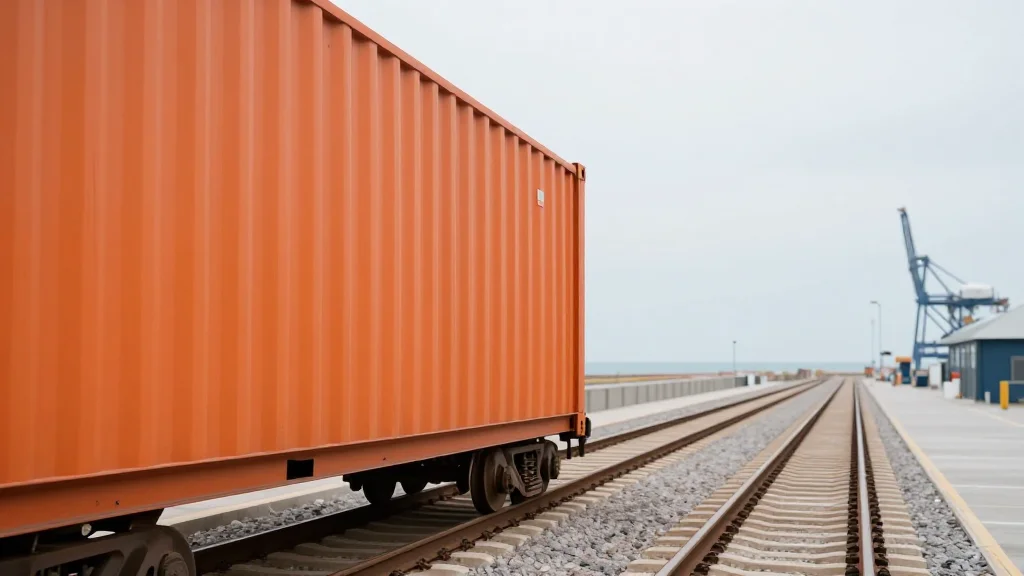
Port of Coos Bay Awarded $11MM to Advance PCIP Project
Why It Matters
The investment positions rural Oregon as a strategic logistics hub, diversifying West Coast supply chains and enhancing resilience amid shifting global trade patterns.
Key Takeaways
- •$11 M federal award accelerates rail upgrades for PCIP terminal.
- •Project adds a ship‑to‑rail gateway, easing congestion at major ports.
- •Expected to create jobs and improve empty‑container access for local producers.
- •Combines $100 M Oregon commitment with prior INFRA and CRISI grants.
Pulse Analysis
The Pacific Northwest’s major ports—Los Angeles, Long Beach, and Seattle—are operating near capacity, prompting shippers to seek secondary gateways that can relieve bottlenecks. Coos Bay, situated on Oregon’s south coast, offers a natural deep‑water harbor and direct connection to the Coos Bay Rail Line, which runs inland to major freight corridors. By converting the North Spit into a ship‑to‑rail container terminal, the Port Community Intermodal Project (PCIP) creates a viable alternative for importers and exporters, expanding the West Coast’s intermodal network and diversifying routing options.
The recent $11 million federal award, layered on top of a $100 million Oregon pledge and earlier INFRA and CRISI grants, funds critical rail infrastructure upgrades such as track reinforcement, signaling enhancements, and yard expansion. These improvements will accommodate larger train sets and increase dwell‑time efficiency, directly supporting the projected throughput of the PCIP terminal. Local officials estimate the project will generate dozens of construction jobs in the short term and sustain a permanent workforce for terminal operations, while also providing regional farmers and manufacturers easier access to empty containers for export.
Beyond immediate economic benefits, the PCIP signals a shift toward more resilient, distributed logistics hubs across the United States. As global trade patterns evolve—driven by shifting consumer demand and supply‑chain risk mitigation—shippers are valuing flexibility and redundancy. A functional Coos Bay gateway can attract cargo that would otherwise be forced through congested ports, reducing dwell times and emissions. The collaboration between public agencies and private partner NorthPoint Development underscores a growing model of public‑private investment that could be replicated in other underserved coastal regions.
Port of Coos Bay Awarded $11MM to Advance PCIP Project
Comments
Want to join the conversation?
Loading comments...