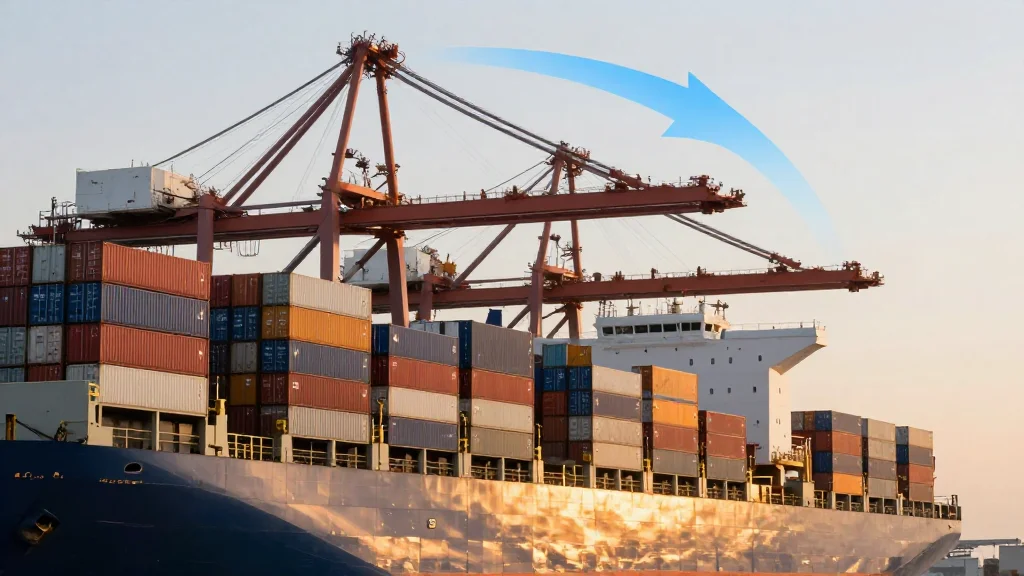
Port of Los Angeles Forecasts 7% Container Volume Decline
Why It Matters
A volume decline at the nation’s busiest gateway pressures U.S. import costs and could shift cargo to competing ports, while the hefty capital plan aims to preserve the Port of Los Angeles’ competitive edge.
Key Takeaways
- •Port budget rises $665M, 31% capital expansion
- •Forecasted TEU volume drops 7% to 9.3M in FY27
- •China’s share of imports falls to 40%, down from 53% last year
- •New Pier 500 proposal targets larger next‑gen ships
- •Operating revenue expected to hit $826M, up 26% year‑over‑year
Pulse Analysis
The Port of Los Angeles, which together with Long Beach forms the nation’s primary container gateway, is confronting a sharp 7% contraction in cargo volumes for fiscal 2026‑27. The decline to 9.3 million TEUs reflects broader geopolitical headwinds, notably the lingering impact of the Trump‑era trade war and shifting Chinese export strategies toward Africa and Europe. As China’s share of inbound shipments slides from 53% to 40%, shippers are increasingly exploring alternative northern routes through Mexico and Canada, reshaping North American supply‑chain dynamics.
In response, the port’s $3.4 billion budget—up $665 million from the previous year—allocates a substantial 31% increase for capital improvements. Key projects include a $74 million rail expansion at berths 302‑305, a $130 million reconfiguration of the SR 47/Vincent Thomas Bridge interchange, and the issuance of a request for proposals for Pier 500, a 200‑acre terminal designed for next‑generation mega‑ships. The plan also bolsters the Clean Truck Fund, upgrades public‑access infrastructure, and deepens sustainability programs, signaling a long‑term commitment to operational resilience despite short‑term volume pressures.
The strategic investments aim to keep the Port of Los Angeles competitive against its regional rival, Long Beach, and to mitigate the risk of cargo diversion. Higher operating revenues—projected at $826 million, a 26% year‑over‑year rise—suggest that fee structures and service diversification are offsetting volume losses. As global trade patterns evolve, the port’s focus on modernizing terminals, expanding rail connectivity, and embracing greener technologies will be critical to maintaining its role as a linchpin of U.S. imports and exports.
Port of Los Angeles forecasts 7% container volume decline
Comments
Want to join the conversation?
Loading comments...