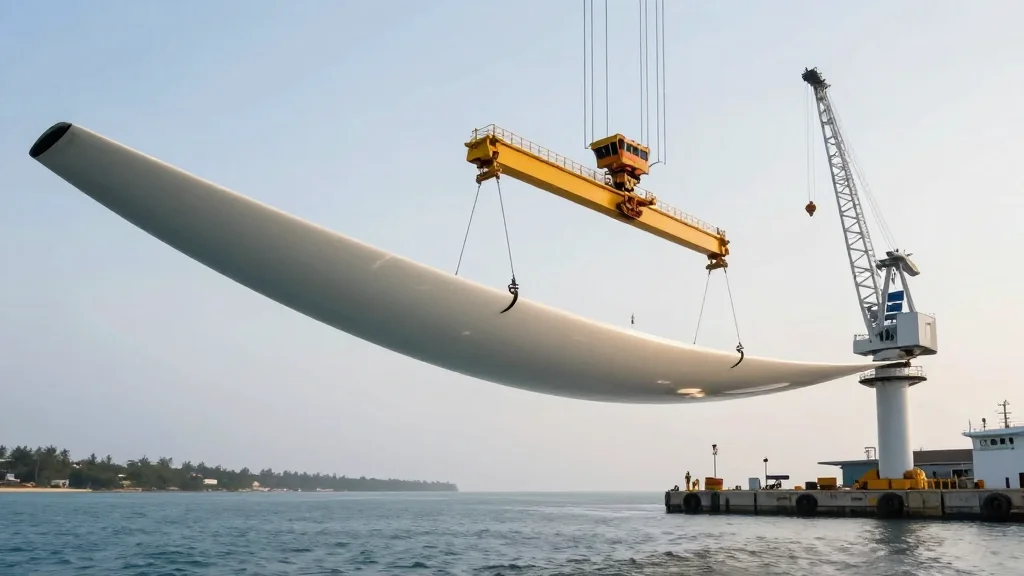
Port Shortfalls Stall Philippines' $11 TWh Offshore Wind Pipeline

Why It Matters
The Philippines' offshore wind ambitions sit at the intersection of climate policy and supply‑chain resilience. Ports are the linchpin that connects turbine manufacturers, installation vessels, and the grid; without them, the entire value chain stalls, inflating project costs and eroding investor confidence. A functional offshore‑wind port network would also diversify the nation's logistics infrastructure, reducing reliance on traditional cargo hubs and creating new export‑ready capabilities for maritime equipment. Beyond energy, the port bottleneck highlights a broader challenge for emerging markets: scaling clean‑energy infrastructure requires parallel development of heavy‑industry logistics. Failure to synchronize these elements could delay regional decarbonization, lock in fossil‑fuel dependence, and limit economic diversification in coastal communities that stand to benefit from new jobs and ancillary services.
Key Takeaways
- •3.5 GW offshore wind pipeline could generate ~11 TWh/yr at full buildout (GWEC 2026 study).
- •No turbine foundations or installations have occurred; ports lack heavy‑lift capacity.
- •Pambuhan Port (Camarines Norte) and Pulupandan (Guimaras) identified as potential hubs.
- •Project timelines assume 2029‑2032 commissioning, but port retrofits could push dates beyond 2035.
- •Local workforce for offshore wind installation remains underdeveloped, increasing reliance on foreign expertise.
Pulse Analysis
The Philippines' offshore wind delay underscores a classic supply‑chain paradox: the technology is ready, but the logistics backbone is not. Historically, successful offshore wind markets—such as the UK and Denmark—invested early in dedicated ports, turning them into industrial clusters that lowered component costs and shortened construction cycles. The Philippines is attempting to replicate that model without the prerequisite capital and policy certainty, a gamble that could cost billions in delayed revenue and higher financing rates.
From a market perspective, the port shortfall creates a window for regional shipbuilders and engineering firms to fill the gap. If the government can marshal public funds or attract sovereign‑wealth investment to upgrade Pambuhan and Pulupandan, it could lock in a supply‑chain advantage that draws international turbine OEMs to set up local assembly lines. Conversely, continued indecision may push developers to relocate projects to neighboring countries with ready‑made logistics hubs, such as Vietnam or Taiwan, eroding the Philippines' competitive edge in the burgeoning Asian offshore wind market.
Looking forward, the success of the offshore wind pipeline will hinge on integrated planning that treats ports, grid interconnections, and workforce development as a single project. A phased financing approach—where port upgrades are funded contingent on meeting permitting milestones—could align incentives and reduce risk. If executed, the Philippines could not only meet its energy‑security goals but also pioneer a supply‑chain model for other emerging economies facing similar infrastructure gaps.
Port Shortfalls Stall Philippines' $11 TWh Offshore Wind Pipeline
Comments
Want to join the conversation?
Loading comments...