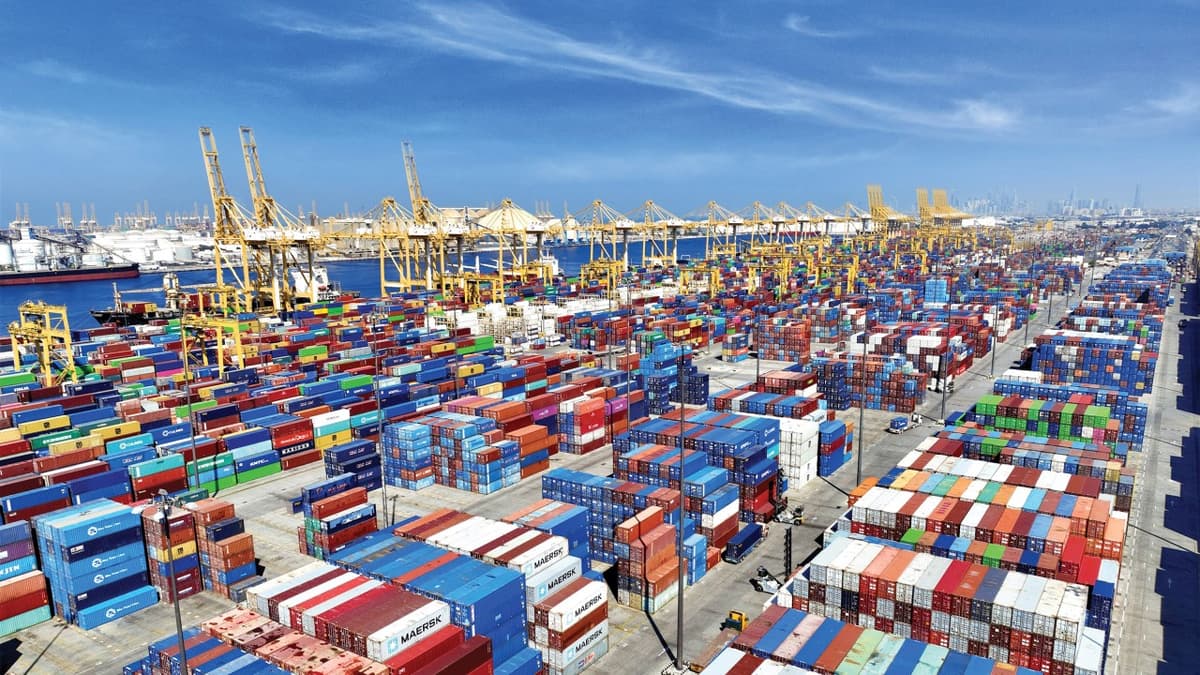
Ports at the Forefront of Economic War in the Gulf
Companies Mentioned
Why It Matters
A prolonged closure would ripple through global energy markets and trigger food‑price inflation across import‑dependent Gulf economies, reshaping trade dynamics and fiscal stability.
Key Takeaways
- •Strait of Hormuz closure threatens $570 bn oil exports
- •Food imports represent 22% of Gulf trade, perishable risk
- •Houthis resume attacks, compounding Red Sea shipping disruptions
- •Strategic grain reserves can buffer short‑term supply shocks
- •Higher inflation likely if maritime blockades extend months
Pulse Analysis
The Strait of Hormuz remains the Gulf’s lifeline for oil, gas and bulk commodities. When the narrow passage is blocked, more than a third of global oil volume—valued at over $570 billion—faces delayed delivery, pressuring benchmark prices and prompting buyers in China, India, Japan and South Korea to seek alternative sources. Energy traders monitor the situation closely, as even brief interruptions can tighten forward curves and trigger speculative flows, reinforcing the Gulf’s strategic importance in the world energy architecture.
Beyond hydrocarbons, the Gulf’s ports import a disproportionate share of food, with staples and live animals comprising roughly 22 % of total imports. Perishable goods such as fruit, vegetables and animal feed are especially vulnerable because they lack the multi‑month storage buffers that grains enjoy. A sustained maritime shutdown would therefore translate quickly into higher consumer prices, eroding purchasing power in a region already grappling with fiscal constraints. The reliance on Red Sea routes for cereals further exposes Gulf markets to global grain volatility, creating a cascade effect where higher feed costs ripple through domestic meat and dairy production.
Policymakers are responding by bolstering strategic reserves and exploring diversification of supply routes. MDS Transmodal’s data suggest that while wheat and rice can be stockpiled for several months, governments must accelerate reserve building for perishable items or develop inland logistics to shorten delivery times. Simultaneously, investments in alternative corridors—such as overland pipelines and air freight for high‑value produce—are gaining traction. These measures aim to mitigate short‑term shocks and preserve economic stability, but the broader lesson underscores the Gulf’s structural dependence on secure maritime channels for both energy and food security.
Ports at the forefront of economic war in the Gulf
Comments
Want to join the conversation?
Loading comments...