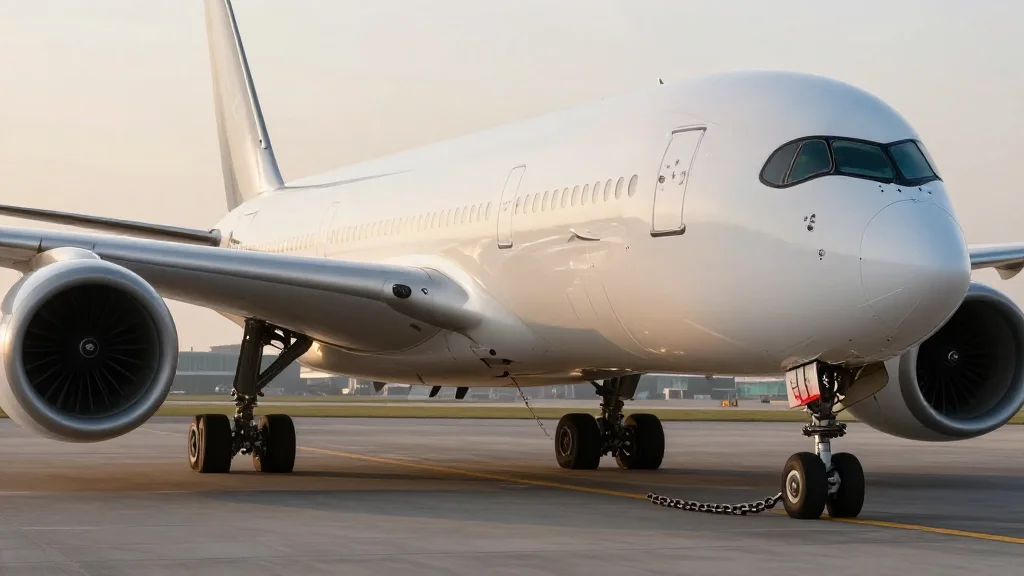
Qantas A350-1000ULR Delivery Slips to April 2027 Amid Airbus Supply‑Chain Woes

Companies Mentioned
Why It Matters
The delay highlights how supply‑chain volatility can directly impact airline network strategies and passenger experience. Project Sunrise is a flagship initiative that positions Qantas as a pioneer in ultra‑long‑haul travel; postponing its launch erodes first‑mover advantage and may shift demand toward competing carriers offering similar non‑stop routes. Beyond Qantas, the episode serves as a cautionary tale for the broader aviation industry, which is still recovering from pandemic‑induced disruptions. Manufacturers and airlines alike must reassess inventory buffers, diversify supplier bases, and incorporate more resilient logistics planning to safeguard future program timelines.
Key Takeaways
- •First Airbus A350‑1000ULR for Qantas now scheduled for delivery in April 2027, four months later than previously announced.
- •Airbus cites “the impact of supply chain issues” affecting the entire A350 production line as the primary cause.
- •Qantas expects the remaining four aircraft to arrive in quick succession, aiming to meet a November 2027 operational target.
- •Project Sunrise aims to cut up to four hours off travel time on non‑stop Sydney‑London and Sydney‑New York routes.
- •The delay underscores broader aerospace supply‑chain fragility and could affect Qantas’s competitive positioning in ultra‑long‑haul markets.
Pulse Analysis
Qantas’s Project Sunrise has always been as much a branding exercise as a commercial one, promising a new era of nonstop connectivity between Australia’s east coast and the world’s major financial hubs. The April 2027 delivery date, while still within the airline’s five‑year strategic horizon, compresses the rollout window and forces Qantas to accelerate certification, crew training, and marketing activities. Historically, airlines that have rushed aircraft entry into service have faced teething problems—ranging from software glitches to cabin‑crew unfamiliarity—that can erode early‑stage customer satisfaction.
From a supply‑chain perspective, the Airbus delay is symptomatic of a post‑pandemic bottleneck that has hit multiple sectors, from semiconductors to specialty alloys. Airbus’s reliance on a tightly integrated European supplier network means that a single disruption—such as a shortage of carbon‑fiber pre‑preg or a delay in engine delivery—can cascade across the entire A350 schedule. Qantas’s decision to keep the remaining four jets on a “quick succession” delivery path suggests that Airbus may be reallocating production slots, potentially at the expense of other customers. This could trigger a competitive scramble for scarce production capacity, especially as airlines worldwide look to modernize fleets with fuel‑efficient, long‑range aircraft.
Looking ahead, the real test will be whether Qantas can translate the delayed hardware into a profitable service model once the planes are in the air. The airline’s $15 billion fleet renewal hinges on premium pricing for ultra‑long‑haul seats, a market segment that remains price‑sensitive despite the novelty factor. If supply‑chain challenges persist, Qantas may need to reconsider its route economics, perhaps by introducing a hybrid model that combines nonstop and one‑stop services to hedge against further delays. In any case, the situation reinforces the strategic importance of supply‑chain resilience as a core component of airline growth strategies.
Qantas A350-1000ULR Delivery Slips to April 2027 Amid Airbus Supply‑Chain Woes
Comments
Want to join the conversation?
Loading comments...