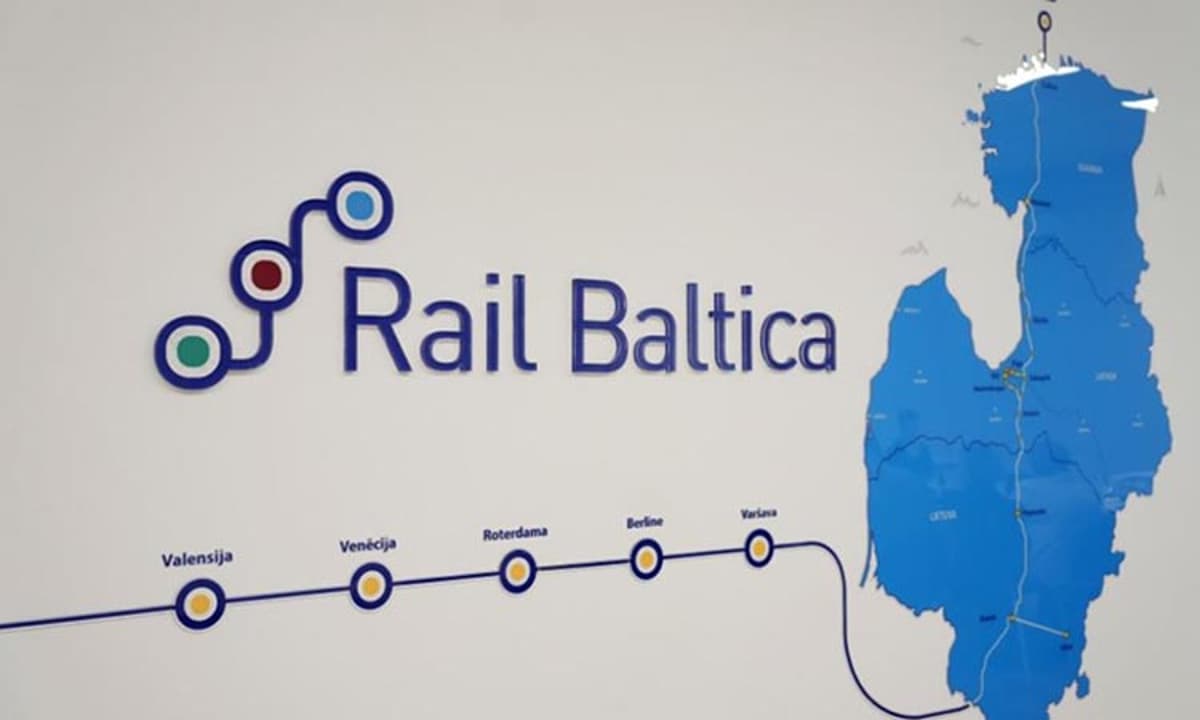
Rail Baltica Launches Market Consultation for Electrification Design Expertise
•February 20, 2026
0
Why It Matters
Securing independent design expertise safeguards the corridor’s technical integrity and accelerates the rollout of a high‑capacity, cross‑border rail link vital for European freight and passenger mobility.
Key Takeaways
- •Market consultation opens for electrification design expertise
- •Procurement targets independent technical review for Latvia, Lithuania
- •Deadline: 27 Feb 2026, Riga time
- •EUR 1.77 bn electrification contract signed 2025
- •Local firms can influence procurement specifications
Pulse Analysis
Rail Baltica, the flagship trans‑Baltic rail corridor linking Estonia, Latvia and Lithuania to the broader European network, entered a critical phase in 2025 with a EUR 1.77 billion contract to design and build its electrification infrastructure. The energy subsystem—comprising traction substations and overhead contact lines—will deliver a stable, high‑capacity power supply essential for both passenger and freight services. By moving from conceptual studies to detailed design, the project positions itself as a cornerstone of the EU’s green transport strategy and a strategic asset for regional resilience.
The newly announced market consultation invites suppliers to review draft procurement documentation and propose refinements to qualification criteria and technical specifications. Targeting independent technical review and validation services, the upcoming competition aims to embed rigorous quality assurance into the detailed design stage across Latvia and Lithuania. The open process, running until 27 February 2026, offers local engineering firms a rare chance to shape procurement terms, ensuring that solutions are both compliant and cost‑effective while fostering transparent competition among European vendors.
Beyond the immediate contract, the initiative signals a broader shift toward integrated, electrified rail corridors across Europe. A reliable, fully electrified Rail Baltica line will reduce reliance on road freight, cut emissions, and enhance supply‑chain efficiency for the Baltic region. Moreover, the corridor’s dual‑use potential—supporting civilian transport and defence logistics—adds geopolitical weight. By securing high‑quality design expertise now, stakeholders aim to mitigate technical risks, accelerate construction timelines, and deliver a rail link that meets future capacity demands while reinforcing the EU’s sustainability and security objectives.
Rail Baltica launches market consultation for electrification design expertise
0
Comments
Want to join the conversation?
Loading comments...