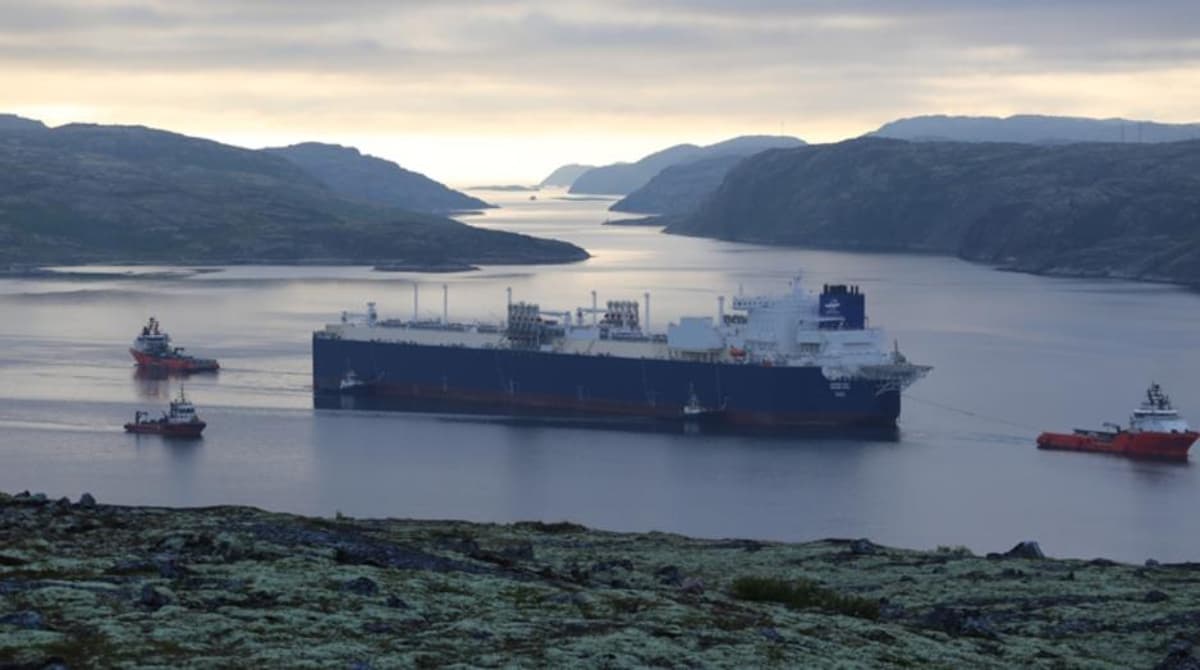
Russia-Linked LNG Carrier ‘Merkuriy’ Loads at Arctic Hub, Expanding Shadow Fleet Capacity
Companies Mentioned
Why It Matters
Expanding the shadow fleet boosts Russia’s ability to move sanctioned Arctic LNG, mitigating sanction‑induced bottlenecks and preparing for larger export needs as European markets close. The added capacity also underpins Moscow’s strategy to shift LNG flows toward Asia without relying on Western‑controlled ports.
Key Takeaways
- •Merkuriy and three ex‑Omani tankers reflagged to Russia.
- •All four vessels now support sanctioned Arctic LNG 2 project.
- •Potential 40% boost to Arctic LNG 2 export capacity.
- •Yamal LNG faces EU ban, may need 30‑35 extra carriers.
- •Ship‑to‑ship transfers at Saam FSU mitigate ice‑season bottlenecks.
Pulse Analysis
Russia’s recent acquisition and reflagging of four former Oman‑owned LNG carriers underscores a growing shadow fleet that sidesteps Western sanctions. By moving vessels like Merkuriy, Kosmos, Luch and Orion under Russian registry, Moscow gains direct control over critical logistics assets without exposing them to flag‑state scrutiny. Satellite imagery and AIS data confirm their presence at the Saam floating storage unit, a hub that enables ship‑to‑ship transfers when sea ice restricts direct port access. This operational shift reflects a broader trend of sanctioned states leveraging opaque ownership structures to preserve export capabilities.
The integration of the four tankers into Arctic LNG 2 could lift the project’s effective export capacity by about 40 percent. Arctic LNG 2, located on the Gydan Peninsula, depends on a mixed fleet of conventional, light‑ice‑class carriers and two high‑ice‑class Arc7 vessels to shuttle gas to the Saam FSU. Adding the reflagged ships eases the seasonal bottleneck that arises during winter and spring, when ice limits navigation and forces longer detours around the Mediterranean. The increased capacity not only sustains current contractual deliveries but also positions Russia to meet rising demand from Asian buyers as European markets shrink.
Looking ahead, the move foreshadows a larger restructuring of Russia’s LNG transport network. An EU ban on Yamal LNG shipments slated for 2027 will force Moscow to redirect a substantial share of its output to distant Asian markets, a shift that could require 30‑35 additional carriers due to longer voyage distances. By bolstering its Arctic fleet now, Russia reduces reliance on Western‑linked maritime infrastructure and creates a more resilient supply chain. Analysts view the Merkuriy acquisition as an early step in a systematic expansion aimed at securing long‑term LNG export viability despite mounting geopolitical pressures.
Russia-linked LNG Carrier ‘Merkuriy’ Loads at Arctic Hub, Expanding Shadow Fleet Capacity
Comments
Want to join the conversation?
Loading comments...