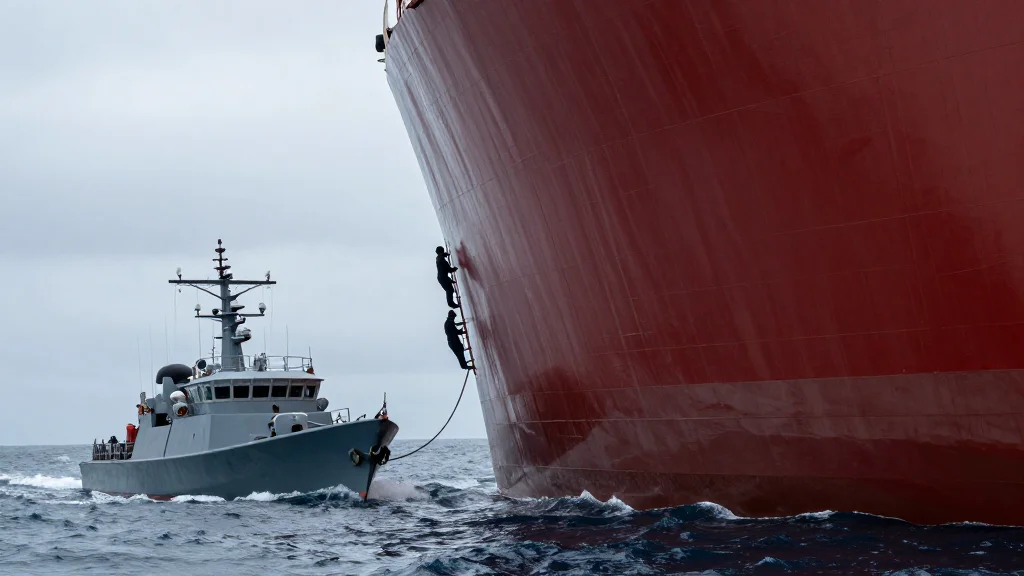
Russian Master Faces Jail Term After Sanctioned Tanker Seizure
Why It Matters
The seizure demonstrates Europe’s willingness to enforce sanctions by targeting ship operators, raising compliance costs for the global shipping industry. It also sets a legal precedent that could deter crews from assisting vessels that evade sanctions.
Key Takeaways
- •French authorities seized the 114,800‑dwt tanker Tagor off Atlantic coast
- •Tagor was operating under a false Madagascar flag to evade sanctions
- •The ship's Russian master faces up to one year in prison
- •Prosecutors are still trying to determine the vessel's ultimate owner
- •Case highlights EU crackdown on Russia's sanctioned shadow‑fleet shipping
Pulse Analysis
European authorities have stepped up enforcement against Russia’s shadow‑fleet, a network of vessels that operate under false flags to sidestep sanctions. The Tagor incident illustrates how the EU is using naval inspections and legal tools to expose these covert operations. By boarding the 114,800‑dwt aframax off the Atlantic and uncovering its Madagascar disguise, France sent a clear signal that flag‑hopping will no longer shield sanctioned ships from scrutiny.
The legal fallout for the crew is equally significant. French prosecutors are pursuing a one‑year jail term for the Russian master, a move that expands liability beyond corporate owners to individual seafarers. While the captain faces immediate punishment, the broader investigation aims to trace the vessel’s ultimate beneficial owner, a step that could lead to further asset freezes or fines. This approach aligns with recent EU directives that hold both operators and crew accountable for violating sanctions, creating a deterrent effect across the maritime sector.
For the shipping industry, the Tagor case raises operational and financial concerns. Insurers are likely to reassess coverage terms for vessels with ambiguous ownership, potentially increasing premiums for ships linked to sanctioned entities. Shipowners may also reroute cargoes to avoid high‑risk zones, impacting global trade flows and port revenues. As compliance costs rise, firms that invest in robust due‑diligence and transparent ownership structures will gain a competitive edge, while those relying on opaque arrangements risk legal exposure and market marginalisation.
Russian master faces jail term after sanctioned tanker seizure
Comments
Want to join the conversation?
Loading comments...