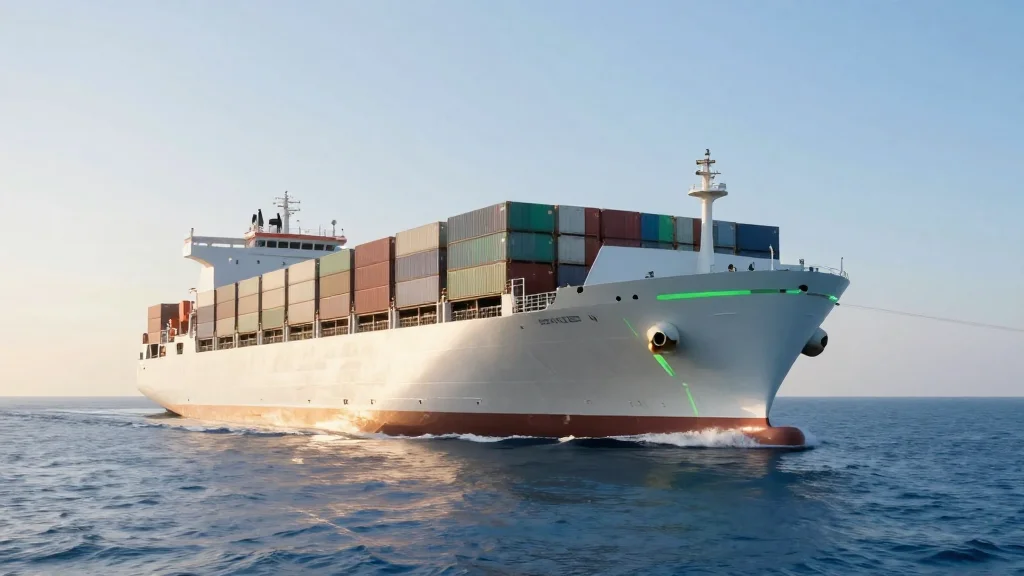
Sea Cargo Charter Members Hold Emissions Line Despite Shipping Turmoil
Companies Mentioned
Why It Matters
Stable emissions performance shows the SCC’s voluntary framework can deliver measurable progress, but the narrowing margins highlight the urgency for deeper decarbonisation to meet IMO 2050 net‑zero targets.
Key Takeaways
- •SCC signatories reduced emissions gap to IMO minimum to 11.6% in 2025.
- •20 of 29 repeat reporters lowered carbon intensity year‑over‑year.
- •Operational optimisation remains primary decarbonisation method for bulk and tanker fleets.
- •Over 90% of voyages verified by third parties, ensuring data transparency.
- •New technologies and regulation needed for long‑term net‑zero goals.
Pulse Analysis
The maritime sector accounts for roughly 3% of global greenhouse‑gas emissions, and the International Maritime Organization’s revised strategy now demands a 40% cut by 2030 and net‑zero by 2050. Voluntary initiatives like the Sea Cargo Charter, launched in 2020, provide a data‑driven benchmark for charterers and shipowners, complementing regulatory pressure. By aggregating performance from 32 signatories—representing about 14% of world seaborne trade—the SCC offers a transparent view of how operational tweaks translate into measurable intensity reductions.
In its 2025 disclosure, the SCC reported an average 11.6% shortfall against the IMO’s minimum pathway, a slight improvement over 2024. More importantly, 20 of the 29 companies that reported in both years succeeded in lowering carbon intensity, indicating that speed optimisation, weather routing and real‑time performance monitoring are delivering tangible results. High transparency—91% of eligible activities disclosed and over 90% of voyages third‑party verified—bolsters credibility and encourages peer‑learning across the dry bulk and tanker segments.
Nevertheless, the report warns that operational gains alone cannot bridge the remaining emissions gap. Industry leaders point to low‑carbon fuels, energy‑efficiency technologies and wind‑assisted propulsion as the next frontier, but widespread adoption hinges on stable policy signals and investment incentives. As global trade routes adjust to geopolitical shocks, shipowners that embed advanced decarbonisation technologies will likely secure a competitive edge, while regulators may look to the SCC model when shaping mandatory reporting and emissions‑credit schemes.
Sea Cargo Charter members hold emissions line despite shipping turmoil
Comments
Want to join the conversation?
Loading comments...