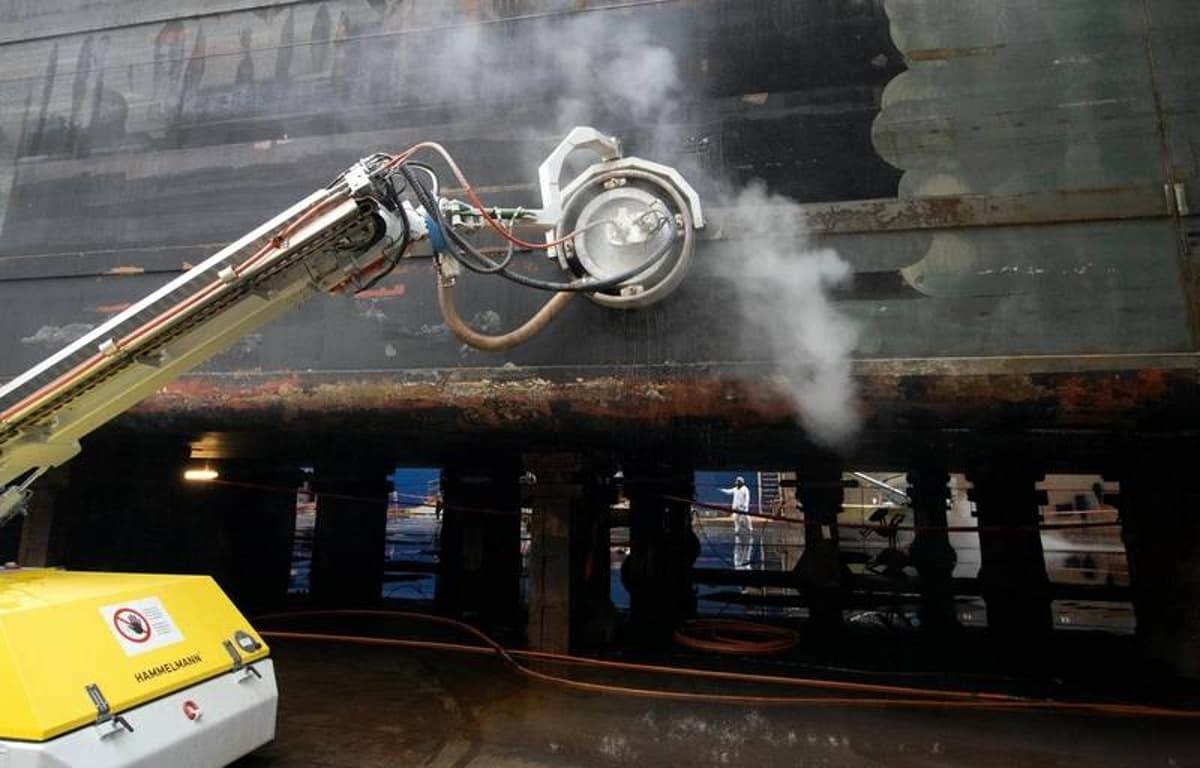
Seaspan Introduces New Remote-Controlled Vehicle
•March 1, 2026
0
Why It Matters
Dockboy reduces labor strain and operational downtime while enhancing cleaning efficiency, giving Seaspan a competitive edge in ship‑repair services. Its deployment signals broader industry movement toward automated, safer maintenance solutions.
Key Takeaways
- •Dockboy is remote‑controlled ultra‑high‑pressure hull cleaning tool
- •Removes barnacles, paint, coatings in single pass
- •Improves ergonomics, reduces operator strain and noise
- •Containerized for use at both Vancouver and Victoria yards
- •Supports in‑house maintenance, upskilling workforce, modernizing ship repair
Pulse Analysis
The maritime maintenance sector has long grappled with the trade‑off between cleaning effectiveness and crew safety. Ultra‑high‑pressure (UHP) blasting delivers rapid hull de‑contamination, but traditional handheld or crawler‑mounted rigs expose operators to intense vibration, noise, and kickback. Dockboy’s remote‑control architecture decouples the operator from the blast source, allowing precise positioning even over complex hull geometries such as divots and handrail pockets. This technology aligns with a growing industry emphasis on automation and worker protection, reducing the risk of musculoskeletal injuries while maintaining high cleaning standards.
Beyond safety, Dockboy drives operational efficiency. By consolidating barnacle removal, paint stripping, and coating preparation into a single pass, turnaround times shrink dramatically, freeing dry‑dock capacity for additional vessels. The system’s containerized design ensures rapid redeployment between Vancouver Drydock and Victoria Shipyards, maximizing asset utilization across Seaspan’s network. Lower acoustic emissions also improve compliance with port noise regulations, enhancing community relations. Together, these factors translate into cost savings, higher throughput, and a more sustainable maintenance workflow.
Strategically, Dockboy underscores Seaspan’s broader modernization agenda, which includes new dry docks, an Operations Centre, and expanded facilities. Investing in advanced cleaning equipment signals a commitment to in‑house capabilities, reducing reliance on external contractors and preserving margin. Upskilling mechanics and painters to operate the system cultivates a versatile workforce, positioning the company to capture a larger share of the commercial ship‑repair market as vessels age and regulatory pressures increase. As the maritime industry pivots toward greener, more efficient practices, tools like Dockboy will likely become standard, shaping the future of shipyard productivity.
Seaspan Introduces New Remote-Controlled Vehicle
0
Comments
Want to join the conversation?
Loading comments...