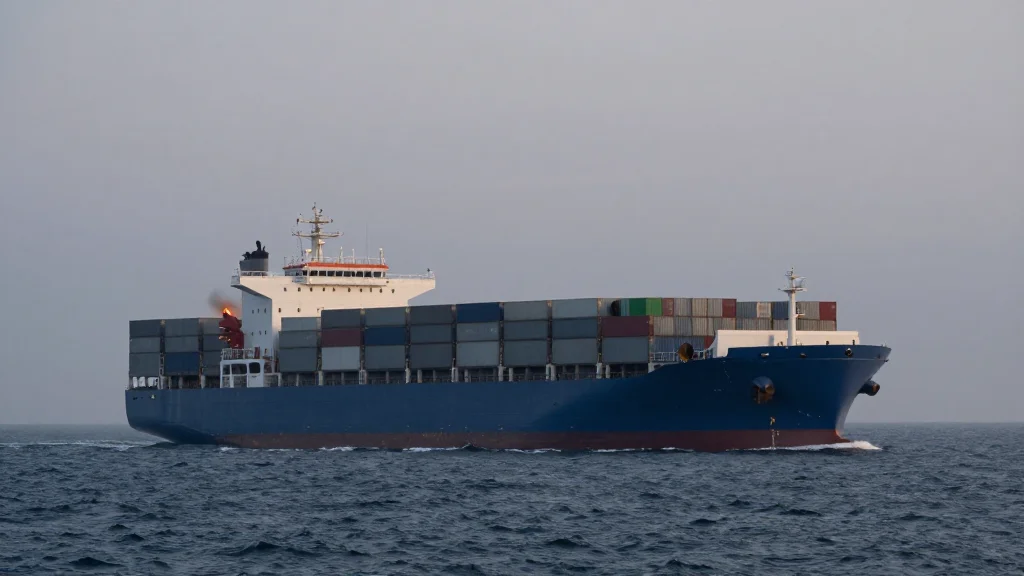
Second Attack Ignites Fire on MSC Ship as Iran Claims Responsibility
Companies Mentioned
Why It Matters
The attack threatens the security of the Gulf’s critical container routes, potentially driving up insurance premiums and prompting shippers to seek alternative corridors. It also signals heightened geopolitical risk as Iran directly confronts U.S. naval actions, affecting global supply‑chain stability.
Key Takeaways
- •MSC Sariska V, 4,814‑teu, hit by IRGC Navy attack off Iraq.
- •Iran says attack retaliates for recent U.S. strike on a vessel.
- •Second assault raises concerns over Gulf shipping corridor safety.
- •Insurance costs for Middle East routes expected to rise sharply.
- •Global container flows may reroute, adding weeks to delivery times.
Pulse Analysis
The Gulf of Oman and adjacent Iraqi waters have become a flashpoint for naval confrontations, especially after the United States launched a precision strike earlier this month against a vessel it alleged was transporting illicit weapons for Iran. In response, the Islamic Revolutionary Guard Corps (IRGC) Navy announced that it had targeted the MSC Sariska V, a 1990‑built 4,814‑teu container ship operated by MSC Group. This second assault, occurring within days of the first, underscores Tehran’s willingness to use fast‑boat tactics to project power and deter perceived Western aggression.
For container carriers, the incident translates into immediate operational challenges. Insurance underwriters are already flagging the Gulf corridor as a high‑risk zone, which could lift war‑risk premiums by 30‑40 percent for voyages that traverse Iraqi waters. Shippers may reroute cargo through the Suez Canal or around the Cape of Good Hope, adding 10‑14 days to transit times and inflating freight rates. Port operators in Dubai and Abu Dhabi are also reviewing security protocols, while logistics firms scramble to secure alternative loading points.
The broader market reaction may ripple through commodity prices and inventory strategies. Analysts warn that sustained disruptions could erode the Gulf’s share of global container traffic, prompting a strategic shift toward more resilient, diversified routes. Policymakers in the United States and Europe are likely to reassess naval deployments and diplomatic engagement with Tehran to mitigate escalation. Meanwhile, investors are monitoring the incident as a barometer for geopolitical risk, which could influence equity valuations in shipping, insurance, and energy sectors.
Second attack ignites fire on MSC ship as Iran claims responsibility
Comments
Want to join the conversation?
Loading comments...