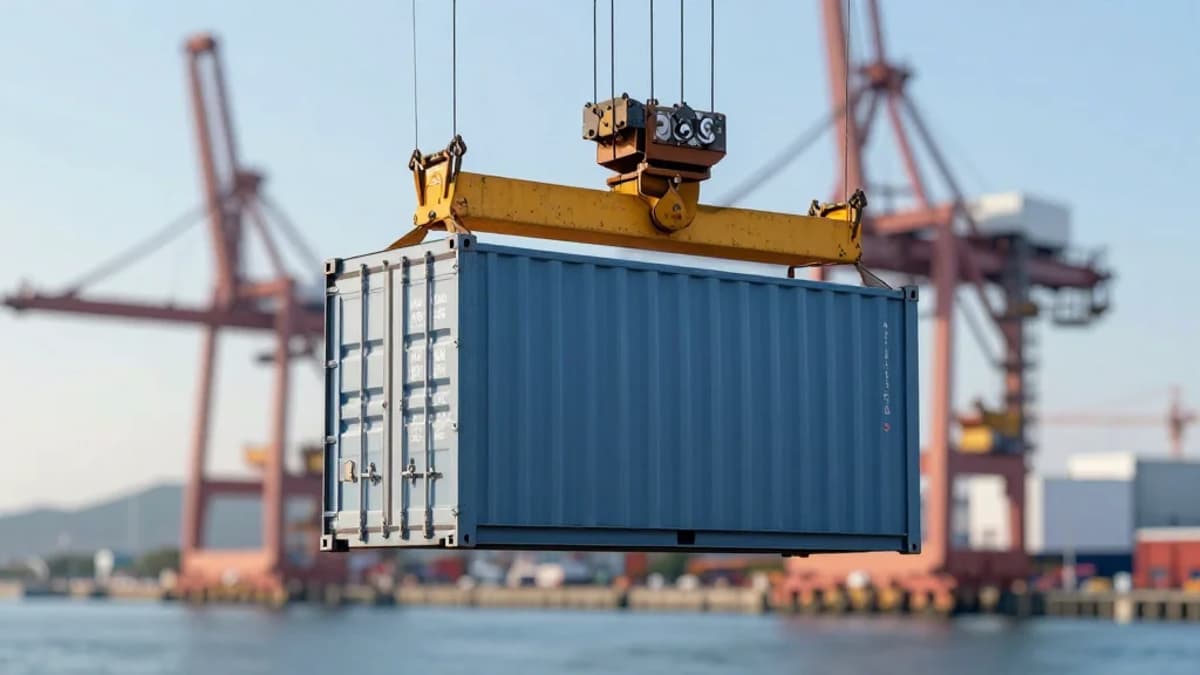
Shipper Purchase Orders Hold Steady Despite Tariff Uncertainty
•February 25, 2026
0
Why It Matters
Stable ordering signals resilience in global trade despite policy volatility, affecting logistics planning and inventory strategies. The evolving trade agenda could reshape import‑export volumes and cost structures for shippers.
Key Takeaways
- •Purchase orders to Asia remain stable despite tariff uncertainty
- •Port of LA TEU volumes down ~12% YoY in Jan
- •Q1 cargo decline projected under 10% despite inventories
- •Upcoming US‑China summit could shift trade policy landscape
- •USMCA review this summer adds further supply‑chain uncertainty
Pulse Analysis
The Port of Los Angeles data show that shippers are still sending purchase orders to Asian factories, even as the Trump administration’s trade policy remains in flux. Gene Seroka’s observation that three‑month‑ahead orders are “stable” suggests that companies are prioritizing seasonal demand—fashion, back‑to‑school, and holiday cycles—over short‑term tariff risk. This behavior reflects a broader industry trend: firms are diversifying sourcing strategies and building flexibility into contracts to hedge against policy swings, rather than pulling back on overseas procurement entirely.
Nevertheless, the port’s volume metrics tell a more nuanced story. In January, total TEUs fell 12 % year‑over‑year, with imports down 13 % and exports down 8 %. Empty container units also dropped 12 %, indicating lingering capacity constraints. Seroka projects a sub‑10 % decline for Q1, a modest dip compared with the 2025 surge that was driven by pre‑tariff stocking. Higher nationwide inventories, a legacy of that surge, are cushioning the slowdown, but they also signal that manufacturers may be rebalancing stock levels in anticipation of tighter trade rules.
Policy uncertainty remains the dominant risk factor. The Supreme Court’s recent ruling against the broad use of the International Emergency Economic Powers Act curtails the administration’s ability to impose sweeping reciprocal tariffs, yet future measures cannot be ruled out. The upcoming Trump‑Xi summit and the summer review of the United States‑Mexico‑Canada Agreement (USMCA) could reshape cross‑border logistics, prompting firms to monitor diplomatic signals closely. Supply‑chain leaders are therefore advised to embed scenario planning into their forecasting models, ensuring resilience against both regulatory shifts and seasonal demand fluctuations.
Shipper purchase orders hold steady despite tariff uncertainty
0
Comments
Want to join the conversation?
Loading comments...