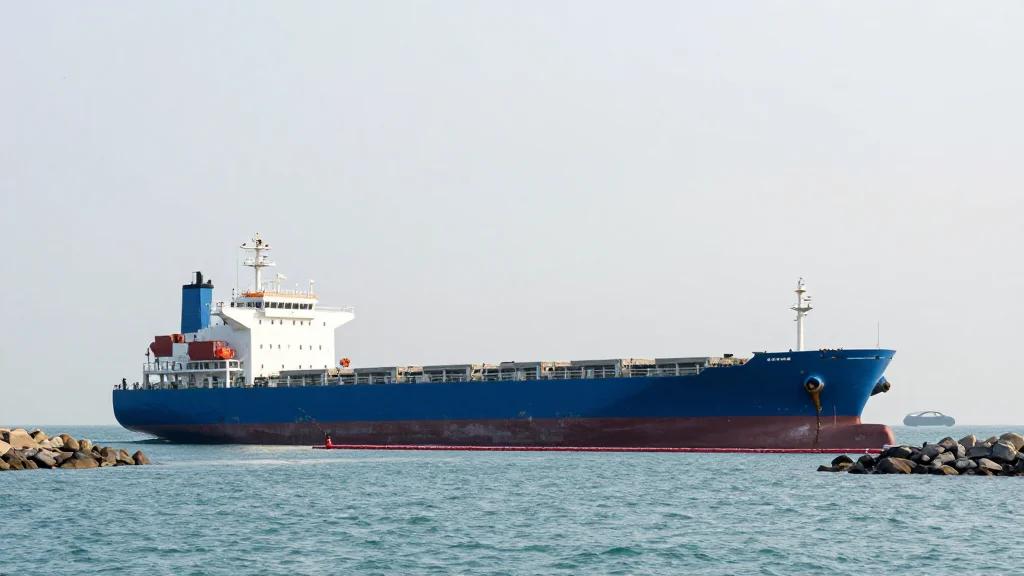
Shipping Bottlenecks Prompt Auto Makers to Rethink Global Supply Chains

Why It Matters
The blockage of the Strait of Hormuz threatens to upend the auto sector’s reliance on low‑cost maritime freight, a cornerstone of its globalized production model. Higher shipping costs and material price spikes directly impact vehicle pricing, potentially slowing demand in price‑sensitive markets. Moreover, the crisis accelerates a strategic pivot toward regionalization, reshaping trade flows, labor markets, and investment patterns across the automotive ecosystem. For downstream industries—steel, plastics, electronics—the ripple effect is equally profound. A sustained shift to rail and air freight will increase pressure on infrastructure, prompting public‑private partnerships and policy interventions. The outcome will determine whether the auto supply chain emerges more diversified and resilient or remains vulnerable to future geopolitical shocks.
Key Takeaways
- •Strait of Hormuz effectively shut down, disrupting over 20% of global container traffic.
- •Plastic raw‑material prices have risen ~50% since the Iran conflict began.
- •Automakers aim to increase regional parts sourcing by 30% within a 1,000‑km radius.
- •Rail freight bookings for containers up 45% as firms seek multimodal alternatives.
- •Analysts project up to 4% margin erosion for OEMs heavily dependent on sea freight.
Pulse Analysis
The current shipping crisis underscores a long‑awaited inflection point for automotive supply chains. For decades, manufacturers have leveraged the cost advantage of deep‑sea freight to build sprawling, globally dispersed networks. The abrupt loss of a major maritime corridor forces a rapid reassessment of that model, exposing the hidden cost of geographic dispersion. Companies that have already invested in regional parts ecosystems—such as Volkswagen’s Eastern‑European hub or Toyota’s North‑American parts consolidation—are now reaping a competitive edge, able to keep production lines humming while peers wrestle with delayed shipments and soaring freight bills.
Historically, supply‑chain resilience has been a secondary consideration to cost efficiency. The pandemic and now the Middle East conflict are shifting that calculus. The surge in rail and air freight demand is likely to trigger a wave of infrastructure spending, especially in Europe where the EU Commission has earmarked €15 billion for rail upgrades. In the United States, the Department of Transportation’s potential subsidies could accelerate the development of high‑speed freight corridors, reducing reliance on vulnerable sea lanes.
Looking ahead, the auto industry may see a bifurcated supply‑chain architecture: core, high‑value components continue to be sourced globally, while high‑volume, low‑margin parts migrate closer to assembly plants. This dual strategy could mitigate risk but will also raise overall production costs, potentially translating into higher sticker prices for consumers. The key for manufacturers will be to balance resilience with affordability, leveraging digital twins and AI‑driven demand forecasting to fine‑tune inventory buffers without inflating working capital. The next six months will reveal whether the current disruption becomes a catalyst for lasting structural change or a temporary shock that fades once the Strait reopens.
Shipping Bottlenecks Prompt Auto Makers to Rethink Global Supply Chains
Comments
Want to join the conversation?
Loading comments...