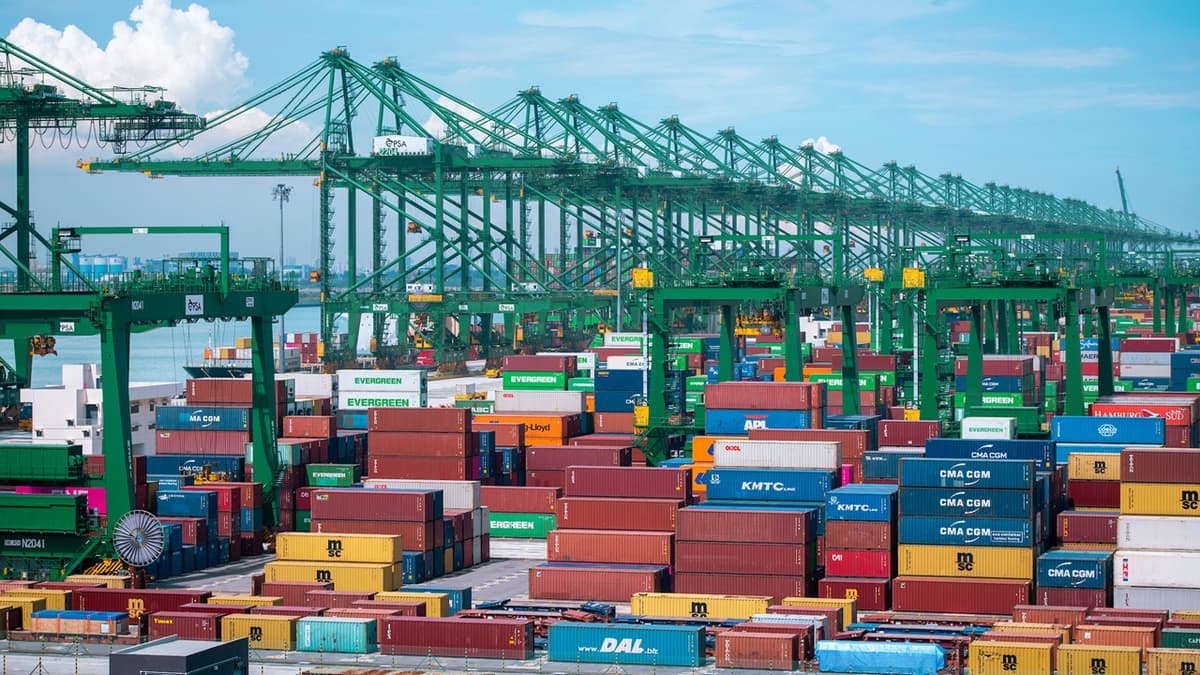
Singapore Eyes Autonomous Feeders Between Container Terminals
Companies Mentioned
Why It Matters
By automating short‑haul container moves, Singapore aims to boost terminal efficiency, reduce labor costs, and cement its position as a leading smart‑port hub in Asia. Success could accelerate global adoption of autonomous maritime logistics.
Key Takeaways
- •MPA and PSA launch EOI for autonomous feeder vessels
- •Vessels will connect Pasir Panjang Terminal with Tuas Port
- •Remote centre will monitor vessel sensors and port traffic live
- •Proposals must cover safety, cybersecurity, and regulatory compliance
- •Project supports Singapore’s wider autonomous shipping and LNG bunkering strategy
Pulse Analysis
Singapore already handles more than 30 million TEUs annually, making it one of the world’s busiest transshipment hubs. To sustain this volume while addressing labor shortages and rising operational costs, the Maritime & Port Authority (MPA) and PSA are turning to autonomous technology for the short‑haul segment that links its main terminals. The proposed feeder vessels will operate between the mature Pasir Panjang Terminal and the newly expanded Tuas Port, cutting turnaround times and enabling a more predictable flow of containers across the harbor. This move reflects a broader industry shift toward digital twins, AI‑driven routing, and unmanned vessels that promise higher productivity and lower emissions.
The EOI emphasizes a remote operations centre that will aggregate data from vessel‑borne sensors, AIS traffic feeds, and port‑side monitoring systems, allowing operators to intervene instantly if anomalies arise. Applicants are required to demonstrate robust navigational safety protocols, seamless interaction with manned ships, redundant system architectures, and hardened cybersecurity measures to guard against hacking attempts. In addition, a clear human‑machine interface and compliance with the International Maritime Organization’s autonomous ship guidelines are mandatory. Crucially, the proposal asks for a viable commercial model that can justify the capital outlay through cost savings and service premiums.
Singapore’s autonomous feeder program dovetails with a parallel joint industry project exploring remote LNG bunkering, involving DNV, Equatorial Marine Fuel Management Services, and the Singapore Institute of Technology. Together, these initiatives aim to create an integrated smart‑port ecosystem that can attract high‑value, technology‑focused cargo owners and reinforce the city‑state’s competitive edge against rivals such as Shanghai and Rotterdam. If successful, the autonomous feeder fleet could become a template for other congested ports worldwide, accelerating the maritime sector’s transition toward fully automated supply chains and supporting global decarbonisation targets.
Singapore eyes autonomous feeders between container terminals
Comments
Want to join the conversation?
Loading comments...