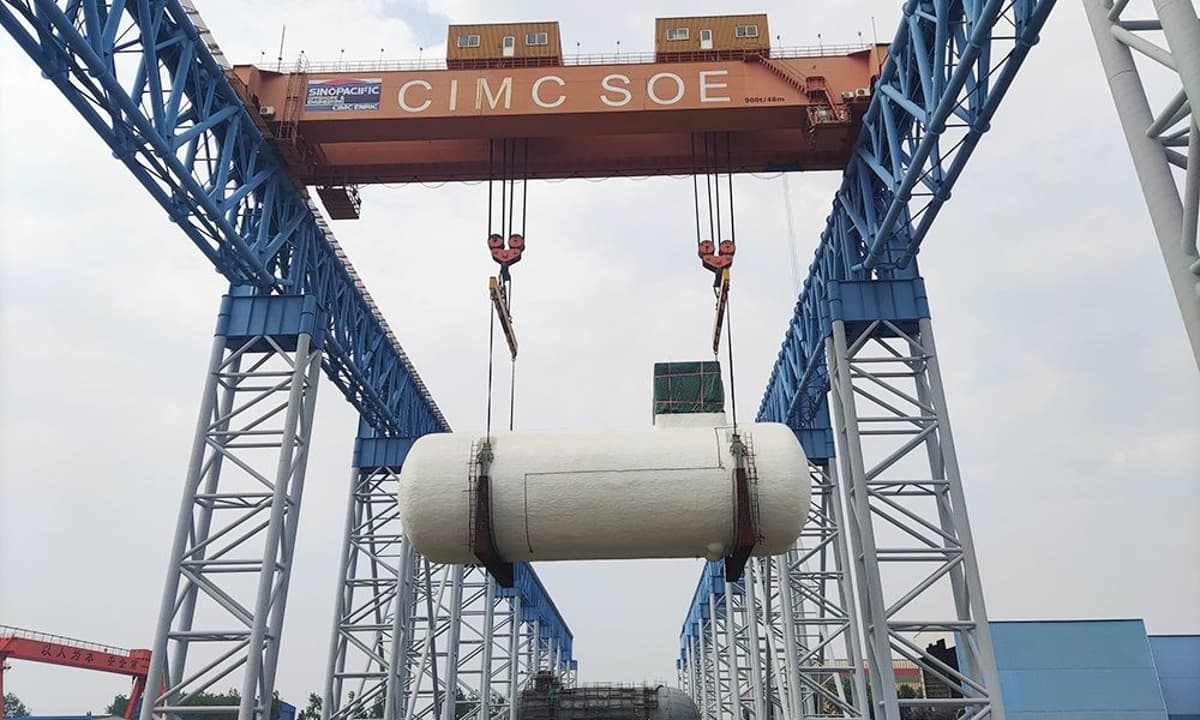
Sinopec Books LNG Bunker Newbuild
Why It Matters
The new vessel strengthens Sinopec’s position in the fast‑growing LNG fuel logistics market, supporting the shift toward cleaner maritime fuels. It also underscores accelerating global demand for LNG bunkering capacity, prompting shipbuilders to scale production.
Key Takeaways
- •Sinopec orders 12,000 cu m LNG bunkering vessel from CIMC SOE.
- •Contract valued at RMB 565 million (~$83 million) under 2026 tender.
- •Vessel adds to CIMC SOE's backlog of 13 large bunker ships.
- •Global LNG bunker orders hit ~30 units in 2025, double 2024.
- •Growing demand from shipping and offshore energy drives logistics expansion.
Pulse Analysis
The LNG bunkering sector is entering a pivotal growth phase as stricter emissions regulations push the maritime industry toward low‑carbon fuels. Sinopec Clean Energy’s latest order reflects a strategic move to secure a dedicated supply chain for liquefied natural gas, positioning the Chinese oil major to meet both its own fleet’s needs and the broader market demand for cleaner propulsion. By investing $83 million in a purpose‑built vessel, Sinopec signals confidence that LNG will become a mainstay of global shipping fuel mixes.
CIMC SOE, a subsidiary of the CIMC Enric group, has rapidly become a hub for large‑capacity LNG bunker ships. The shipyard’s order book now includes ten 20,000 cu m vessels and three near‑20,000 cu m units, illustrating how Chinese shipbuilders are scaling to meet international demand. The Sinopec contract adds a 12,000 cu m vessel, diversifying the yard’s portfolio and reinforcing China’s competitive edge in specialized marine construction. This momentum is bolstered by government incentives for green maritime infrastructure, which help lower financing costs and accelerate delivery schedules.
Globally, the surge to roughly 30 LNG bunker orders in 2025—double the 2024 tally—highlights a broader industry shift. Shipping lines, offshore platforms, and even cruise operators are seeking reliable LNG supply chains to comply with IMO 2020 and upcoming carbon‑intensity targets. As the market expands, investors are watching shipyards and fuel logistics firms for growth opportunities, while regulators monitor the transition’s impact on emissions. Sinopec’s new vessel thus serves as both a commercial asset and a benchmark for the scale of future LNG bunkering investments.
Sinopec books LNG bunker newbuild
Comments
Want to join the conversation?
Loading comments...