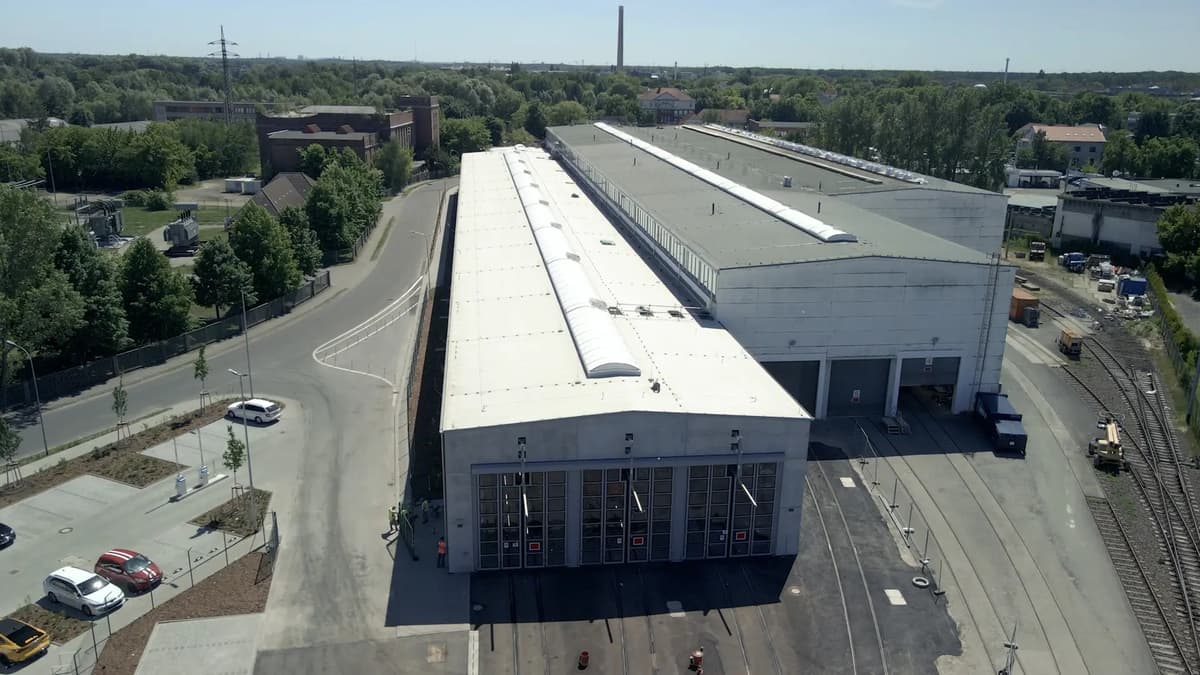
Stadler Opens a Train Testing Center in Germany
Why It Matters
The center shortens delivery cycles and boosts capacity for European rail operators while improving safety and efficiency through voltage‑specific testing, reinforcing Stadler’s competitive edge in a fragmented market.
Key Takeaways
- •Stadler invests €40 million ($44 million) in Hennigsdorf testing center.
- •Hall 1 adds 3,360 m² indoor track with multi‑voltage power supply.
- •Facility creates 128 new jobs in Brandenburg region.
- •Multi‑voltage system enables testing at 15 kV and 25 kV standards.
- •Full commissioning hub to finish by 2027 with outdoor test track.
Pulse Analysis
Stadler’s decision to build a dedicated commissioning hub in Hennigsdorf reflects a broader industry shift toward localized, high‑precision testing facilities. European rail networks operate on a patchwork of electrification standards—15 kV 16.7 Hz in Germany, Austria and Switzerland, and 25 kV 50 Hz in France, Spain, and many high‑speed lines. By installing a multi‑voltage power supply inside Hall 1, Stadler can simulate these conditions on the shop floor, eliminating the need for early‑stage field trials and reducing the risk of voltage‑related faults before a train leaves the factory.
The €40 million ($44 million) investment not only brings state‑of‑the‑art infrastructure but also injects 128 skilled positions into the Brandenburg labor market. The 3,360 m² hall features three interior tracks, continuous inspection channels, and roof‑level workstations that let engineers and customers inspect pantographs, HVAC units, and braking systems without scaffolding. This streamlined acceptance process shortens the time from final assembly to customer hand‑over, a critical advantage as European operators scramble to modernize fleets amid tightening emissions regulations.
Looking ahead, Stadler’s phased rollout aims to deliver a 1,437‑meter indoor track network and a 744‑meter outdoor test line by 2027, positioning Hennigsdorf as one of the company’s flagship sites in Europe. The expanded capability will support larger, more complex trainsets, including cross‑border EMUs that must meet multiple voltage regimes. For the rail industry, the center signals a move toward integrated, end‑to‑end manufacturing ecosystems that combine production, testing, and commissioning under one roof, setting a new benchmark for speed, safety, and sustainability.
Stadler opens a train testing center in Germany
Comments
Want to join the conversation?
Loading comments...