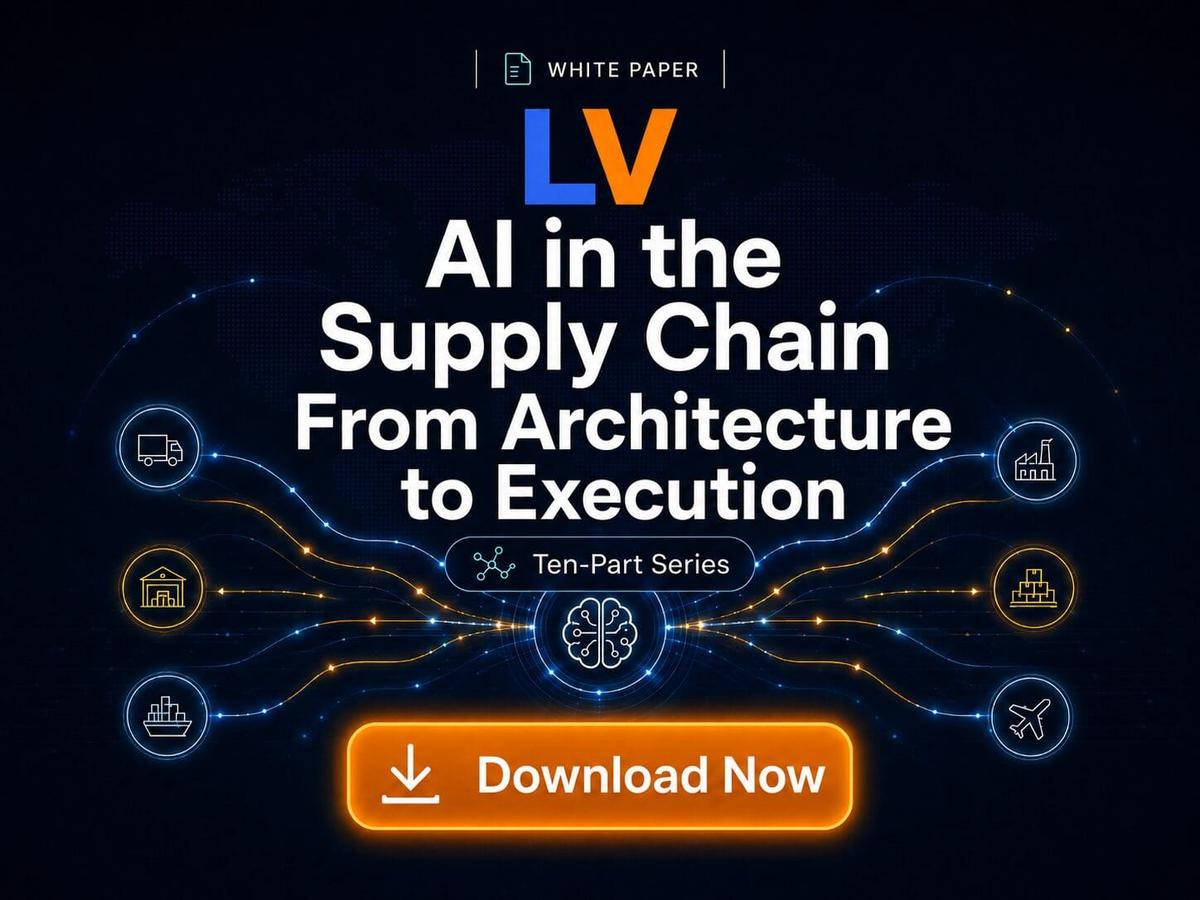
Supply Chain AI Enters the Execution Era
Why It Matters
Reducing decision latency translates into lower costs, higher service reliability, and stronger supply‑chain resilience, making execution‑focused AI a strategic differentiator for manufacturers and logistics providers.
Key Takeaways
- •AI shift from insight generation to operational execution.
- •Decision latency identified as primary bottleneck in supply chains.
- •Integrated workflows required to turn alerts into actions.
- •Competitive advantage will belong to firms reducing response time.
- •Vendors must embed AI into existing execution systems.
Pulse Analysis
The conversation around artificial intelligence in supply chains has long centered on technical feats—improved demand forecasts, early disruption detection, and automated report generation. While those capabilities proved AI could operate within complex logistics data sets, they rarely altered the day‑to‑day decisions that move goods. As a result, many early adopters saw impressive pilot metrics but little impact on bottom‑line performance. This gap has prompted analysts to reframe AI success: not by how smart the model is, but by how quickly it can drive real‑world actions.
Decision latency—the interval between recognizing a change and executing a coordinated response—has emerged as the critical constraint. A delayed transportation alert can cascade into inventory shortages, missed delivery promises, and eroded customer trust. The article illustrates a typical scenario where a shipment delay is visible to the transportation team, yet inventory, fulfillment, and customer‑service groups remain out of sync for hours. Each siloed handoff adds friction, inflating costs and risk. Companies that redesign their workflow architecture to route AI‑generated insights directly to the owners and execution systems can shave minutes, if not seconds, off this latency, delivering tangible service and financial gains.
For vendors and enterprises alike, the execution era reshapes investment priorities. Solution providers must move beyond dashboards and recommendation engines to deliver end‑to‑end orchestration platforms that embed AI into existing ERP, TMS, and WMS layers. Enterprises, meanwhile, need clear governance, real‑time data sharing, and cross‑functional decision ownership to unlock AI’s value. Firms that master this integration will not only improve operational agility but also set a new competitive benchmark, where speed of response becomes as valuable as forecasting accuracy. The shift signals a broader industry move from AI as a novelty to AI as a core engine of supply‑chain performance.
Supply Chain AI Enters the Execution Era
Comments
Want to join the conversation?
Loading comments...