Supply Chain Shocks Fuel Push for More Resilience
Companies Mentioned
Why It Matters
Supply‑chain resilience is becoming a strategic advantage, influencing cost structures, market speed, and long‑term profitability across industries. Companies that fail to adapt risk operational bottlenecks and lost market share as disruptions become the new normal.
Key Takeaways
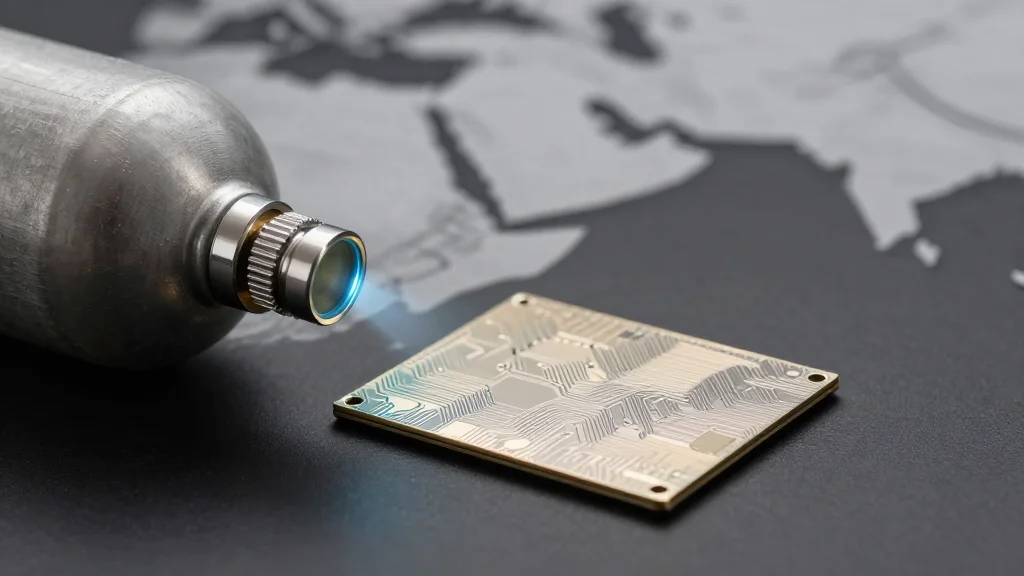
- •Helium shortage from Iran war threatens semiconductor production.
- •Firms adopt regionalized, diversified supply chains to reduce disruption risk.
- •Digital analytics and stress tests become core to resilience strategy.
- •Nearshoring to Mexico and Vietnam grows as firms avoid single-source dependence.
Pulse Analysis
The latest helium shortage, sparked by the Iran conflict, highlights how even niche inputs can cripple high‑tech production. While semiconductor fabs have long relied on a stable helium supply for lithography, the sudden bottleneck forces manufacturers to reconsider single‑source dependencies. This episode dovetails with a decade‑long trend away from pure cost‑driven offshoring toward a more balanced approach that values geographic risk mitigation alongside price.
Researchers across IMD, Oxford, and CEIBS document a surge in diversification tactics. Companies are embracing "China‑plus‑one" and "friendshoring" models, shifting parts of their supply base to Vietnam, Mexico, and other nearshore hubs. The move is not a retreat from global trade but a reconfiguration that keeps production closer to key consumer markets, reduces transit times, and cushions firms against geopolitical shocks. Survey data show that 65% of German manufacturers have already broadened their supplier portfolios, while U.S. firms increasingly source from Mexico to sidestep China‑centric risks.
Digital transformation underpins this strategic pivot. MIT’s David Simchi‑Levi emphasizes stress‑testing supply networks to quantify "time‑to‑recover" and "time‑to‑survive" metrics, while Stanford’s Hau Lee promotes "ultra‑agility"—using real‑time analytics to turn supply chains into growth engines. Firms like Shein and Temu illustrate how modular, data‑driven logistics can accelerate product launches, turning resilience into a profit driver. As visibility improves, companies that embed analytics into procurement and inventory decisions will likely outpace rivals still anchored to intuition‑based planning.
Supply chain shocks fuel push for more resilience
Comments
Want to join the conversation?
Loading comments...