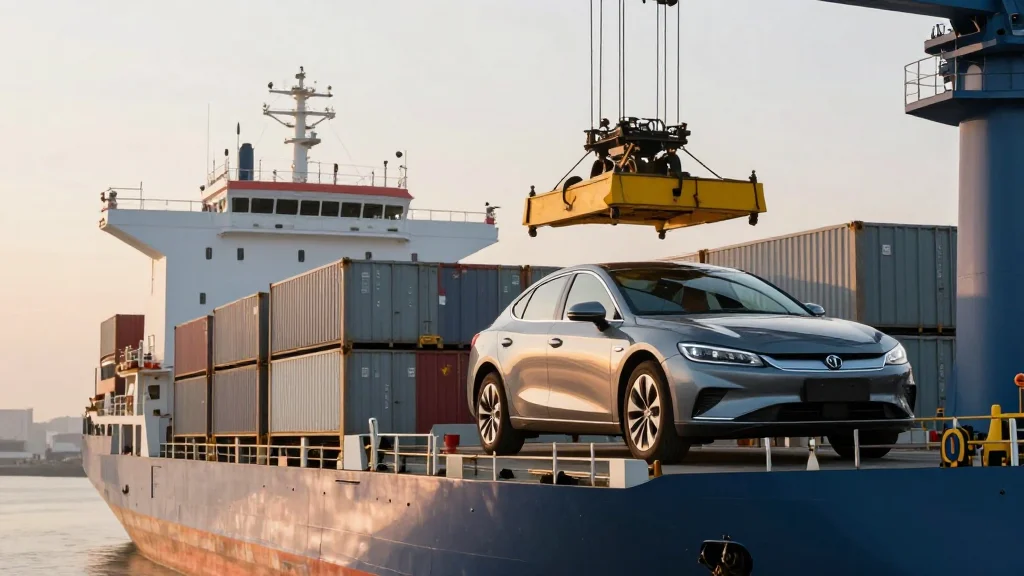
Surging Asia Vehicle Exports, High/Heavy Rebound Buoy Carrier Operators
Why It Matters
The rapid export growth fuels higher shipping demand, tightening capacity and supporting stronger freight rates for carrier operators. It also demonstrates how Asian manufacturing rebounds can counterbalance regional disruptions.
Key Takeaways
- •Chinese vehicle exports rose 57% YoY to 2.2 million units Q1.
- •Hybrid vehicle shipments jumped 112% to 514,000 units.
- •High‑and‑heavy cargo volumes show early rebound, easing carrier capacity constraints.
- •Tightening vehicle‑carrier market lifts freight rates despite Middle East downturn.
- •Carrier operators anticipate stronger earnings as demand outpaces supply.
Pulse Analysis
China’s auto industry is entering a new export phase, driven by robust domestic production and aggressive overseas market penetration. The 57% year‑over‑year increase to 2.2 million vehicles reflects both traditional models and a surge in electrified powertrains, with hybrids alone up 112% to over half a million units. This volume lift translates directly into more roll‑on/roll‑off slots for carriers, intensifying competition for limited space and prompting a price premium on vehicle‑specific vessels.
At the same time, the high‑and‑heavy cargo segment—covering construction equipment, industrial machinery, and oversized freight—is emerging from a pandemic‑induced lull. Early‑quarter data points to a modest but clear rebound, which eases some of the capacity strain caused by the earlier Middle‑East conflict that had depressed trade flows. As a result, freight rates for both standard vehicle carriers and heavy‑lift services have risen, narrowing the margin gap that carriers faced during the downturn.
Looking ahead, carrier operators are recalibrating schedules and investing in larger, more fuel‑efficient vessels to capture the upside from Asia’s export momentum. While geopolitical risks remain, the dual drivers of vehicle export growth and high‑value cargo recovery suggest a durable uplift for the sector. Stakeholders should monitor policy shifts in China, fuel price trajectories, and any resurgence of regional tensions, as these factors will shape the sustainability of the current rate environment.
Surging Asia vehicle exports, high/heavy rebound buoy carrier operators
Comments
Want to join the conversation?
Loading comments...