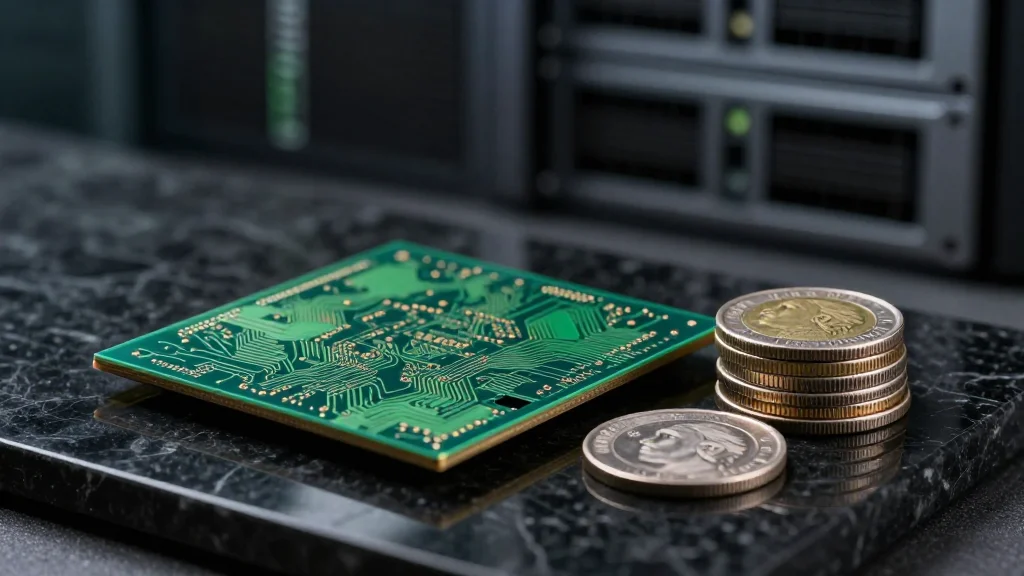
Taiwanese Tech Firms Secure Record $14.5 Billion Debt to Power AI Chip and Server Build‑out

Why It Matters
The record borrowing underscores how AI is reshaping capital allocation in the technology sector, turning financing decisions into a strategic lever for supply‑chain dominance. Taiwan’s ability to fund rapid capacity expansion could cement its role as a critical node in the global AI hardware ecosystem, influencing pricing, delivery schedules, and the competitive balance between U.S., Chinese, and European players. At the same time, the debt surge introduces financial risk. If AI demand softens, heavily leveraged firms may struggle to service their obligations, potentially triggering a wave of restructurings that could disrupt component availability and raise financing costs for the entire sector.
Key Takeaways
- •Taiwanese chip component makers and server builders have secured $14.5 billion in debt in 2026, a record for the island’s tech sector.
- •Financing is split roughly 50/50 between semiconductor packaging firms and server chassis manufacturers.
- •The debt binge mirrors a global trend of tech firms leveraging cheap credit to meet AI‑hardware demand.
- •Expanded capacity aims to alleviate AI supply‑chain bottlenecks, especially in advanced packaging and high‑density servers.
- •High leverage raises refinancing risk if AI spending slows or interest rates rise.
Pulse Analysis
The Taiwanese debt surge is a textbook case of capital‑intensive industries using financial markets to pre‑empt supply‑chain constraints. Historically, semiconductor booms have been financed through a mix of equity and government subsidies; the current AI‑driven wave relies heavily on private debt, reflecting both the speed of demand growth and the limited fiscal space for state support. This shift could accelerate Taiwan’s transition from a pure manufacturing hub to a financing‑enabled AI hardware powerhouse.
From a competitive standpoint, the infusion of $14.5 billion may give Taiwan an edge over rivals in China and the United States, whose firms are also courting credit but face tighter regulatory scrutiny and higher borrowing costs. If Taiwanese firms can translate debt into higher output without compromising balance sheets, they could lock in long‑term supply contracts with AI cloud providers, reinforcing the island’s strategic importance.
However, the strategy is not without pitfalls. The rapid build‑out risks creating excess capacity if AI model adoption plateaus or if alternative architectures (e.g., neuromorphic chips) gain traction. A mis‑aligned supply curve could trigger a wave of defaults, pressuring lenders and potentially tightening credit for future tech projects. Stakeholders should monitor utilization rates, interest‑rate trends, and AI market forecasts to gauge whether the financing binge will yield sustainable growth or sow the seeds of a sector‑wide correction.
Taiwanese Tech Firms Secure Record $14.5 Billion Debt to Power AI Chip and Server Build‑out
Comments
Want to join the conversation?
Loading comments...