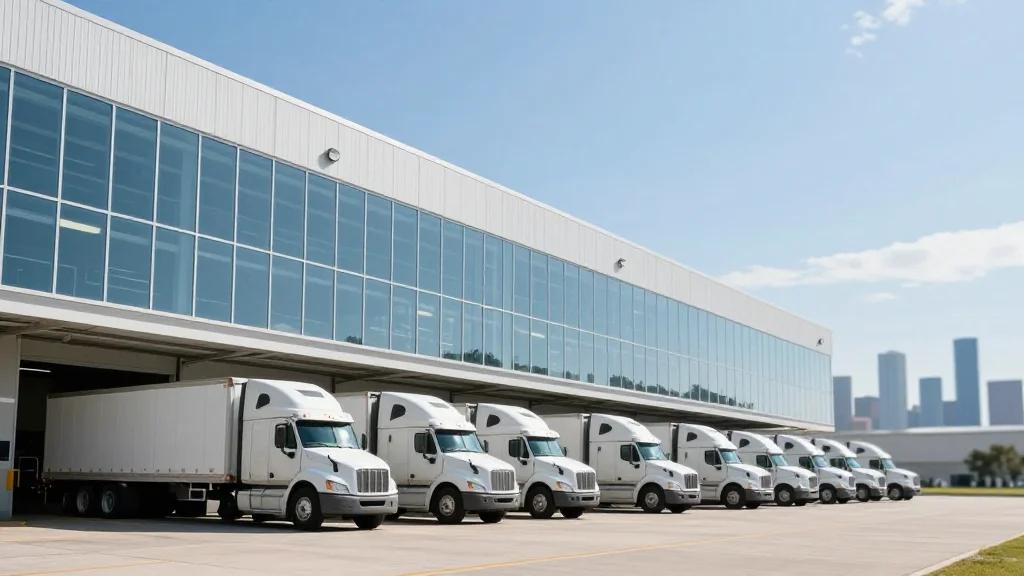
Target Opens $265M Houston Logistics Facility, Adds 185 Jobs
Companies Mentioned
Why It Matters
The new receive center gives Target real‑time inventory flexibility, sharpening its competitive edge in a tight retail supply‑chain landscape. It also signals broader adoption of digital‑twin design and near‑shore logistics to curb costs and improve service speed.
Key Takeaways
- •$265M, 1.2M‑sq‑ft Houston receive center opens
- •Creates 185 local jobs, expanding Gulf Coast logistics footprint
- •Directly receives global vendor shipments, reducing downstream bottlenecks
- •Uses VR design to optimize layout before construction
- •Shortens transport distances between import hubs, cutting costs
Pulse Analysis
Target’s $265 million, 1.2 million‑square‑foot Houston facility marks the retailer’s first dedicated “receive center,” a new node that sits upstream of its traditional distribution network. Located on the Gulf Coast, the site bridges the company’s import hubs in Georgia and Washington state, allowing goods to enter the U.S. supply chain closer to the southern market. By adding about 185 jobs, the project not only expands Target’s logistics footprint but also reinforces its commitment to regional resilience, a priority for retailers facing recent freight disruptions.
The receive center’s core advantage is its ability to ingest shipments directly from thousands of global vendors, hold inventory in a buffer, and release it only when real‑time store demand data indicate a need. This upstream positioning reduces bottlenecks at downstream distribution centers and store backrooms, especially during peak seasons or for high‑velocity items. Shorter haul distances translate into lower transportation expenses and faster replenishment cycles, sharpening Target’s same‑day and next‑day delivery promises while freeing capacity for seasonal and bulky products.
Target also pioneered the use of immersive 3‑D visualization and simulation tools from its Minneapolis XR Experience Center to design the Houston layout before breaking ground. The virtual design process, a form of digital‑twin technology, enabled engineers to test workflows, optimize aisle configurations, and spot inefficiencies early, cutting costly post‑construction changes. As retailers increasingly turn to digital twins to accelerate facility rollout and improve operational readiness, Target’s approach showcases how technology can drive supply‑chain agility, lower capital expenditures, and set a benchmark for future logistics expansions.
Target opens $265M Houston logistics facility, adds 185 jobs
Comments
Want to join the conversation?
Loading comments...