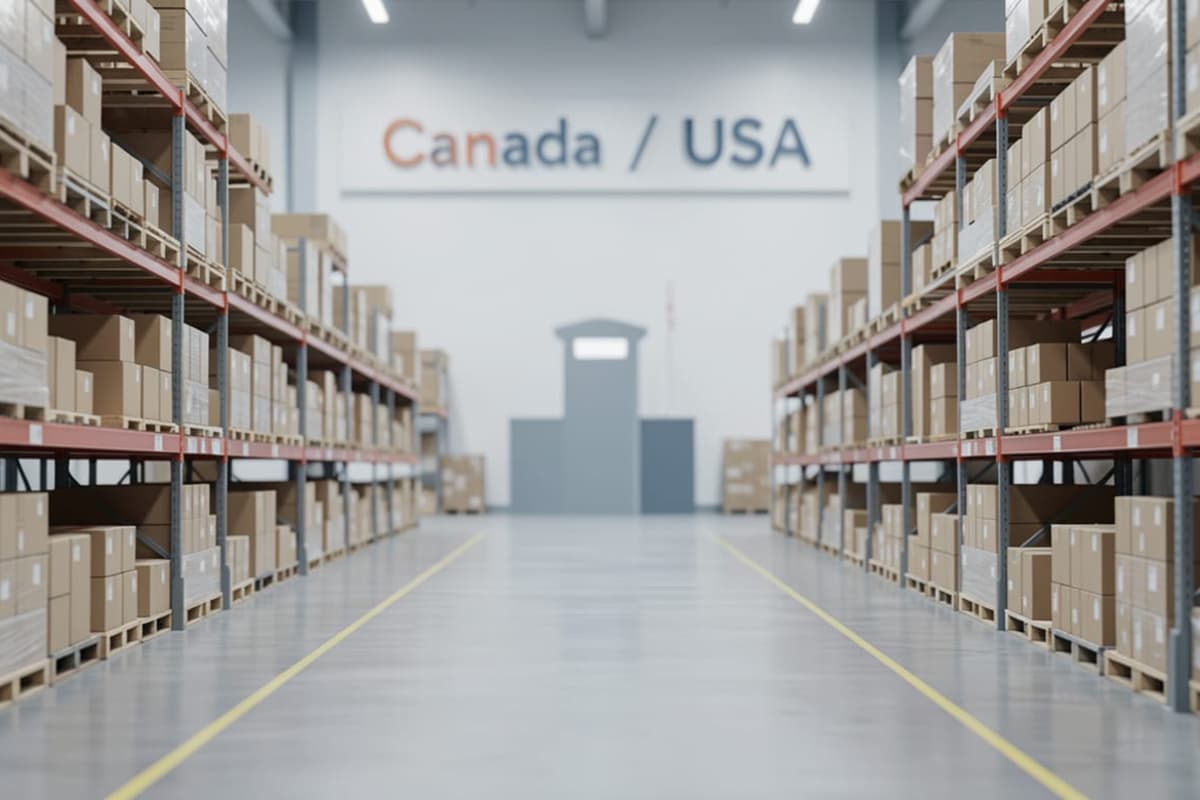
The Benefits of Leveraging a Canadian Warehouse or 3PL for American Companies with Canadian Orders
•February 23, 2026
0
Why It Matters
Domestic inventory in Canada reduces cost, service risk, and tariff exposure, giving firms a competitive edge in the North American market.
Key Takeaways
- •Border crossings add customs delays and variability.
- •Canadian inventory lowers per‑unit transportation costs.
- •Local fulfillment meets Canadian delivery expectations.
- •In‑country stock mitigates tariff and policy shocks.
- •3PLs provide flexible entry without capital commitment.
Pulse Analysis
Cross‑border fulfillment has become a strategic liability for many U.S. manufacturers that ship every Canadian order through a single U.S. distribution hub. Each parcel must clear customs, endure carrier congestion at a handful of ports of entry, and confront unpredictable policy shifts, all of which inflate delivery windows and erode service reliability. By relocating inventory into Canada, firms eliminate the final customs hurdle, turning a variable, just‑in‑time model into a predictable domestic flow. This network redesign not only shortens lead times but also creates a structural buffer against sudden border disruptions.
Beyond the obvious savings on border fees, Canadian warehousing reshapes the total landed cost of goods destined for the north. Consolidating freight to a single cross‑border shipment reduces per‑unit transportation expenses and allows companies to apply duties based on the final market, often lowering tariff burdens. Moreover, domestic storage streamlines reverse logistics; Canadian customers can return items through local carriers instead of navigating a second customs clearance. The net effect is a leaner cost structure, higher inventory turnover, and a service level that mirrors the expectations set by domestic e‑commerce players.
Deploying a Canadian third‑party logistics (3PL) partner accelerates market entry while sidestepping the capital intensity of building a dedicated warehouse. 3PLs bring established carrier relationships, regulatory know‑how, and scalable space that can expand or contract with demand fluctuations. This flexibility is especially valuable in a climate of shifting tariffs and intermittent border closures, where agility trumps fixed‑asset certainty. Companies that treat Canadian warehousing as a deliberate network node—not a peripheral add‑on—gain a competitive edge, improve resilience, and position themselves to capture growth in Canada’s increasingly sophisticated e‑commerce landscape.
The Benefits of Leveraging a Canadian Warehouse or 3PL for American Companies with Canadian Orders
0
Comments
Want to join the conversation?
Loading comments...