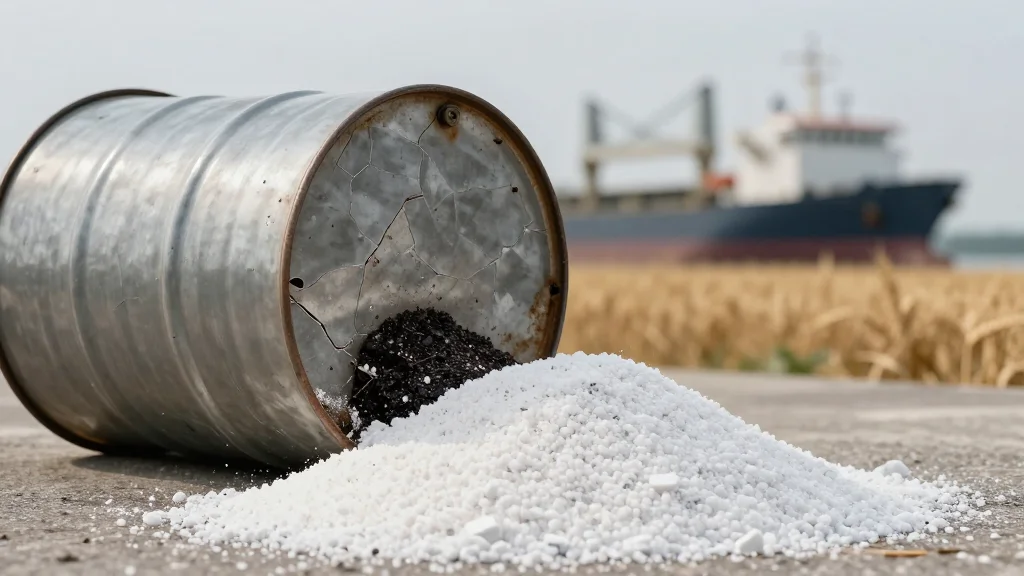
The Fertilizer Shock That Could Trigger a Global Food Crisis
Companies Mentioned
Why It Matters
The fertilizer shortfall threatens global food security by lowering crop yields and inflating food prices, especially in the poorest, import‑dependent economies. It underscores how geopolitical shocks can quickly cascade into agricultural crises.
Key Takeaways
- •Half‑million tons of nitrogen fertilizer production halted globally
- •Yield drops could reach 50% for nitrogen‑dependent crops
- •80% of sub‑Saharan Africa’s fertilizer is imported, raising food‑security risk
- •Brazil and Argentina seek alternative supply chains to protect grain exports
Pulse Analysis
The closure of the Strait of Hormuz after the recent U.S.-Israeli attack on Iran has created an unprecedented bottleneck for the global fertilizer market. By restricting the flow of crude oil and liquefied natural gas—key feedstocks for nitrogen and phosphate production—the disruption has slashed output at major producers such as Yara and forced freight rates to spike. This supply shock arrives at a critical juncture, coinciding with the prime planting window for the northern hemisphere, and amplifies existing vulnerabilities in regions that rely heavily on imported fertilizers.
Reduced fertilizer application directly translates into lower yields, particularly for nitrogen‑intensive staples like wheat, maize and soybeans. Analysts estimate that yield penalties could approach 50% for some crops, potentially depriving the world of billions of meals and fuelling a surge in food prices. The impact will be felt most acutely in sub‑Saharan Africa, where 80% of fertilizer is imported, and in Latin America’s grain belts, where Brazil and Argentina account for a sizable share of global wheat, maize and soybean exports. Food‑insecure populations in these regions could face heightened hunger risk and social instability.
Governments and agribusinesses are already mobilising contingency plans. Some countries are stockpiling fuel and fertilizer, while others are exploring alternative logistics corridors through the Red Sea, the Suez Canal and overland routes from Russia and Turkey. Policy makers are also urging accelerated investment in domestic fertilizer capacity and green ammonia projects to reduce reliance on volatile maritime trade. The episode highlights the strategic importance of diversifying agricultural input supply chains to safeguard food security against future geopolitical disruptions.
The Fertilizer Shock That Could Trigger a Global Food Crisis
Comments
Want to join the conversation?
Loading comments...