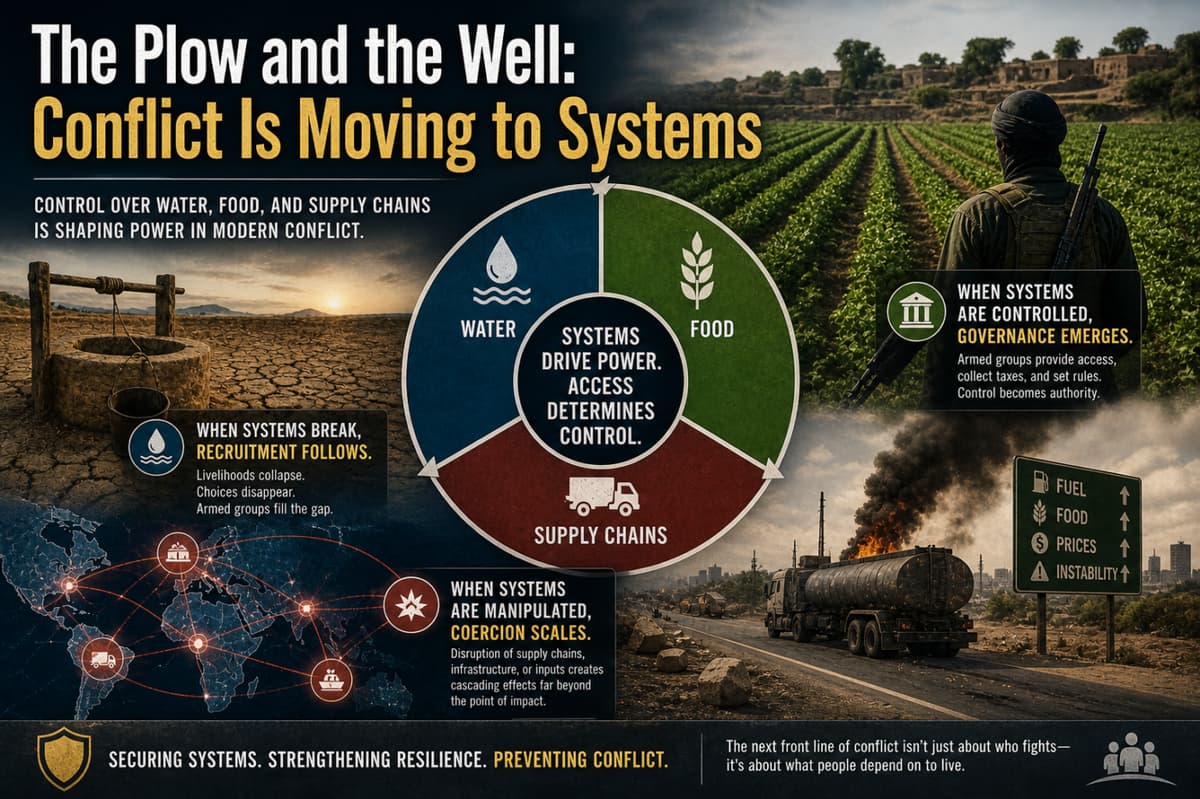
The Plow and the Well: Conflict Is Moving to Systems
Key Takeaways
- •Lake Chad shrank >90%, triggering displacement and recruitment for Boko Haram
- •ISIS controlled 40% of Syria’s wheat and a third of Iraq’s agriculture
- •JNIM’s 2025 fuel blockade raised Bamako prices by 500%, crippling services
- •Systemic disruption, not just leadership, now drives modern insurgent power
- •Counterterrorism must protect water, food, and supply-chain chokepoints
Pulse Analysis
The rise of system‑centric conflict reflects a broader evolution in how power is exercised in fragile environments. When water sources dry, farms fail, or trade routes break, populations face existential choices that make insurgent groups attractive as providers of basic needs. The Lake Chad Basin illustrates this dynamic: a 90% reduction in lake surface area over six decades eroded fisheries and agriculture, pushing millions into poverty and creating a recruitment pool for Boko Haram and later ISWAP. By offering taxed access to dwindling resources, these groups transformed survival into a political contract, blurring the line between criminality and governance.
Control over essential commodities also enables insurgents to project authority without holding territory. ISIS’s seizure of irrigation infrastructure and a substantial share of wheat production in Syria and Iraq allowed it to tax farmers, allocate grain, and dictate agricultural cycles, effectively running a parallel state. Similar patterns emerge in Somalia and Afghanistan, where al‑Shabaab and the Taliban levy fees on trade and humanitarian aid, embedding themselves in the economic fabric of daily life. These practices demonstrate that legitimacy in conflict zones increasingly hinges on the ability to deliver—or withhold—critical services, reshaping the traditional notion of statehood.
For policymakers, the implication is clear: counterterrorism must expand beyond kinetic operations to safeguard the lifelines of civilian economies. Scenario‑based exercises, like those at Arizona State University’s Center for Agriculture and National Security, help map cascading effects of systemic failures and identify chokepoints that, if protected, can deny insurgents a strategic advantage. Investing in resilient water infrastructure, diversified supply chains, and rapid agricultural recovery mechanisms not only mitigates humanitarian crises but also undercuts the recruitment narrative that fuels extremist growth. In the coming decade, stability will be measured less by battlefield victories and more by the durability of the systems that keep societies functioning.
The Plow and the Well: Conflict Is Moving to Systems
Comments
Want to join the conversation?