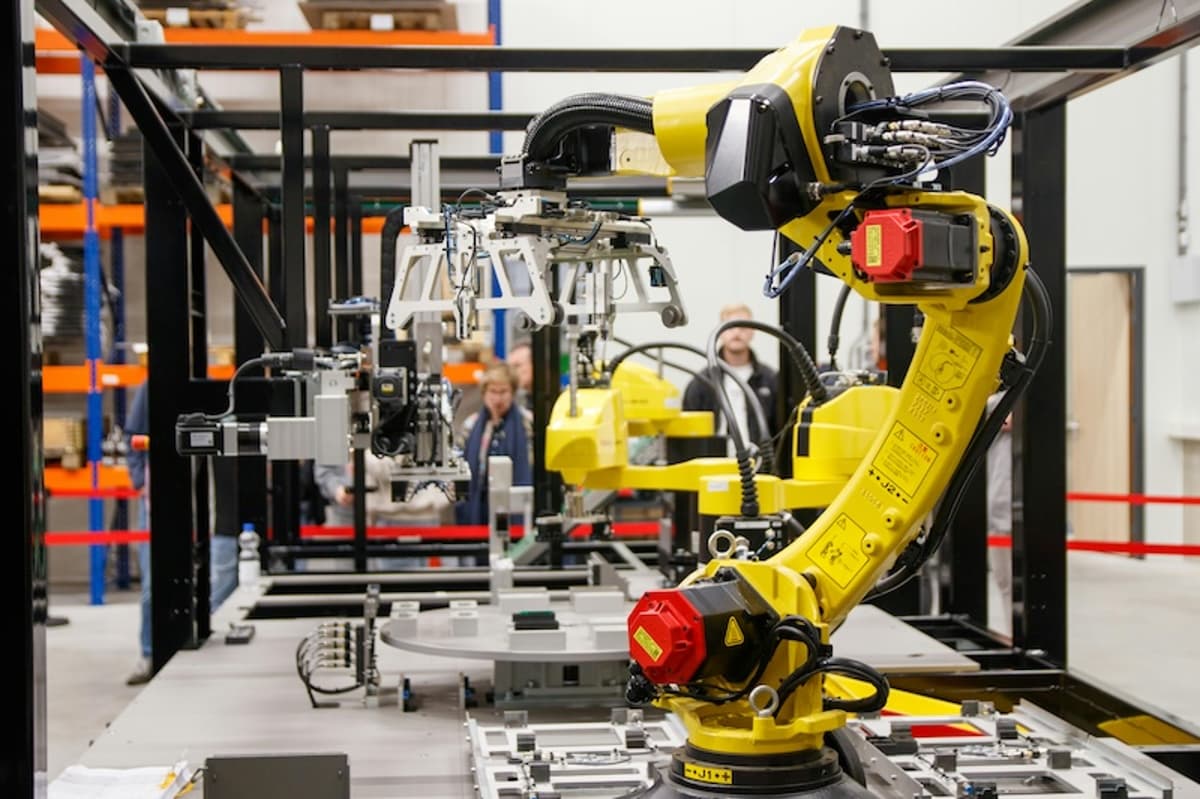
The Role of an Offset Striking Wrench in Modern Robotics
Why It Matters
Fast, reliable fastening directly translates to lower robot downtime and higher production throughput, making the offset striking wrench a strategic asset for any high‑mix, high‑volume manufacturing operation.
Key Takeaways
- •Offset design reaches fasteners in confined robotic assemblies
- •Impact torque speeds up high‑strength fastening during robot build
- •Reduces maintenance downtime by avoiding extensive disassembly
- •Enhances safety by minimizing slippage and operator fatigue
- •Complements automated torque tools in hybrid maintenance workflows
Pulse Analysis
Mechanical engineering remains the backbone of robotic systems, even as software and AI dominate headlines. Traditional hand tools, especially the offset striking wrench, fill a niche that automation cannot fully replace: delivering raw impact torque in cramped, hard‑to‑reach locations. The wrench’s angled head bypasses obstacles that would force engineers to redesign assemblies or use costly robotic manipulators, preserving design flexibility while keeping costs in check. This practical advantage is why many factories still stock a robust inventory of manual impact tools alongside their digital torque meters.
In the assembly line, the offset striking wrench accelerates the fastening of large bolts that secure actuators, joint housings, and structural frames. By allowing a technician to strike the tool with a hammer, torque levels far exceed what a standard wrench can produce, ensuring connections meet the high‑strength specifications required for dynamic loads. The result is a measurable reduction in cycle time—often shaving seconds per joint—that compounds into significant productivity gains across thousands of units. Moreover, the tool’s ergonomic offset reduces operator strain and the risk of slippage, contributing to a safer work environment and lower injury‑related costs.
Looking ahead, the tool is poised to integrate more tightly with smart maintenance ecosystems. Sensors can now be attached to impact wrenches to log torque data, feeding real‑time analytics into predictive maintenance platforms. This hybrid approach—combining the tactile control of a manual wrench with digital monitoring—offers manufacturers a way to maintain the reliability of legacy hardware while embracing Industry 4.0 insights. As robotics expand into harsher sectors like mining and offshore energy, demand for rugged, high‑torque hand tools such as the offset striking wrench is expected to rise, reinforcing its role as an indispensable component of modern robotic infrastructure.
The Role of an Offset Striking Wrench in Modern Robotics
Comments
Want to join the conversation?
Loading comments...