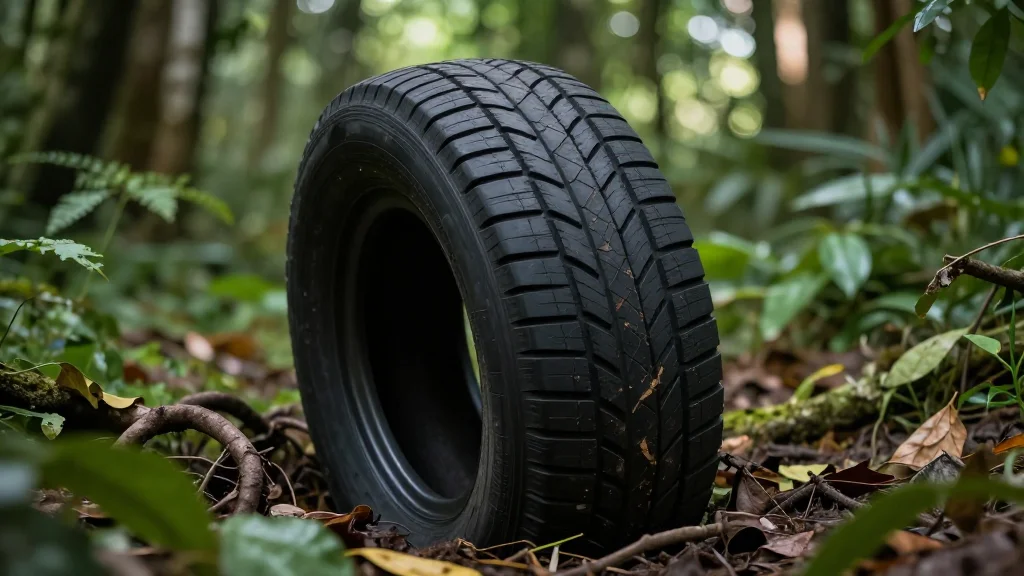
Tire Makers Brace for EU Deforestation Rule Delays, Citing Complex Supply Chains

Companies Mentioned
Why It Matters
The EU Deforestation Regulation is the first major policy to tie commodity trade directly to forest protection, and natural rubber is a linchpin of the global tyre market. Delays in its implementation risk creating a compliance gap where some manufacturers can claim readiness while others lag, potentially distorting competition and undermining the EU’s climate goals. Moreover, the regulation forces a massive data‑collection effort across a fragmented smallholder base, setting a precedent for traceability in other commodities such as palm oil and cocoa. Beyond environmental compliance, the push for digital tyre management illustrates how supply‑chain resilience is becoming a multi‑layered challenge. By integrating sensor data into fleet operations, tyre makers can offset some of the cost pressures that arise from stricter sourcing rules, ensuring that logistics networks remain reliable even as upstream sourcing becomes more complex and costly.
Key Takeaways
- •EU Deforestation Regulation now slated for Dec. 30, 2026 for large/medium firms, with a six‑month extension for small operators.
- •Tire makers consume 70% of global natural rubber; 6 million smallholders produce 85% of the supply.
- •GPSNR CEO Stefano Savi says EU‑driven traceability has moved from “impossible” to achievable.
- •Michelin and Continental have been EUDR‑ready since 2024, but smallholder mapping remains a bottleneck.
- •Continental’s ContiConnect digital tyre system promises up to 15% fuel savings and fewer breakdowns for EU fleets.
Pulse Analysis
The EU’s decision to push the EUDR deadline to the end of 2026 reflects a classic regulatory trade‑off: granting industry more time to build complex traceability infrastructure while risking a loss of policy momentum. For tyre manufacturers, the stakes are high because natural rubber is both a volume‑driven input and a commodity tied to deforestation hotspots. Companies that have already invested in geolocalisation—Michelin’s two‑year lead, for example—will likely capture a competitive edge, especially as downstream OEMs and retailers demand proof of compliance. Conversely, firms that lag may face retrofitting costs that could erode margins, particularly in a market where tyre prices are under pressure from raw‑material volatility.
Digital tyre management, as highlighted in Continental’s white paper, offers a complementary pathway to mitigate supply‑chain risk. While it does not address the provenance of rubber, it reduces operational uncertainty downstream, delivering cost efficiencies that can offset higher upstream compliance expenses. This dual‑track approach—upstream traceability paired with downstream digital optimization—could become a template for other sectors facing similar ESG mandates.
Looking forward, the next critical juncture will be the EU’s final rule‑making on data‑submission standards. If the Commission adopts a blockchain‑friendly framework, it could accelerate smallholder onboarding and lower verification costs. If not, the industry may see a patchwork of national solutions, fragmenting the market and potentially prompting non‑EU tyre makers to seek alternative, less‑regulated export routes. In either scenario, the interplay between regulation, technology, and supply‑chain coordination will shape the competitive landscape of the global tyre industry for years to come.
Tire Makers Brace for EU Deforestation Rule Delays, Citing Complex Supply Chains
Comments
Want to join the conversation?
Loading comments...