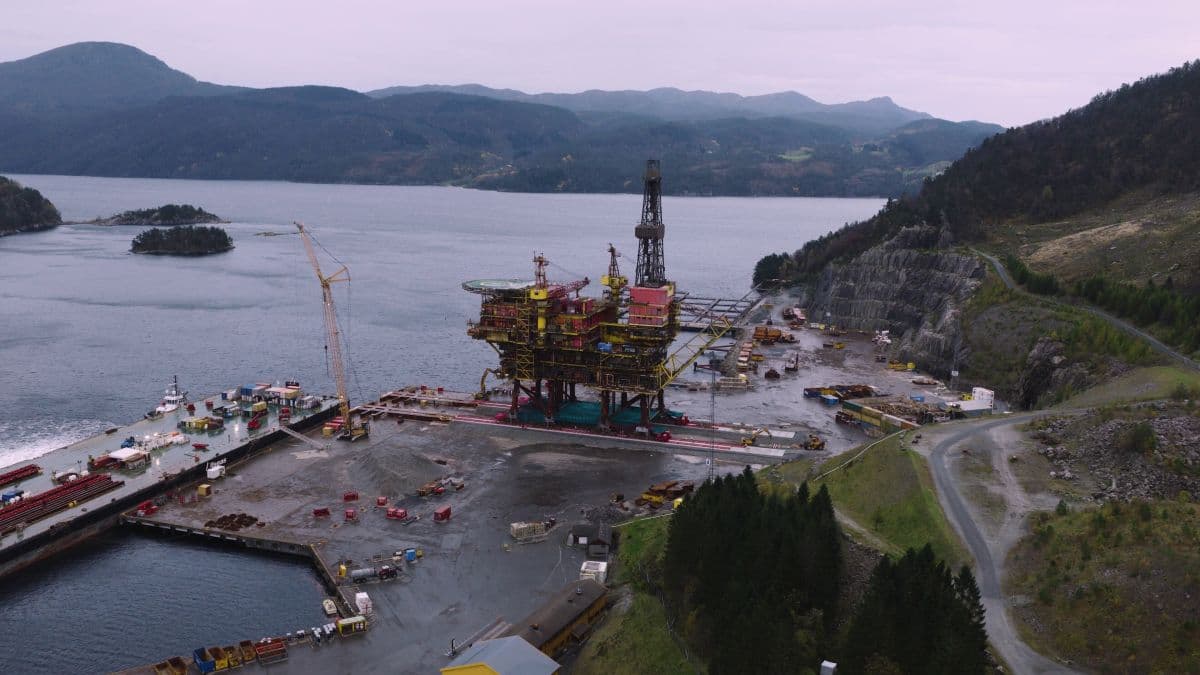
Topside Decommissioning Projects Streamlined With Combined Planning
Why It Matters
The streamlined process slashes project timelines and costs, boosting safety and profitability as the offshore sector confronts a wave of aging assets that must be retired efficiently.
Key Takeaways
- •Mammoet pre‑configured Iron Lady barge for two topsides simultaneously.
- •Combined load‑in completed in half the 24‑hour target.
- •40 push/pull units moved 16,865‑ton and 12,831‑ton topsides at 49 ft/hr.
- •Method now a standard operation, reducing time and cost for decommissioning.
- •Heather Alpha shipped to Denmark, Eider Alpha to Norway for disposal.
Pulse Analysis
Offshore decommissioning has become a pressing priority as Europe’s aging oil and gas platforms near the end of their operational lives. Removing topsides—structures that can weigh tens of thousands of tonnes—requires heavy‑lift vessels, precise engineering, and meticulous coordination to avoid environmental and safety risks. Companies like Allseas rely on purpose‑built ships such as the Pioneering Spirit to lift entire topsides in a single operation, but the subsequent transfer to shore‑based disposal yards often proves a bottleneck, driving up both time and expense.
Mammoet’s recent collaboration with Allseas demonstrates how integrated planning can transform that bottleneck into a competitive advantage. By outfitting the Iron Lady barge with skid tracks, inner beams, and stabiliser systems ahead of time, Mammoet prepared a dual‑capacity load‑in platform that accommodated both Heather Alpha and Eider Alpha in one campaign. The use of 40 push/pull hydraulic units delivered a consistent 49 ft per hour movement, allowing the topsides to be transferred, ballasted, and secured within a single 12‑hour shift—half the client’s original 24‑hour target. This approach not only reduced labor hours but also minimized exposure to weather‑related delays and potential safety incidents.
The success of this combined‑planning model signals a shift for the broader decommissioning market. As regulators tighten timelines for offshore asset retirement, firms that can demonstrate faster, safer, and more cost‑effective methods will secure a larger share of the emerging service pool. Mammoet’s declaration that the process is now a "standard operation" suggests the methodology will be replicated on future projects, potentially accelerating the overall pace of offshore clean‑up while delivering measurable savings to owners and investors alike.
Topside Decommissioning Projects Streamlined With Combined Planning
Comments
Want to join the conversation?
Loading comments...