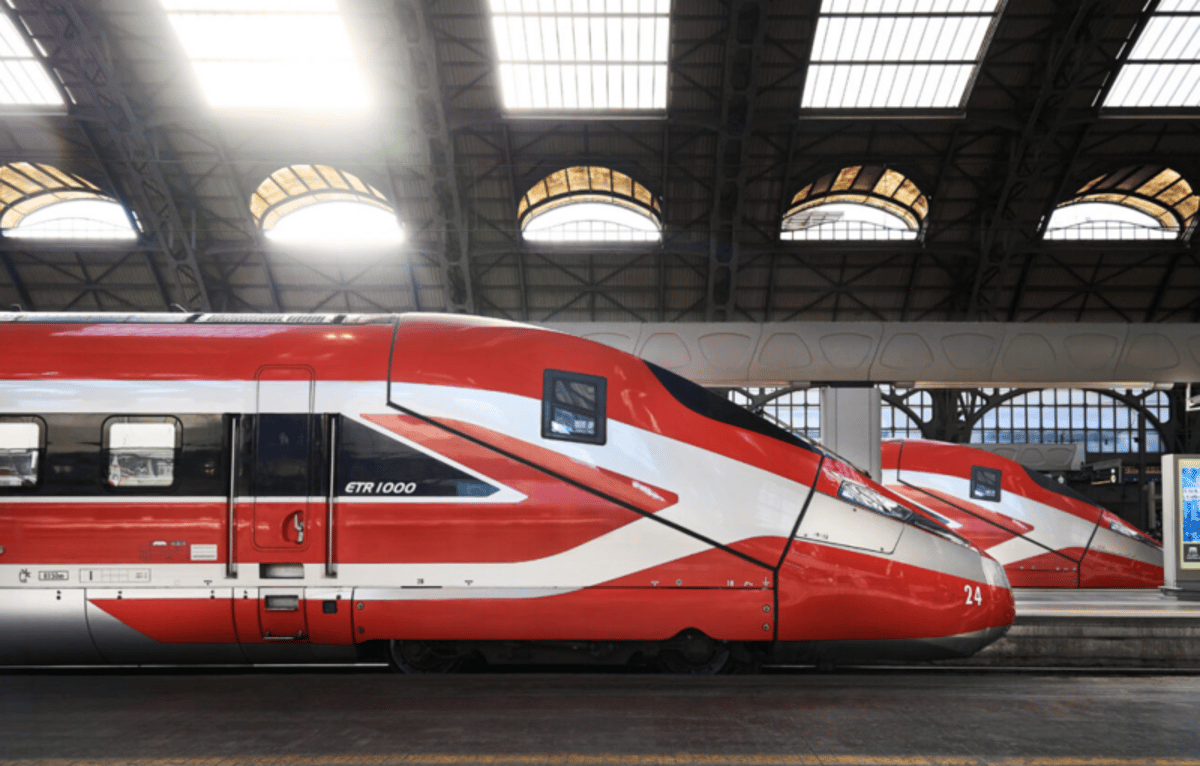
Trenitalia to Purchase 74 Additional Frecciarossa 1000 High-Speed Trains
•February 23, 2026
0
Why It Matters
The investment strengthens Trenitalia’s competitive edge in Europe’s liberalised rail market and accelerates the shift to lower‑emission, high‑speed travel.
Key Takeaways
- •€2 billion program adds 74 Frecciarossa 1000 trains
- •New units boost domestic and cross‑border high‑speed capacity
- •Regional fleet renewal drops average age below ten years
- •Hybrid and battery Intercity trains target non‑electrified routes
- •5G trials aim to improve onboard connectivity on key corridors
Pulse Analysis
Italy’s high‑speed rail sector is entering a new growth phase as Trenitalia rolls out a €2 billion fleet expansion. By 2030 the operator will have 74 additional Frecciarossa 1000 trains, a move designed to capture rising passenger demand and to compete more aggressively with other European high‑speed providers. The added capacity will enable tighter schedules on core routes such as Milan‑Rome and open more slots for international services, reinforcing Italy’s position as a pivotal hub in the trans‑Alpine network.
Beyond the flagship high‑speed units, Trenitalia is modernising its regional and Intercity offerings. Over 80% of its regional rolling stock already consists of newer‑generation vehicles, and the latest renewal push aims to bring the fleet’s average age below ten years. In the Intercity segment, the introduction of hybrid and battery‑powered trains addresses gaps on non‑electrified lines, delivering cleaner operations while expanding service reach. These upgrades collectively improve asset utilization, lower maintenance costs, and boost seat occupancy across the network.
Digital connectivity is another pillar of Trenitalia’s strategy. Recent 5G trials on the Turin‑Milan corridor demonstrate the operator’s commitment to delivering reliable onboard internet, a key differentiator for business travelers. By exploring satellite‑based back‑haul options, Trenitalia seeks to eliminate coverage blind spots on longer routes. Enhanced connectivity, combined with a greener, higher‑capacity fleet, positions the company to meet EU mobility goals and to attract a new generation of rail passengers seeking speed, sustainability, and seamless digital experiences.
Trenitalia to Purchase 74 Additional Frecciarossa 1000 High-Speed Trains
0
Comments
Want to join the conversation?
Loading comments...