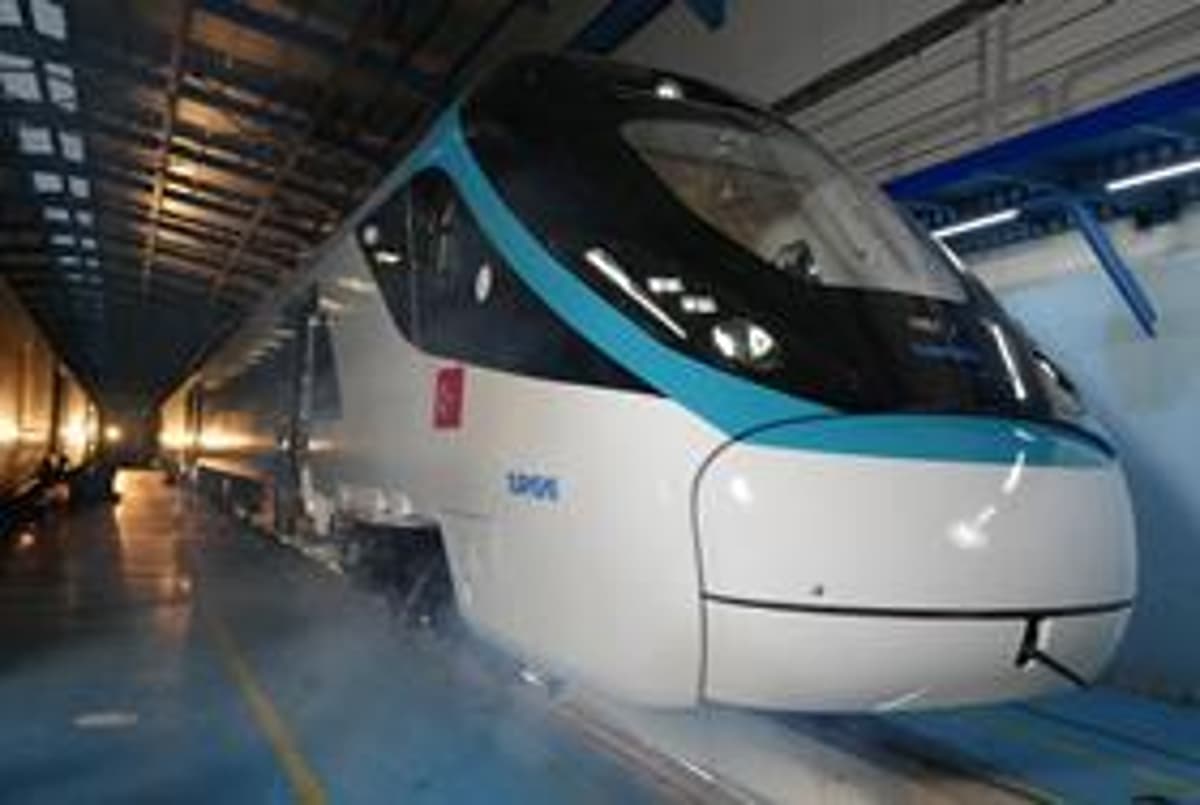
Turkey's Next National Train Nears Completion
•March 2, 2026
0
Why It Matters
The rollout expands Turkey’s high‑speed capacity, strengthens domestic rail manufacturing, and enhances regional connectivity.
Key Takeaways
- •225 km/h train 90% finished
- •15 trainsets slated for delivery by 2028
- •Capacity 577 passengers, includes disabled compartments
- •Aselsan provides traction and control systems
- •Will augment 31 existing high‑speed sets
Pulse Analysis
The Turkish Ministry of Transport announced that the nation’s first “National High Speed Train” is now 90 percent complete, marking a milestone in the country’s push for self‑reliant rail infrastructure. Built by state‑owned Türasaş, the eight‑car aluminium EMU is designed for a top speed of 225 km/h and will join the existing fleet of 31 high‑speed trainsets. A total of 15 trainsets, including a prototype, are scheduled for delivery by 2028, with the inaugural unit expected on the tracks later this year for testing. This timeline underscores Turkey’s ambition to accelerate its high‑speed network ahead of regional competitors.
The new trainsets integrate advanced safety and comfort features that reflect global best practices while leveraging local expertise. Aselsan, a leading defence and rail specialist, supplies the traction, control, and train‑management systems, ensuring reliable performance at high speeds. Passenger‑focused amenities include Wi‑Fi, vending machines, automatic emergency braking, climate‑controlled cabins, and comprehensive CCTV coverage. Accessibility is addressed through two dedicated disabled compartments and boarding lifts. Such technology not only raises the service standard but also positions Turkey as a potential exporter of high‑speed rail solutions in the Eurasian market.
From a business perspective, the addition of 577‑seat high‑speed trains will significantly boost capacity on Turkey’s busy corridors, reducing travel times and attracting higher ridership. The domestically produced fleet reduces reliance on foreign manufacturers, keeping capital within the national economy and fostering a skilled supply chain around Türasaş and Aselsan. Moreover, the project aligns with broader government initiatives to modernise transport, stimulate regional development, and support tourism. As the network expands, ancillary industries such as maintenance, signaling, and digital services are likely to experience growth, reinforcing the train’s long‑term economic impact.
Turkey's next National Train nears completion
0
Comments
Want to join the conversation?
Loading comments...