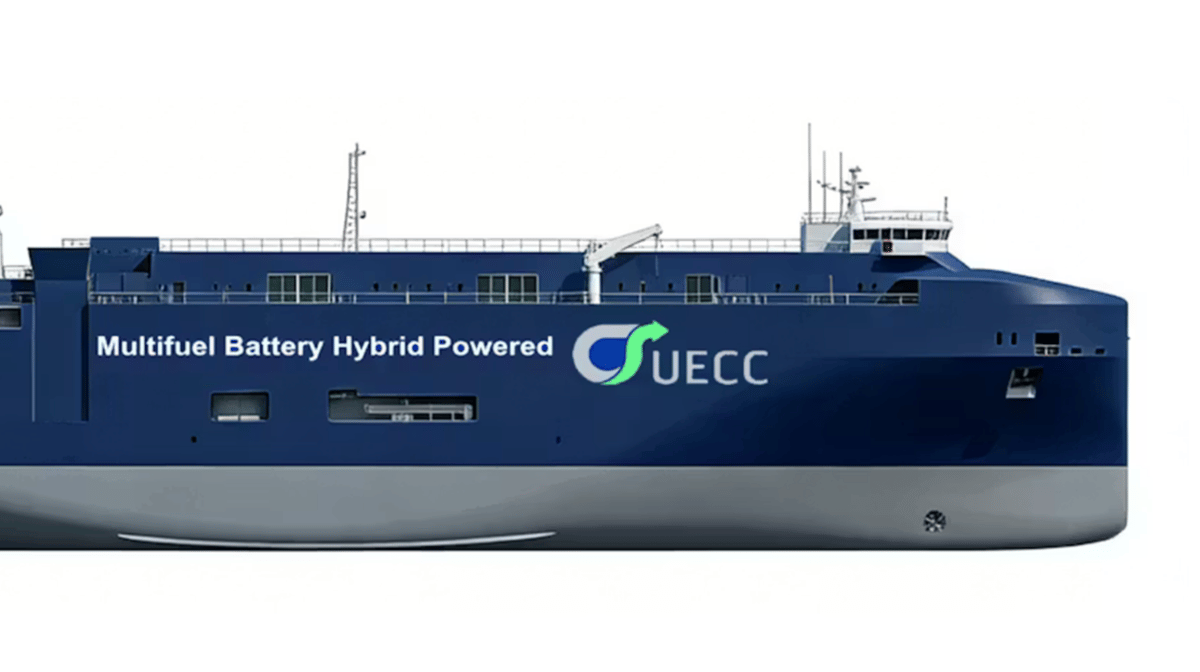
UECC Orders Multi-Fuel Battery Hybrid PCTC Pair
•March 4, 2026
0
Why It Matters
The addition accelerates UECC’s transition to low‑carbon shipping, enhancing fleet efficiency and meeting tightening emissions regulations. It also signals growing demand for hybrid PCTCs in European intra‑regional trade.
Key Takeaways
- •UECC orders two 3,000‑ceu hybrid PCTCs.
- •Vessels use LNG engines, battery storage, optimized hull.
- •Equipped with shore‑power and emissions‑monitoring systems.
- •Fleet will total nine dual‑fuel, multi‑fuel ships.
- •Supports EU decarbonisation targets and biomethane use.
Pulse Analysis
The push toward decarbonised short‑sea shipping has accelerated in Europe, where regulators are tightening CO₂ and NOx limits for intra‑regional routes. Operators are turning to multi‑fuel battery hybrid pure car‑truck carriers (PCTCs) as a pragmatic bridge between conventional diesel and fully zero‑emission vessels. By integrating liquefied natural gas (LNG) propulsion with sizable battery packs, these ships can slash fuel consumption while retaining the flexibility to switch fuels based on price and availability. This hybrid approach also aligns with the European Union’s Fit‑for‑55 roadmap, which encourages the adoption of low‑carbon fuels such as biomethane.
The two new 3,000‑capacity PCTCs ordered by United European Car Carriers (UECC) exemplify the latest engineering advances from Shanghai Ship Research & Design Institute and China Merchants Jinling Shipyard. An aerodynamically refined hull reduces drag, while the dual‑fuel LNG engine paired with high‑energy‑density batteries delivers optimal power density across varying load profiles. Real‑time emissions monitoring and shore‑power capability further cut port‑side emissions, meeting increasingly strict port state control standards. The ballast‑free design also minimizes weight penalties, translating into measurable fuel savings and lower operating costs over the vessel’s lifecycle.
For UECC, the addition of these hybrids expands its fleet to nine dual‑fuel vessels, positioning the company as a frontrunner in sustainable ro‑ro logistics. The order deepens the strategic partnership with a premier Chinese shipyard, ensuring access to cutting‑edge construction techniques and future‑proofing the ships for emerging alternative fuels. Competitors watching UECC’s move may accelerate their own hybrid programmes to remain competitive in a market where charterers increasingly demand carbon‑neutral transport solutions. Ultimately, the deployment of multi‑fuel battery hybrids could reshape the economics of short‑sea trade, driving broader industry adoption.
UECC orders multi-fuel battery hybrid PCTC pair
0
Comments
Want to join the conversation?
Loading comments...