UK and France Finalize Postwar Hormuz Mine-Clearing Mission
Why It Matters
Clearing mines from the Hormuz corridor is critical to re‑establishing the flow of oil and goods through the world’s most vital maritime chokepoint, directly affecting global trade and energy prices. The UK‑France‑led operation also signals a shift toward European leadership in Gulf security amid U.S. disengagement.
Key Takeaways
- •UK and France lead 15‑nation mine‑clearing mission in Hormuz.
- •Mission awaits US‑Iran agreement before deploying assets.
- •Royal Navy's RFA Lyme Bay carries autonomous mine‑hunting systems.
- •US lacks dedicated MCM ships; relies on Littoral Combat Ships.
Pulse Analysis
The Strait of Hormuz handles roughly a fifth of global oil shipments, making any disruption a flashpoint for worldwide markets. In early June, clashes between U.S. forces and Iran’s Revolutionary Guard left the waterway virtually idle, prompting insurers and shippers to reroute cargo at higher cost. While President Donald Trump downplayed the mine threat, analysts warned that even a few undetected devices could halt tanker traffic and trigger price spikes in crude and refined products.
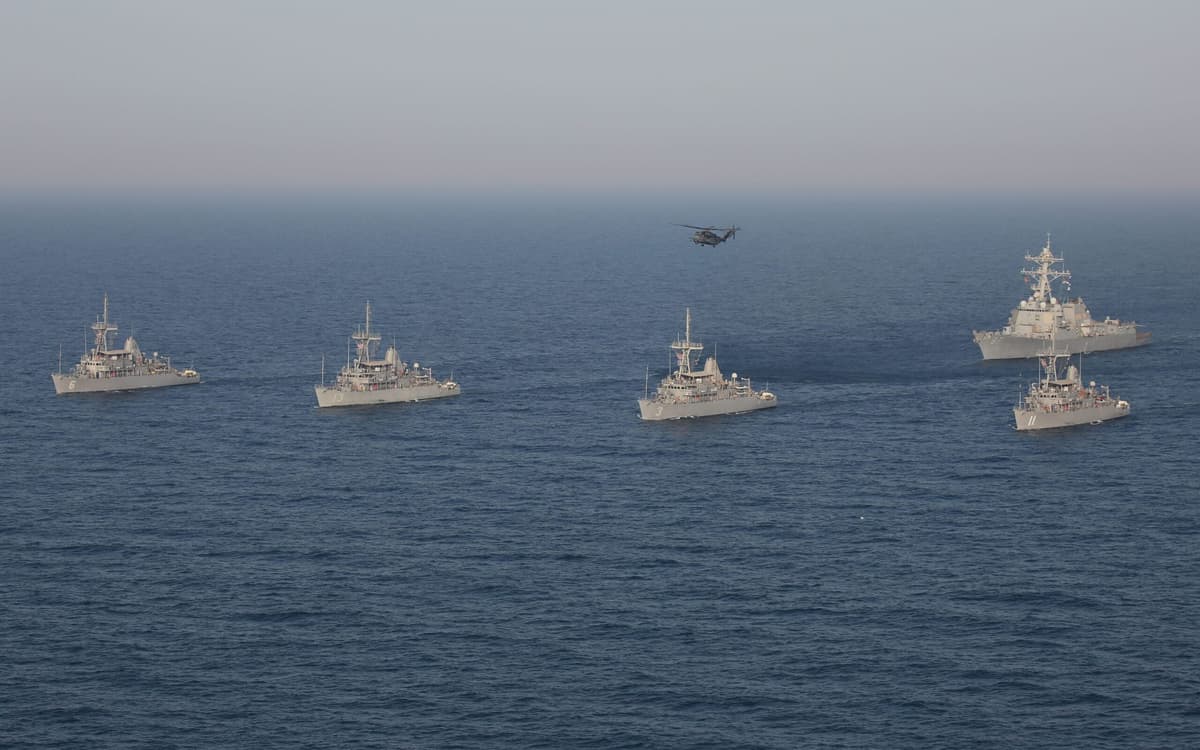
In response, the United Kingdom and France have cemented a joint de‑mining initiative that brings together fifteen allied nations ready to contribute ships, divers and autonomous sweep systems. Britain’s RFA Lyme Bay, already en route from Gibraltar, carries a suite of unmanned mine‑hunting drones, while French naval assets will provide command and control. The United States, lacking dedicated mine‑countermeasure vessels after retiring its Avenger‑class fleet, will rely on Littoral Combat Ships equipped with modular minesweeping kits. Deployment, however, hinges on a formal US‑Iran memorandum that guarantees safe passage for both commercial and military traffic.
If successful, the clearance operation could restore pre‑war traffic levels, easing the $‑per‑barrel premium that has burdened consumers and manufacturers alike. Moreover, the European‑led effort underscores a growing willingness among NATO allies to assume security responsibilities in the Gulf, potentially reshaping the strategic balance as Washington’s direct involvement wanes. Traders will watch closely for the first escorted convoy, a tangible signal that the Hormuz corridor is once again viable for the world’s energy supply chain. Energy analysts predict that a fully cleared strait could shave up to 0.5% off global oil transport costs.
UK and France Finalize Postwar Hormuz Mine-Clearing Mission
Comments
Want to join the conversation?
Loading comments...