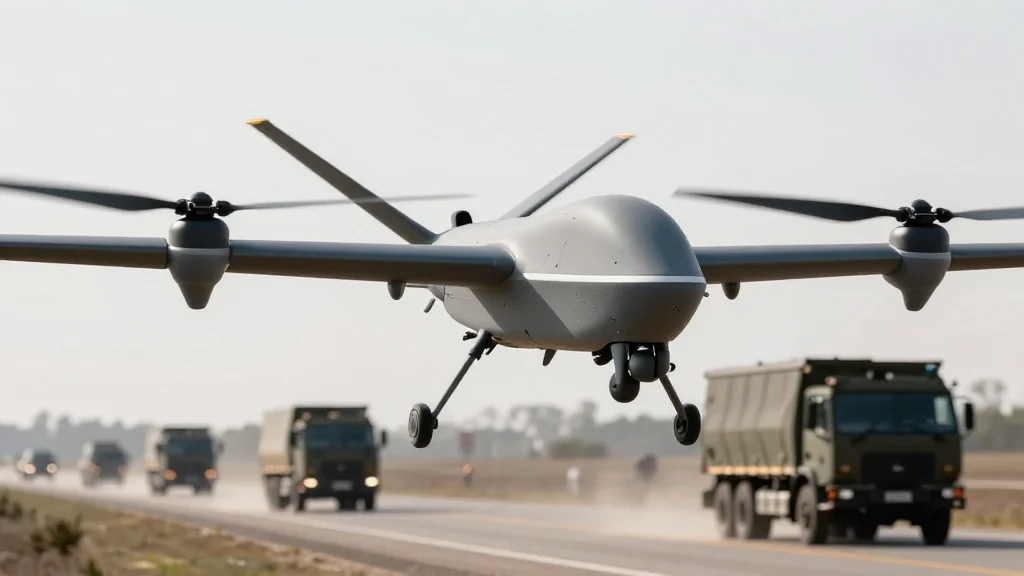
Ukraine's 'Morrigan' Drone Cripples Russia's R‑280 Supply Highway

Why It Matters
The Morrigan attacks illustrate how modern warfare increasingly targets supply chains, turning logistics into a battlefield of its own. Disrupting the R‑280 not only hampers Russia’s ability to sustain its southern offensive but also forces a costly reallocation of assets to protect and rebuild transport routes. For the broader supply‑chain community, the episode underscores the strategic vulnerability of linear, high‑volume corridors to low‑cost, high‑impact technologies. Beyond the immediate military context, the incident raises questions for civilian logistics in conflict zones. The R‑280 also serves commercial traffic; its partial closure affects regional trade, fuel distribution, and humanitarian aid. As nations invest in drone counter‑measures and resilient routing, the episode may accelerate the adoption of decentralized logistics models and advanced surveillance to mitigate similar threats.
Key Takeaways
- •Ukrainian 412th Nemesis Brigade deployed the Morrigan mid‑range drone against Russia's R‑280 highway
- •R‑280 is a 370‑mile supply route from Rostov‑on‑Don to Crimea, critical for Russian logistics
- •Ukrainian claims of "dozens" of trucks and fuel depots destroyed in recent attacks
- •Russian‑backed Kherson governor ordered temporary closure of part of the highway on May 21
- •Morrigan represents a new class of fixed‑wing, rail‑launched drones targeting supply lines 20‑300 km behind front lines
Pulse Analysis
The Morrigan strike marks a tactical evolution where unmanned systems are purpose‑built for logistics disruption rather than direct combat. Historically, supply‑chain attacks have relied on artillery or sabotage; the shift to autonomous, low‑observable drones reduces risk to personnel and expands the reach of interdiction operations. Ukraine’s ability to produce and field such a system domestically also signals a maturing defense industrial base that can rapidly iterate designs to meet battlefield gaps.
From a strategic standpoint, the R‑280 attacks force Russia to confront a classic supply‑chain dilemma: concentrate resources on defending a single, vital artery or disperse them across multiple, less efficient alternatives. The latter inflates operational costs, lengthens resupply timelines, and creates new choke points that can be further exploited. This pressure may erode Russian operational tempo in the south, buying Ukraine critical time for counter‑offensives.
Looking forward, the Morrigan’s success could inspire similar platforms in other theaters, prompting a race to develop counter‑drone defenses for logistics corridors. Nations with extensive land‑based supply networks—whether military or commercial—may need to invest in layered detection, electronic warfare, and hardened infrastructure to safeguard against low‑cost aerial threats. The R‑280 episode thus serves as a case study in how emerging drone technology can reshape the calculus of supply‑chain security in both war and peace.
Ukraine's 'Morrigan' Drone Cripples Russia's R‑280 Supply Highway
Comments
Want to join the conversation?
Loading comments...