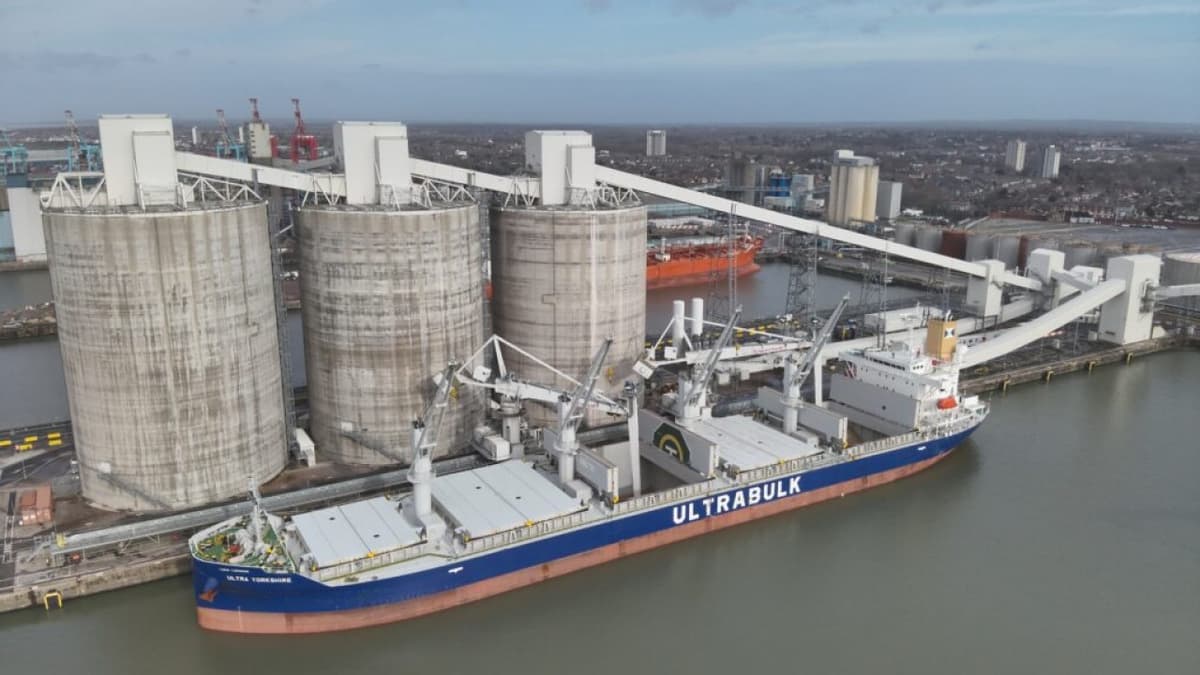
Ultrabulk Handymax Makes First Transatlantic Biomass Delivery
Why It Matters
The operation proves that large‑scale bio‑fuel propulsion can dramatically lower maritime carbon footprints, accelerating decarbonisation of the energy‑supply chain.
Key Takeaways
- •Ultra Yorkshire delivered 29,000 tonnes biomass from US to UK
- •Voyage used B100 biofuel, cutting CO₂ ~90% vs conventional fuel
- •Drax‑Ultrabulk contract runs through 2031, includes yearly emission reductions
- •Biomass will be rail‑shipped to Drax Power Station, supporting net‑zero 2040
Pulse Analysis
The Ultra Yorkshire’s transatlantic crossing is a milestone for low‑carbon maritime logistics. Powered by B100, a 100 % hydro‑treated vegetable oil blend, the 29,000‑tonne biomass voyage avoided roughly 90 % of the CO₂ a conventional heavy‑fuel ship would emit. This aligns with the IMO’s 2030 emissions agenda and shows bio‑fuels can be deployed at scale on long‑haul routes without sacrificing cargo capacity. For Drax, the partnership validates its pledge to source renewable energy throughout the supply chain. The shipment also supports Drax’s broader strategy to replace coal with sustainable biomass across its generation fleet.
The cargo will be off‑loaded at Liverpool and moved by GB Railfreight and DB Cargo trains running on HVO, creating a fully decarbonised corridor from the Gulf Coast to the UK’s largest biomass plant. Drax’s net‑zero by 2040 target depends on such integrated logistics, as biomass replaces coal and transport emissions drop. HVO‑powered trains emit up to 80 % less CO₂ than diesel, further tightening the supply‑chain carbon footprint. The 2031 contract with yearly emission‑reduction clauses embeds sustainability into commercial terms, offering a template for other renewable‑fuel supply chains.
Analysts view the operation as proof that bio‑fuel‑powered ships can compete commercially. With the EU’s Fit for 55 rules and the US Inflation Reduction Act rewarding greener fuels, shipowners face mounting pressure to move away from bunker fuel. Data from the Ultra Yorkshire voyage on fuel performance, cost and compliance can accelerate B100 infrastructure at ports. If the model scales, the maritime sector could achieve gigatonne‑level reductions, accelerating the global energy transition. Replicating similar contracts could cut millions of tonnes of CO₂ from global freight, reinforcing maritime’s role in climate goals while supporting renewable power generation.
Ultrabulk handymax makes first transatlantic biomass delivery
Comments
Want to join the conversation?
Loading comments...