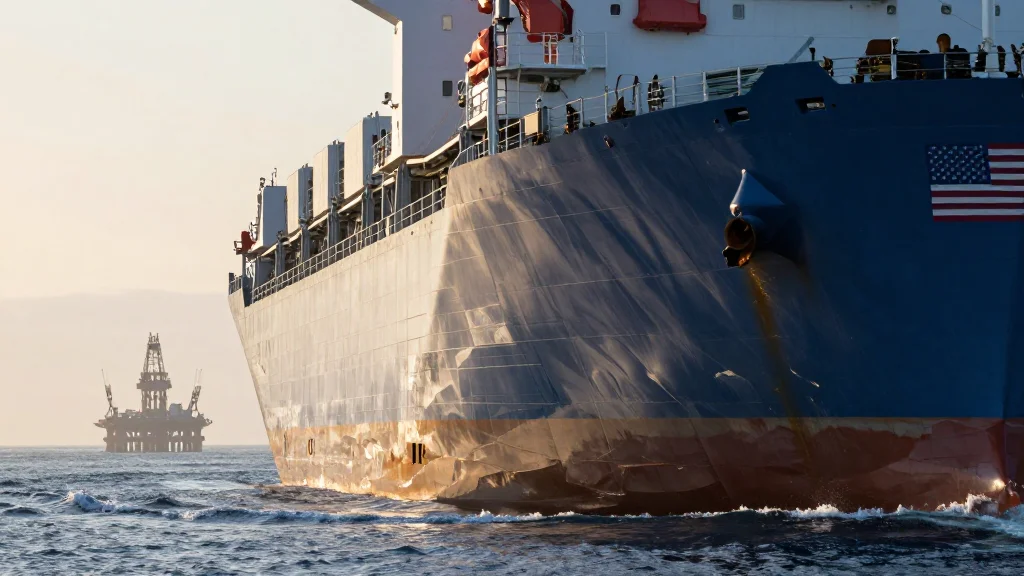
U.S. Extends Jones Act Waiver for 90 Days to Ease Energy Supply Disruptions

Why It Matters
The Jones Act waiver directly affects the United States’ ability to import and distribute essential energy commodities during a period of heightened geopolitical risk. By temporarily relaxing a century‑old protectionist law, the administration aims to prevent fuel shortages and price spikes that could ripple through the broader economy, from manufacturing to agriculture. Beyond the immediate relief, the extension raises questions about the future of U.S. maritime policy. If the waiver proves effective, lawmakers and industry leaders may push for a more permanent re‑evaluation of the Jones Act, potentially reshaping the domestic shipbuilding sector and altering the strategic calculus of U.S. naval logistics.
Key Takeaways
- •U.S. extends Jones Act waiver for 90 days, now running until mid‑August.
- •White House Press Secretary Taylor Rogers cites data showing faster supply deliveries.
- •Waiver covers crude oil, refined fuels, fertilizer, coal and other industrial goods.
- •Industry groups welcome added tanker capacity; maritime unions warn of long‑term impacts.
- •Extension is a response to ongoing disruptions in the Strait of Hormuz caused by Iran’s war.
Pulse Analysis
The decision to prolong the Jones Act waiver reflects a pragmatic shift in U.S. supply‑chain governance, where regulatory rigidity yields to real‑time market pressures. Historically, the Jones Act has been defended as a cornerstone of maritime sovereignty, ensuring a fleet of U.S.‑built, crewed, and owned vessels ready for national emergencies. Yet the current crisis underscores a tension between that strategic ideal and the operational reality of a constrained tanker market.
In the short term, the waiver injects much‑needed capacity, likely dampening the upward pressure on gasoline and diesel prices that have surged since the Hormuz bottleneck emerged. For refiners on the Gulf Coast, the ability to source foreign‑flagged tankers could shave days off delivery timelines, translating into lower inventory costs and more stable feedstock pricing. Conversely, domestic shipbuilders may see a temporary dip in new‑build orders, a trend that could accelerate if policymakers entertain a more permanent relaxation of the Act.
Looking forward, the waiver sets a precedent for using targeted regulatory relief as a tool of energy security. If the extension proves successful, it could embolden future administrations to invoke similar measures during other supply‑chain shocks, such as extreme weather events or geopolitical flashpoints elsewhere. However, any move toward a lasting overhaul of the Jones Act would require navigating entrenched political interests, including labor unions and defense advocates who view the law as a non‑negotiable element of national defense. The coming weeks will reveal whether the current extension is a one‑off tactical response or the first step toward a broader re‑thinking of America’s maritime policy framework.
U.S. Extends Jones Act Waiver for 90 Days to Ease Energy Supply Disruptions
Comments
Want to join the conversation?
Loading comments...