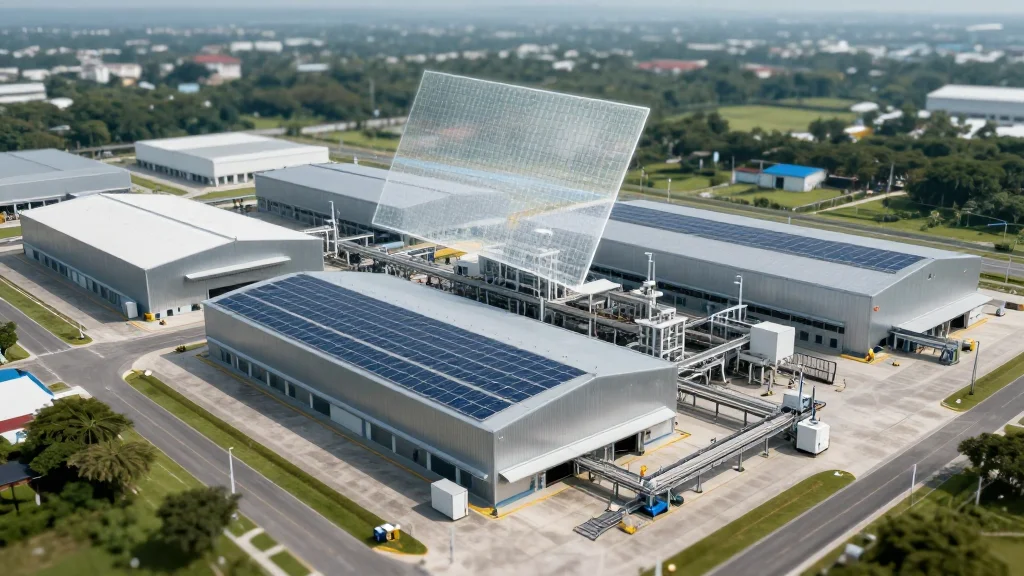
U.S. Launches 4,000‑Acre High‑Tech Manufacturing Zone in Philippines to Safeguard AI Supply Chains

Why It Matters
The Philippines hub marks the first large‑scale, allied‑focused manufacturing enclave dedicated to AI hardware, a sector previously dominated by a handful of East Asian players. By embedding production capacity within an “Economic Security Zone,” the United States creates a tangible alternative to China’s integrated semiconductor ecosystem, potentially reshaping global pricing and investment flows. For the broader supply‑chain community, the initiative signals a shift toward regionalized, security‑oriented manufacturing clusters that could become a template for other allied nations seeking to protect critical technology pathways. Beyond immediate hardware, the zone could catalyze downstream services—software development, testing, and AI model training—by clustering talent and capital in the Indo‑Pacific. If successful, it may accelerate the diversification of AI supply chains, lower entry barriers for smaller firms, and reduce the geopolitical leverage that single‑source dependencies confer on rival powers.
Key Takeaways
- •U.S. announced a 4,000‑acre high‑tech manufacturing zone in the Philippines on April 16.
- •The zone is part of Pax Silica, a U.S.-led framework with 13 allied countries.
- •Location: Luzon Economic Corridor, designed as an “Economic Security Zone.”
- •Goal: diversify AI hardware supply chains and reduce reliance on China.
- •Target: $5 billion annual output by 2030, first lines operational by late 2027.
Pulse Analysis
The Philippines project is more than a diplomatic gesture; it is a strategic bet on supply‑chain resilience as a competitive advantage. Historically, the United States has relied on private‑sector initiatives to secure critical minerals, but the Pax Silica model integrates government coordination, financing, and standards‑setting into a single enclave. This hybrid approach could accelerate capital deployment, as investors gain confidence from clear policy backing while still benefiting from market‑driven demand signals.
From a competitive standpoint, the hub directly challenges China’s “Made in China 2025” vision, which has built a vertically integrated semiconductor ecosystem. By offering an allied alternative that promises transparent governance and reduced export‑control friction, the United States may attract firms that have been hesitant to deepen ties with Chinese suppliers. The success of the zone will hinge on its ability to attract anchor manufacturers—such as U.S. chipmakers and AI accelerator firms—and to secure a reliable flow of critical minerals, many of which the Philippines lacks domestically. Partnerships with partner nations that possess mining assets (e.g., Australia’s rare‑earth projects) will be essential.
Looking ahead, the Luzon hub could serve as a prototype for a network of allied manufacturing zones across the Indo‑Pacific, each leveraging local comparative advantages—whether in labor, logistics, or mineral access. If the model proves scalable, it may usher in a new era of “distributed resilience,” where critical technology supply chains are deliberately spread across friendly jurisdictions, reducing systemic risk and reshaping global trade patterns.
U.S. Launches 4,000‑Acre High‑Tech Manufacturing Zone in Philippines to Safeguard AI Supply Chains
Comments
Want to join the conversation?
Loading comments...