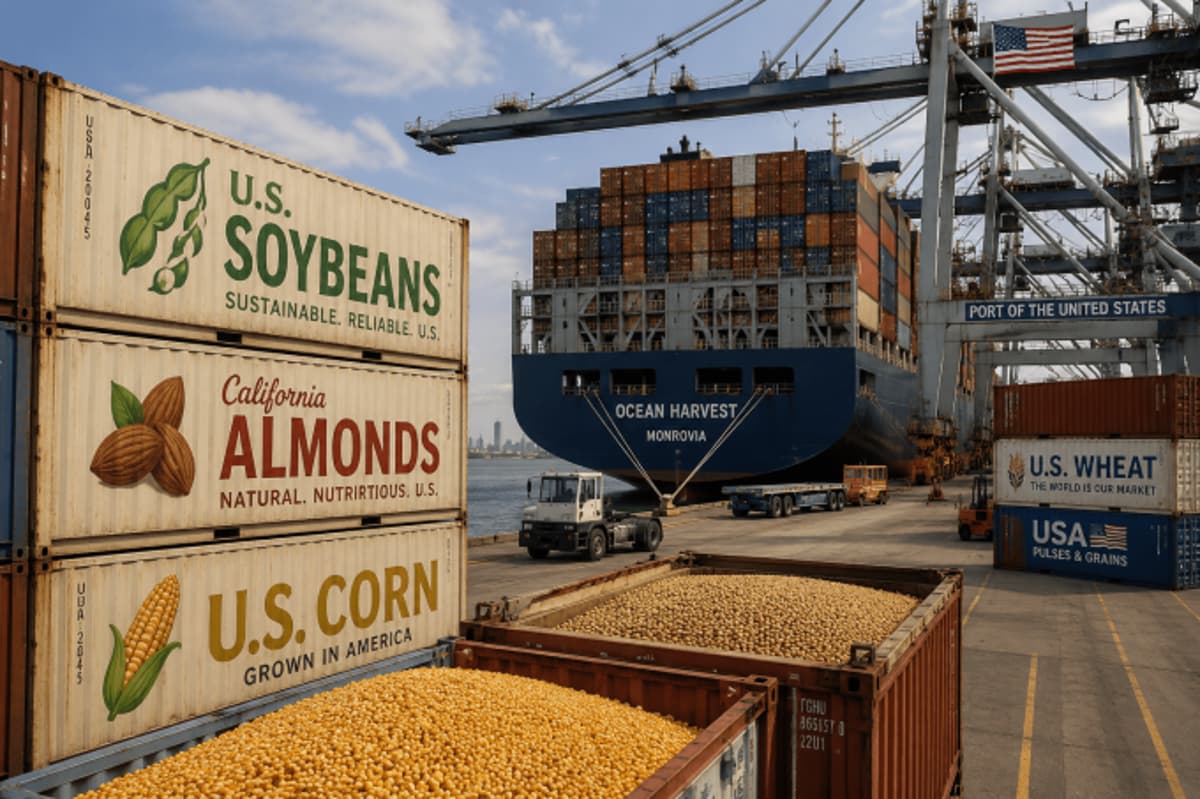
US Shippers Warn Revived China Ship Fees Could ‘Eliminate’ Ag Exports
Why It Matters
The added costs could erode thin agricultural margins, shift global buyers to competitors, and reshape U.S. maritime policy debates.
Key Takeaways
- •Reinstated fees could add $600‑$900 per container.
- •Soybean price to SE Asia may rise to $12.81 per bushel.
- •Smaller US ports risk reduced service from carriers.
- •Domestic‑built vessel rule deemed infeasible without subsidies.
- •Thin export margins could be erased by added fees.
Pulse Analysis
The push to revive port fees on Chinese‑built ships reflects a broader U.S. strategy to curb China’s dominance in global shipbuilding. The fees, originally suspended in late 2024 to facilitate trade talks, were intended to level the playing field for American shipyards. By re‑imposing a $1 million‑$1.5 million charge per vessel, policymakers hope to deter U.S. carriers from relying on cheaper Chinese‑flagged tonnage, but the move also risks unintended spill‑over effects on export‑dependent sectors.
For American farmers, the financial calculus is stark. Adding $600‑$900 to each container translates into a roughly 7% price hike for soybeans destined for Southeast Asia, raising the delivered cost from $12 to $12.81 per bushel. Similar pressure points appear for corn and timber, where higher freight rates could push U.S. products out of price‑sensitive markets already contested by Brazil, Canada and Australia. With profit margins already razor‑thin, many exporters warn that the fee could render U.S. commodities uncompetitive, prompting foreign buyers to switch suppliers.
The controversy also spotlights a deeper policy dilemma: the feasibility of mandating that a growing share of U.S. exports travel on domestically built and flagged vessels. Industry groups argue that the current U.S. shipbuilding fleet cannot meet demand without massive subsidies and years of investment. As Senators Warren and Kelly press the administration for a clear stance, the outcome will influence not only agricultural trade flows but also the future of American maritime capacity, potentially reshaping supply‑chain resilience and geopolitical leverage in the Indo‑Pacific region.
US shippers warn revived China ship fees could ‘eliminate’ ag exports
Comments
Want to join the conversation?
Loading comments...