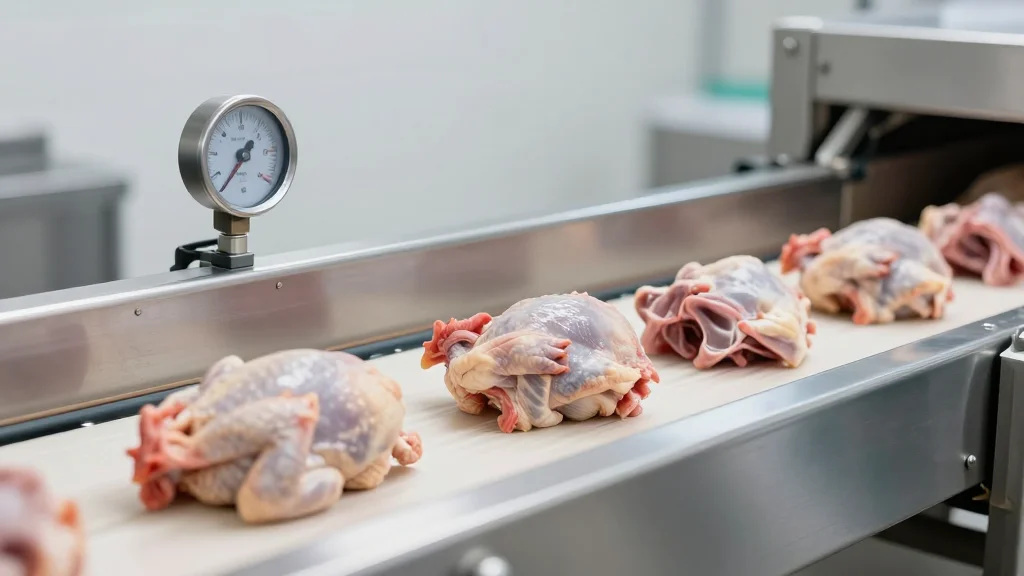
USDA Pushes Faster Meat Plant Lines, Sparking Labor and Safety Backlash

Why It Matters
Accelerating line speeds directly affects the meat supply chain’s capacity, influencing everything from farm‑gate demand to retail shelf prices. Faster processing could help mitigate recent shortages, but it also raises the risk of worker injuries and may strain existing safety oversight, prompting potential regulatory or litigation push‑back. Beyond labor, the proposed changes could amplify the environmental footprint of meat production. Higher throughput often means more energy consumption, increased water use, and greater waste generation, challenging industry pledges to reduce emissions. The debate highlights a broader tension between efficiency‑driven cost cuts and the growing demand for sustainable, humane food systems.
Key Takeaways
- •USDA proposes raising poultry line speed to 175 birds per minute (up from 140).
- •Turkey line speed would increase to 60 birds per minute (up from 55).
- •Swine processing would lose any speed cap, allowing unlimited throughput.
- •UFCW reports over 22,000 comments opposing poultry rule and 20,000 opposing pork rule.
- •Environmental group Food and Water Watch calls the plan a disaster for workers and the climate.
Pulse Analysis
The USDA’s speed‑up proposal arrives at a moment when the U.S. meat supply chain is still recovering from pandemic‑induced labor shortages and plant shutdowns. Historically, regulatory relaxations—such as the 1990s line‑speed increases—correlated with short‑term price gains but also with spikes in workplace injuries and food‑safety incidents. By pushing speeds beyond the 1990s benchmarks, the agency risks repeating those patterns, especially as automation has not fully mitigated the most hazardous manual tasks.
From a competitive standpoint, faster lines could give large, vertically integrated processors an edge, allowing them to absorb higher fixed costs and outprice smaller regional plants. This could accelerate consolidation in the meat industry, further narrowing supplier options for farmers and retailers. Conversely, unions and advocacy groups may leverage the public comment surge to force stricter enforcement or even legislative caps, echoing the 2021 UFCW lawsuit that halted a prior swine speed rule.
Looking ahead, the USDA’s decision will likely become a litmus test for how regulators balance efficiency with worker safety and environmental stewardship. If the agency proceeds, it may need to pair speed increases with mandatory ergonomic upgrades, real‑time injury monitoring, and stricter emissions reporting to placate critics. Failure to do so could trigger a new wave of litigation, regulatory rollbacks, or consumer backlash that would reverberate through the entire food‑distribution network.
USDA Pushes Faster Meat Plant Lines, Sparking Labor and Safety Backlash
Comments
Want to join the conversation?
Loading comments...